
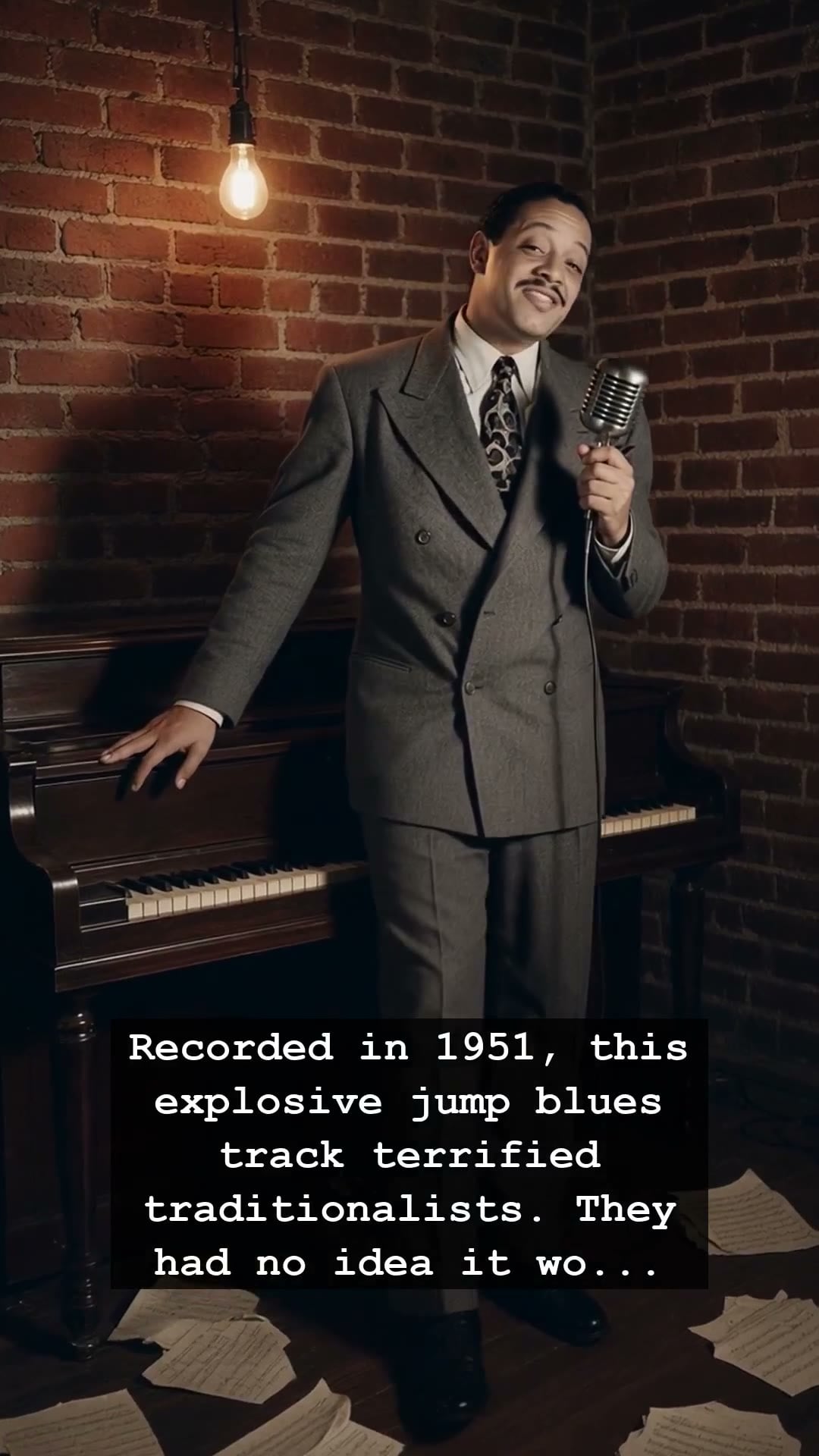
In 1951, long before the leather-clad giants of Arena Rock dominated the world or the distorted wails of Grunge shook the earth, a frantic, percussive sound emerged from the smoke-filled clubs of the American South. The man behind this sonic earthquake was Tiny Bradshaw, a bandleader whose name is now etched in the bedrock of musical history. His track, The Train Kept A-Rollin’, did more than just get people on the dance floor; it fundamentally altered the DNA of modern music. To the traditionalists of the early fifties, this composition was an auditory assault, a wild, primitive rebellion that terrified the establishment. They dismissed it as a passing fad, completely oblivious to the fact that they were witnessing the violent birth of the heavy metal revolution.
Tiny Bradshaw was a master of the jump blues style, blending big band sophistication with the gritty, raw urgency of rhythm and blues. When he stepped into the studio to record this masterpiece, he infused the track with an aggressive, driving rhythm that felt like a locomotive losing its brakes. The guitar work was sharp, biting, and dangerously loud for the era, creating a template that would eventually be stolen, polished, and electrified by icons like The Yardbirds, Aerosmith, and Led Zeppelin. It is one of history’s greatest ironies that the foundations of thunderous hard rock were laid by a man who started his career as a smooth jazz-tinged bandleader.
Imagine the scene in a mid-century Jukebox joint. As the needle dropped on Tiny Bradshaw’s record, the atmosphere shifted. It wasn’t the polished pop of the crooners; it was something visceral. It was the sound of post-war anxiety, raw ambition, and the untamed spirit of American music breaking free from its shackles. While the youth of the day were just beginning to feel the tremors of Rock ‘n’ Roll, Tiny Bradshaw was already miles ahead, unknowingly handing a blueprint to every distorted-guitar player who would follow in his wake for the next fifty years.
The genius of Tiny Bradshaw lay in his ability to push the boundaries of what a brass-heavy band could achieve. He channeled the frenetic energy of the nightlife circuit—the same grit you would later find at Woodstock or the gritty underground venues of the seventies. Despite the immense influence of his work, the name Tiny Bradshaw often fades into the footnotes of textbooks, overshadowed by the very rock stars he inspired. Yet, listen closely to those original recordings, and you can hear the faint, echoing blueprints of the riffs that would eventually fill stadiums across the globe.
Tracing the lineage of rock music back to Tiny Bradshaw reminds us that every genre, no matter how loud or rebellious, is built upon the ghosts of those who dared to experiment first. His 1951 masterpiece remains a testament to the fact that music is not a static art form, but a chain reaction of ideas and accidents. Whether you are a devotee of the early blues or a die-hard fan of heavy metal, you owe a debt to the relentless pulse of this legendary bandleader. Sometimes, the most important revolutions don’t start with a bang, but with a rhythm that just refuses to stop.