
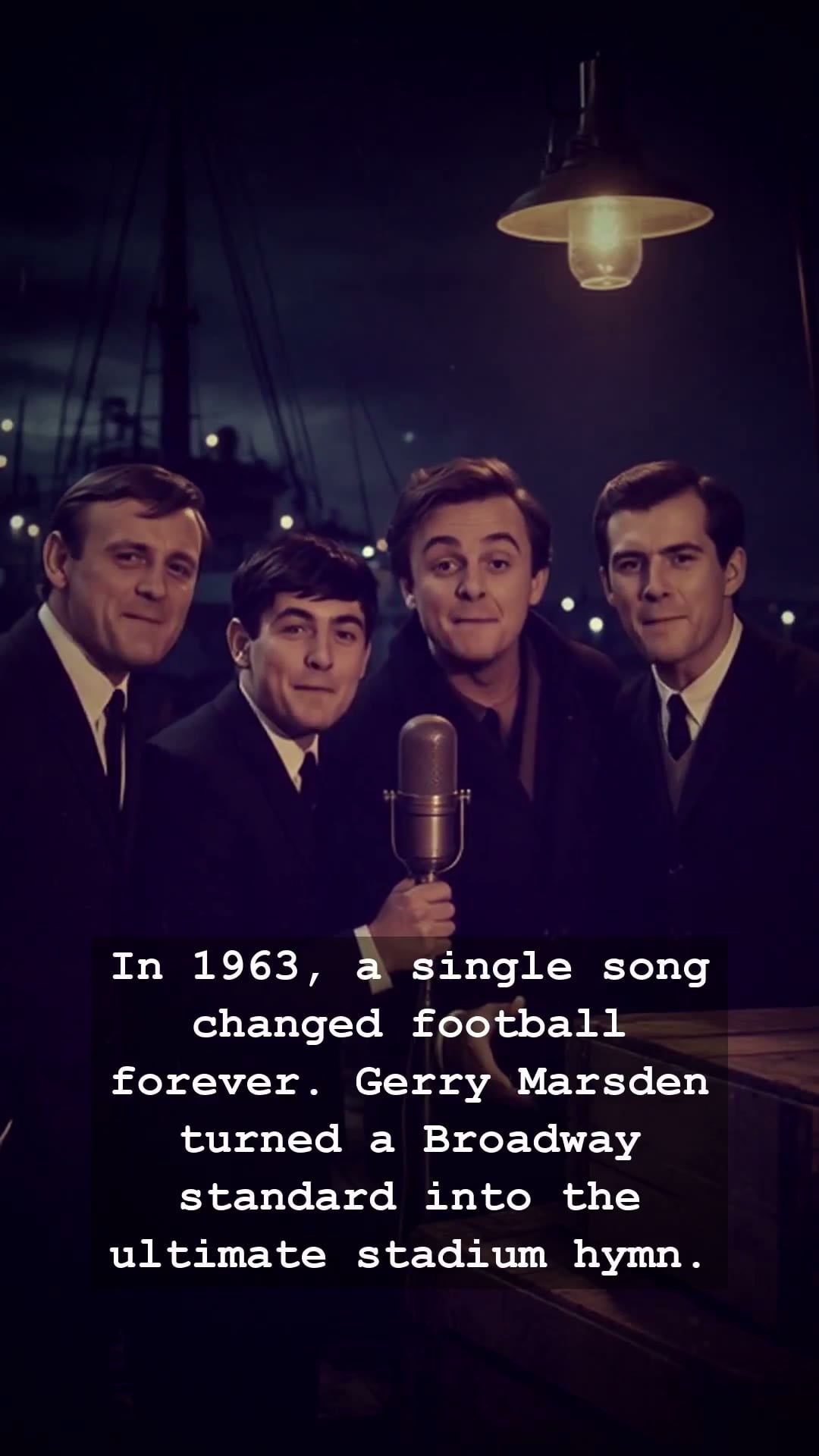
The year was 1963, a time when the Merseybeat sound was sweeping through every smoky club in Liverpool, and the world felt like it was shifting on its axis. In the heart of this cultural explosion stood Gerry Marsden, the charismatic frontman of Gerry and the Pacemakers. While the Beatles were busy conquering the charts, Marsden was about to pull off a feat that had nothing to do with record sales and everything to do with the soul of a city. He walked into the studio and recorded a version of You’ll Never Walk Alone, a showtune from the musical Carousel, and in doing so, he unknowingly drafted the blueprint for every stadium anthem that would follow in the decades to come.
At the time, the idea of a Broadway ballad resonating with the working-class fans of English football seemed, at best, a gamble and, at worst, a total mismatch. Yet, the raw, earnest delivery of Gerry Marsden breathed a new kind of life into the lyrics. There was a haunting sincerity in his voice that transcended the glitter of the theater, turning a piece of stage dialogue into a desperate, hopeful prayer for those standing on the terraces. It was the era of the Jukebox and the transistor radio, when music was the primary fuel for the collective spirit, and Marsden tapped into that pulse with devastating efficiency.
As the song began to echo through the corridors of Anfield, something magical happened. The crowd didn’t just listen; they participated. The power of the collective voice transformed the stadium into a single, breathing entity, a phenomenon that has since become the gold standard for sports atmosphere. Gerry Marsden had provided the lyrics, but the fans provided the heart, creating an eternal tradition that turned a simple pop song into a cultural monolith. It was a moment of perfect synchronicity between a performer and his audience, cemented in the history of British music and sports alike.
Of course, the road to such iconic status is rarely without its shadows. The music industry in the sixties was a pressure cooker, and while Gerry Marsden enjoyed the spoils of fame, the sheer weight of his song’s legacy often dwarfed his own personal journey. Yet, whenever the familiar chords strike up today, the drama of the charts and the noise of the media fall away. What remains is the sheer, unadulterated emotion that Marsden captured in those few minutes of tape. It serves as a reminder of how the music of that era—the golden age of pop—could bridge the gap between entertainment and something far more sacred.
Looking back, it is impossible to talk about the history of football culture without centering the contribution of Gerry Marsden. He taught us that a song is more than just a melody; it is an identity. Whether you are a fan of rock, pop, or the ballads that defined the sixties, the influence of that one recording remains undeniable. Even today, the echoes of his voice serve as a bridge to a time when music felt like a lifeline. As we look back on the legacy he left behind, we are reminded that some songs truly never walk alone.