
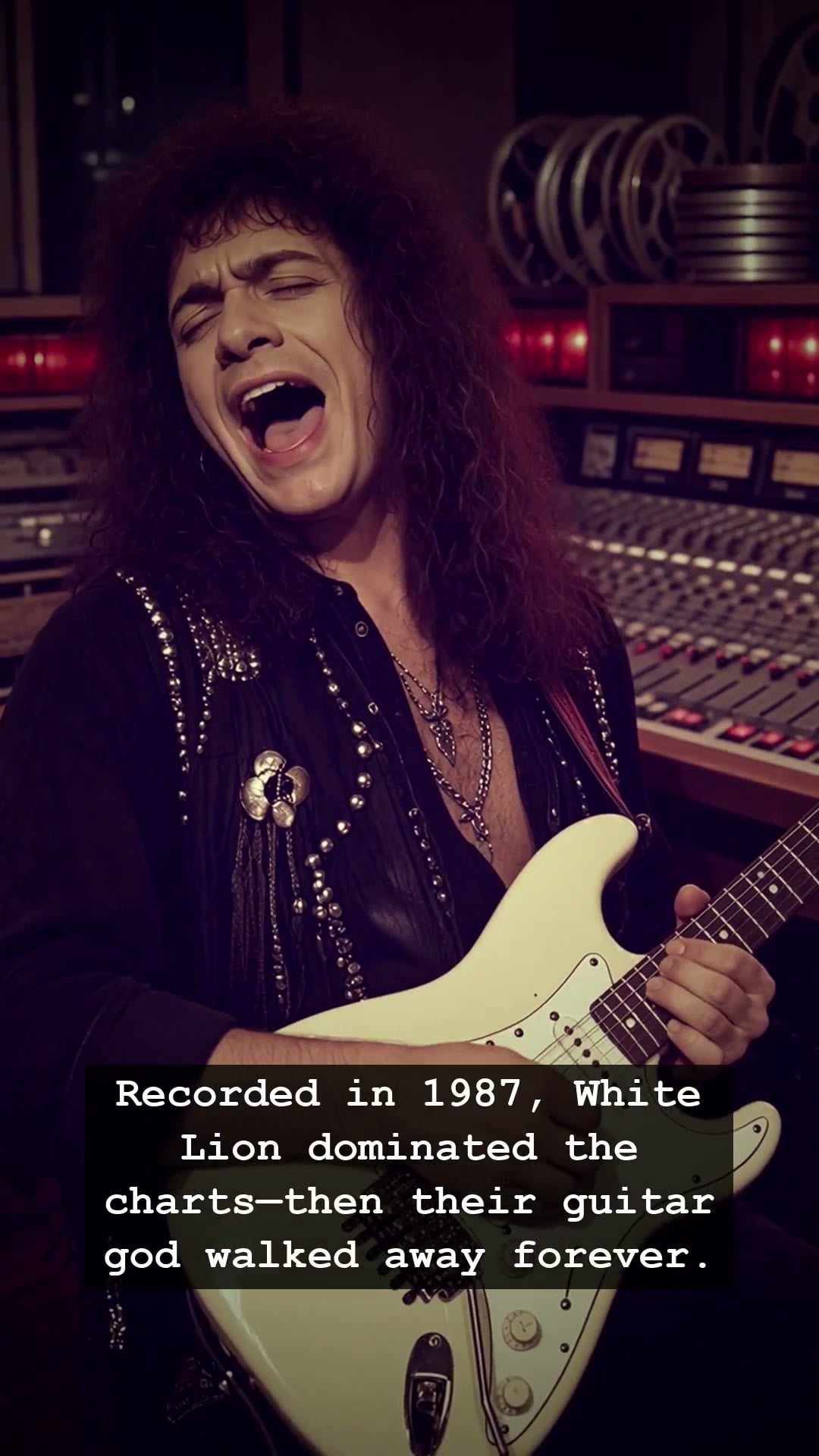
The year was 1987. The airwaves were saturated with the neon-soaked energy of MTV, and hair metal was the undeniable king of the cultural landscape. Among the leather-clad giants, one band stood out with an intoxicating blend of pop sensibility and technical wizardry: White Lion. At the center of their sonic storm was Vito Bratta, a guitarist whose fluid, melodic fretwork could make a stadium weep and a hard rock fan swoon. He was hailed as the next Eddie Van Halen, a prodigy destined to carry the torch of guitar heroism into the next decade. Then, as quickly as he had ascended the throne of rock stardom, Vito Bratta simply vanished, retreating into a silence that has haunted his fans for over thirty years.
To understand the magnitude of his departure, one must revisit the era of the Walkman and the power ballad. White Lion had captured lightning in a bottle with hits like Wait and When the Children Cry, tracks that showcased Vito Bratta as a master of both atmosphere and shredding. Behind the scenes, the life of a guitar god was far less glamorous than the music videos suggested. It was a world of endless touring, grueling legal battles, and the crushing weight of industry expectations that pushed many artists to their breaking points. Vito Bratta was never one for the typical rock and roll excess, and the relentless machinery of fame began to feel like a cage rather than a stage.
Following the dissolution of White Lion in the early nineties, rumors began to swirl. Some whispered of a hand injury that made playing impossible; others suggested he had simply grown disillusioned with the shifting tides of the music industry as grunge began to dismantle the hair metal empire. Vito Bratta, a man who had once been the focus of every guitar magazine cover, chose a life of complete anonymity. He turned his back on the spotlights of the Sunset Strip, the roar of the arena crowds, and the constant demand for more. It was a clean break, a rare and defiant act of reclaiming one’s life from the hollow machine of commercial rock.
Today, his disappearance remains one of the most poignant mysteries in classic rock history. While his contemporaries continued to chase nostalgia on endless reunion tours, Vito Bratta remained firmly in the shadows, tending to his family and living a life entirely detached from the fame he had earned. This absence has only served to solidify his legend, turning his fretwork on those classic eighties records into a relic of a lost, golden age of guitar excellence. He did not go out in a blaze of destruction; he simply stepped off the stage and never looked back.
Looking back, we are left with the music, which still rings with the same fire and heart it had in 1987. The story of Vito Bratta is not one of tragedy, but of an artist who understood that his talent was not for sale to the highest bidder. Whether you remember seeing White Lion on your old television screen or discovered his mastery through a pair of vintage headphones, his legacy remains untarnished by time. He walked away from it all to find something most rock stars never manage to capture: a quiet, private peace. Perhaps that is the greatest solo he ever played.