
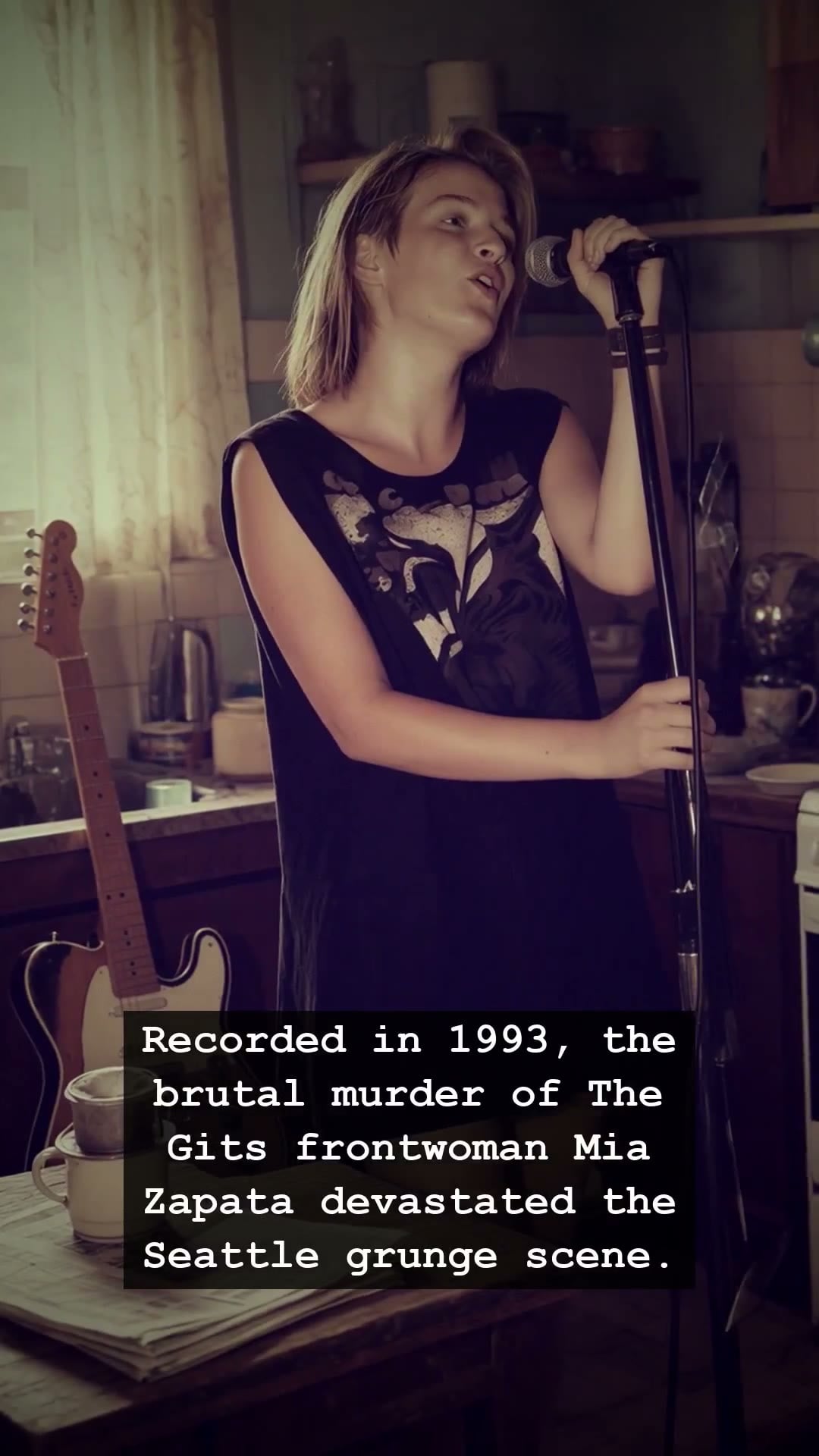
In the rain-soaked streets of 1993 Seattle, the flannel-clad dream of grunge was not just a sound; it was a revolution. At the heart of this raw, untamed energy was The Gits, fronted by the fierce and magnetically gifted Mia Zapata. Her voice was a jagged blade, cutting through the cynicism of the era with a punk-rock intensity that commanded every room she stepped into. But on a dark night in July 1993, that powerful voice was silenced forever in a brutal act of violence that shattered the soul of the Emerald City’s music scene. The murder of Mia Zapata did not just end a promising career; it left a gaping, agonizing hole in the fabric of the Pacific Northwest underground.
At the time, the world had its eyes glued to MTV, waiting for the next Nirvana or Pearl Jam hit, but for the musicians who filled the cramped dive bars and local recording studios, the loss of Mia Zapata was personal and devastating. She was more than just a frontwoman; she was a pioneer, a woman navigating a male-dominated scene with uncompromising grit. The investigation into her death initially hit a wall, leaving a community that thrived on collective expression feeling helpless and betrayed. The silence from the authorities was deafening, forcing those closest to her to take the burden of justice into their own hands.
In an unprecedented display of solidarity, rock royalty and local musicians banded together to fund a private investigation. They refused to let the memory of Mia Zapata fade into a cold case file. For ten agonizing years, the search for her killer became a haunting mission, a desperate pursuit of truth that underscored the deep, familial bonds forged within the Seattle grunge community. It was a decade of waiting, mourning, and fighting against the indifference of the system, a testament to how deeply she was loved and how profoundly she was missed.
When justice finally arrived in 2003, it brought a somber sense of closure, but it could never restore the vibrant, chaotic brilliance that was Mia Zapata. The story of her life and death remains a dark, cautionary chapter in the history of the 90s alternative boom. It is a reminder of the fragility of the icons we idolize and the dangerous reality that often lurked behind the stage lights, the sold-out shows, and the legendary festival posters that defined the decade.
Today, we look back at the legacy of Mia Zapata not just through the lens of tragedy, but through the lens of a fierce, unrelenting spirit. Her recordings still crackle with a vitality that refuses to age, echoing the urgency of a time when music felt like it could change the world. As we remember her, we honor the woman behind the microphone who taught a generation that even when the light is extinguished, the resonance of a true artist’s voice never truly fades away.