
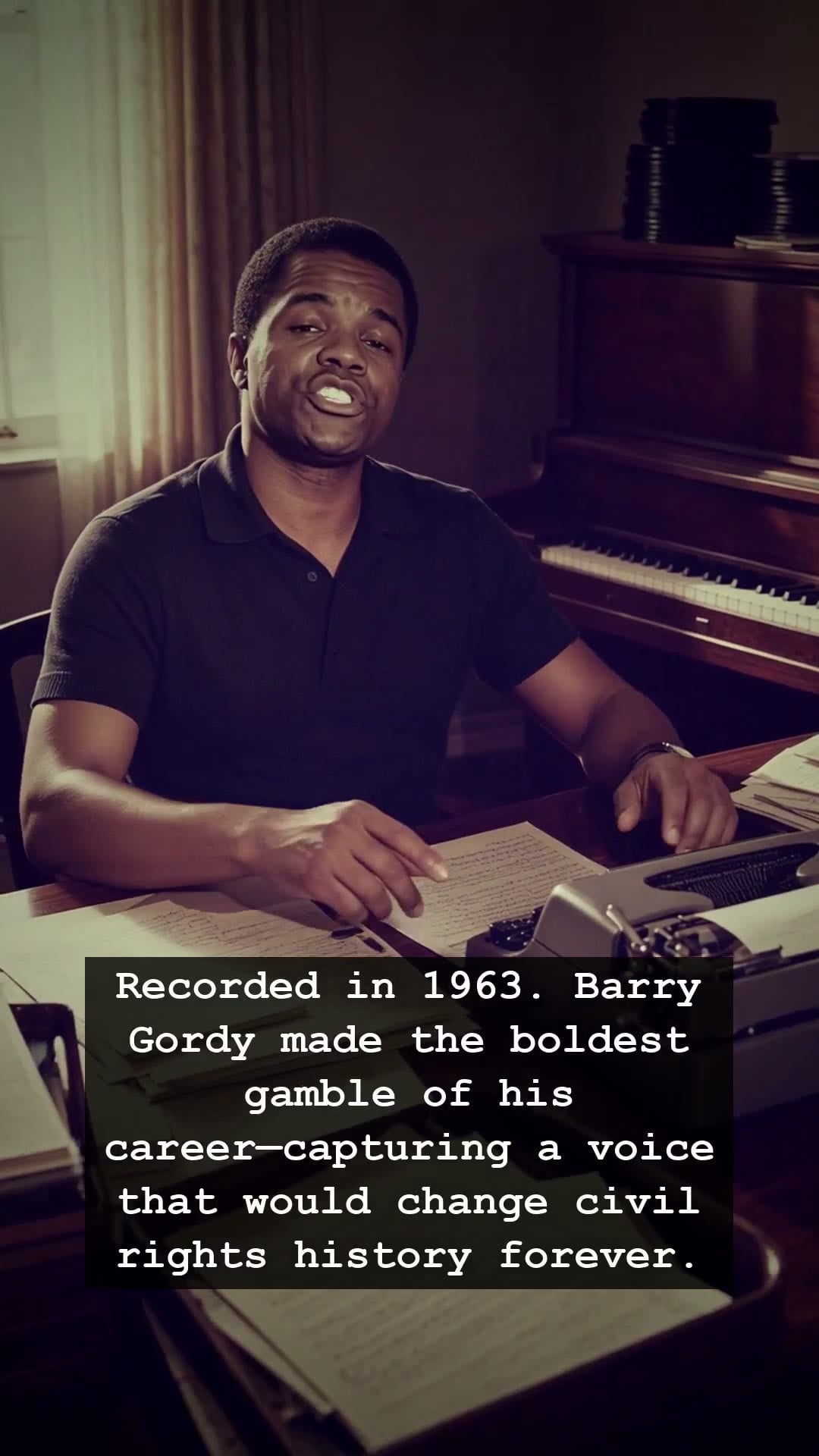
In the sweltering summer of 1963, the air in Detroit felt heavy with both anticipation and unrest. While the nation stood on the precipice of seismic social change, Berry Gordy sat in a small studio, staring at a set of recordings that would prove to be the most dangerous—and brilliant—gamble of his life. As the visionary architect of Motown, Berry Gordy was known for his polished, radio-friendly hits that crossed racial lines. But in this singular moment, he chose to step away from the shimmering pop formula to document a voice that carried the weight of a generation’s struggle for civil rights. It was a move that threatened to alienate his sponsors and fracture his carefully constructed empire, yet he pressed ahead, driven by a gut feeling that history needed this specific sound to survive.
The recording was more than just music; it was a visceral manifestation of the American dream’s broken promises. While the rest of the world was dancing to the upbeat rhythms of the Supremes or the Temptations, Berry Gordy saw the power in a raw, unvarnished truth. He risked his reputation and his financial standing to ensure this voice reached the masses, understanding that the Motown sound was not just about entertainment, but about giving a face and a heartbeat to the voiceless. The studio felt like a pressure cooker, with tensions rising as the label head contemplated whether the public was truly ready for the message embedded in those grooves.
Looking back, the audacity of Berry Gordy is what defined the golden age of American soul. He operated his label with the precision of an assembly line, but he possessed the soul of a revolutionary. By deciding to release this project, he wasn’t just chasing the next chart-topper; he was cementing his legacy as a man who understood that music serves as the primary document of history. The vinyl pressings that emerged from the Hitsville U.S.A. studio during that volatile period became more than just consumer goods; they became artifacts of the Civil Rights movement, finding their way into homes through the heavy warmth of a turntable and the scratchy, honest crackle of an analog recording.
The impact was immediate and profound, echoing far beyond the Billboard charts. It forced a national conversation, challenging the status quo of a segregated industry. Berry Gordy never wanted to be a martyr for the cause, but his decision made him a pillar of it. The brilliance of his leadership at Motown was his ability to balance commercial viability with deep cultural resonance. He understood that to change the world, you first had to reach its ears, and by taking this gamble in 1963, he proved that pop music could be a weapon for justice.
Decades later, the echo of that gamble still resonates in every room where music matters. When we drop the needle on these vintage tracks today, we aren’t just listening to a melody; we are listening to a man who looked at the crumbling pillars of a society and decided to use sound to build something stronger in their place. Berry Gordy changed the landscape of American culture, leaving a permanent mark on the soundtrack of our collective memory. As we continue to honor the legends who paved the way, we must remember that sometimes the biggest hits aren’t the ones that make the most money, but the ones that make the most difference.