
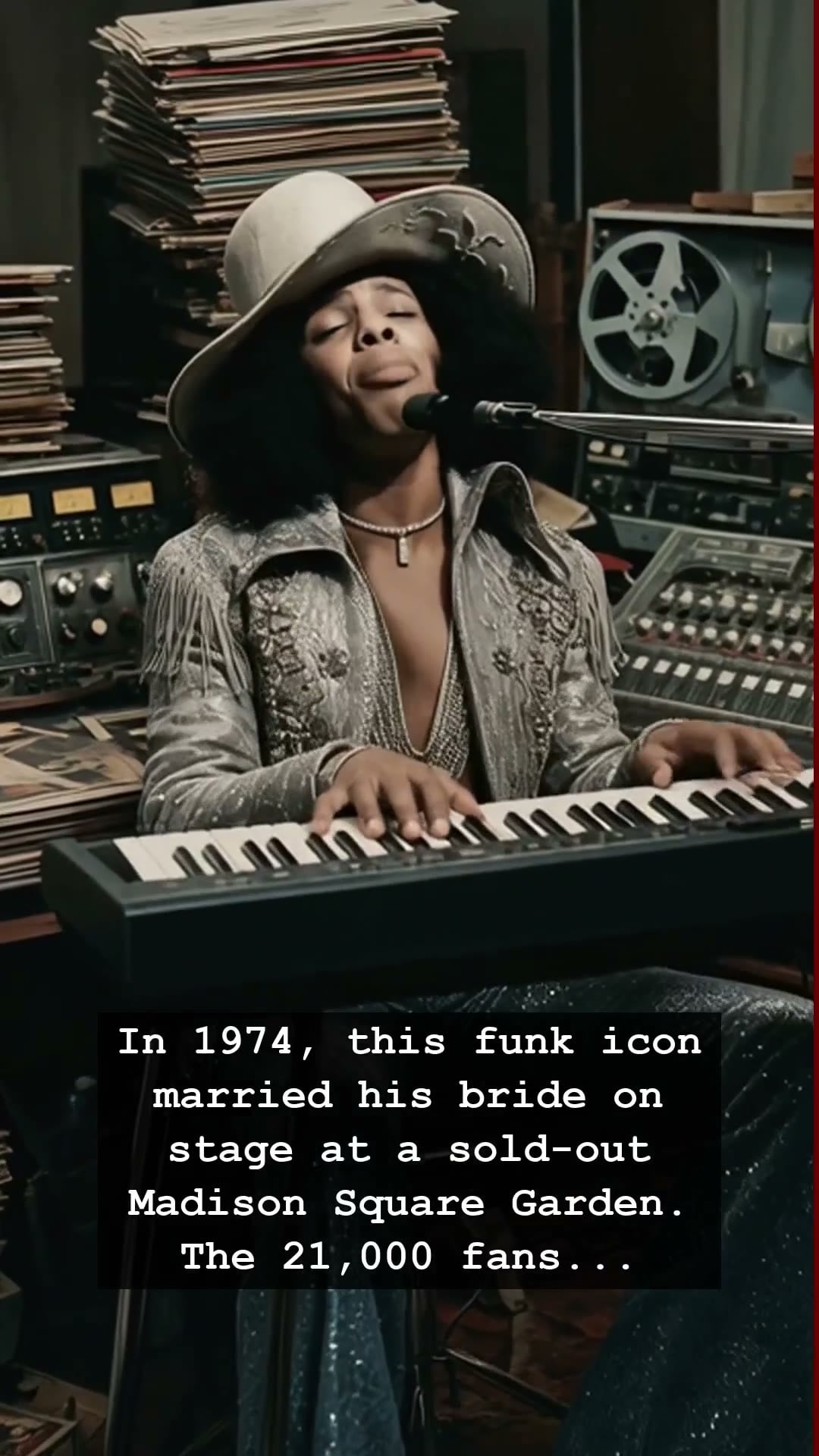
The year was 1974, and the air at Madison Square Garden was thick with the scent of cheap perfume, cigarette smoke, and the unbridled electricity of the funk revolution. Twenty-one thousand fans had packed the arena, not just for a concert, but to witness a spectacle that would go down in rock and roll infamy. Sly Stone, the visionary frontman of Sly and the Family Stone, decided that a private ceremony was simply not enough for a man of his stature. He chose to turn his marriage to model Kathy Silva into a gold-draped, circus-like event on center stage. It was the peak of his cultural dominance, a moment where the lines between reality and show business completely dissolved into the shimmering lights of mid-seventies New York City.
To the thousands of screaming devotees in the audience, this was the ultimate climax of the funk era. Sly and the Family Stone were the architects of a sound that blended psychedelic soul with a social consciousness that resonated deeply with the spirit of the time. But behind the glitz and the high-octane performance, the foundation of the band and the man himself was rapidly deteriorating. The marriage was not a celebration of love, but rather a performative outburst fueled by the dangerous excesses that defined the era’s darker side. By the time the final note of the wedding march faded into the rafters of the Garden, the seeds of destruction had already been sown.
The tragedy of Sly and the Family Stone during this period is a classic cautionary tale of fame’s heavy toll. Just five months after that glittering stage wedding, the relationship collapsed into a heap of tabloid headlines and personal trauma. The pressure of maintaining the persona of a funk icon, combined with the relentless grind of touring and the suffocating influence of illicit substances, turned what should have been a transformative life event into a cautionary anecdote. It remains one of the most jarring images in music history: the man who taught the world to dance together and celebrate diversity ending his most public relationship in a cloud of ego and chemical haze.
Looking back, the MSG wedding stands as a stark reminder of the fragile boundary between the artist and the ego. While fans of Sly and the Family Stone continue to cherish the infectious grooves of hits like Dance to the Music and Everyday People, it is impossible to ignore the cracks that formed during this tumultuous time. It captures the essence of the seventies—an era of liberation, excess, and eventually, exhaustion. It was a time when musicians were treated like gods, and like the myths of old, they were often expected to sacrifice their humanity for the sake of the spectacle.
Today, the legacy of Sly Stone remains complicated but undeniably influential. He changed the course of music history, forcing us to rethink how rhythm and soul could be woven into the fabric of American life. As we dust off our vinyl records and remember the neon-soaked energy of the seventies, it is worth pausing to consider the human cost of those iconic moments. The stage at Madison Square Garden may have been built for dreams, but for Sly and the Family Stone, it became the place where a dream turned into a haunting memory. Perhaps there is a lesson in the silence that followed the applause.