
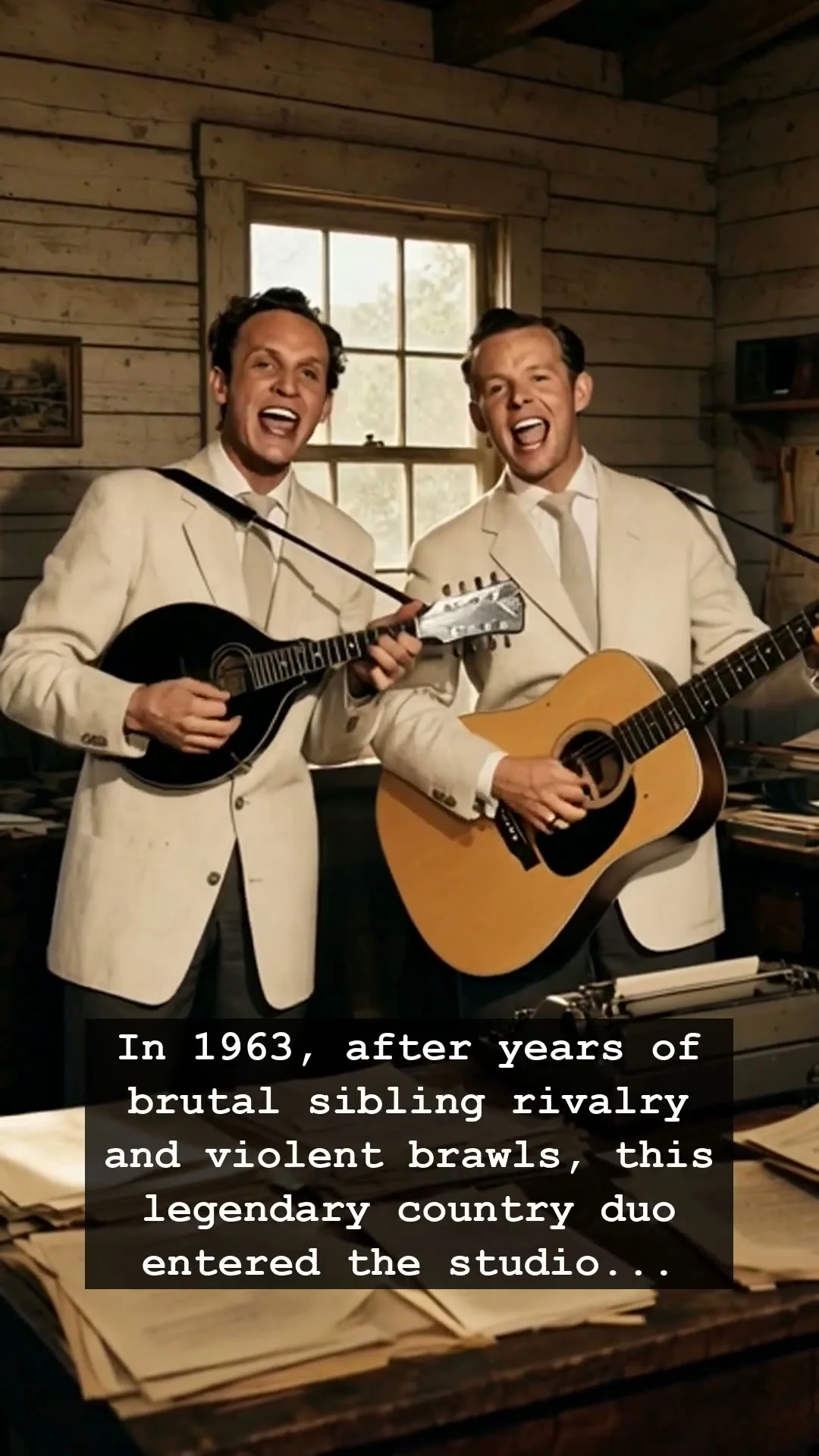
The year was 1963, and the air in the recording studio was thick with the kind of resentment that can only brew between blood relatives. Charlie and Ira Louvin, known to the world as the legendary Louvin Brothers, stood before the microphones. To the radio listeners of the era, their voices were like angels descending from the heavens, blending in a perfect, high-lonesome harmony that defined the golden age of country music. But behind the shimmering perfection of their gospel-infused melodies lay a reality that felt more like a scene from a Tennessee noir novel than a musical career. Their final session was not a joyous reunion, but the last gasp of a partnership defined by brutal brawls, deep-seated jealousy, and a toxic friction that had finally reached its boiling point.
For those who remember the crackle of a jukebox in a dimly lit diner or the way a transistor radio sounded on a quiet summer porch, The Louvin Brothers represent a specific slice of American history. They were masters of the mandolin and vocal interplay, influencing everyone from The Everly Brothers to Emmylou Harris. Yet, their personal lives were defined by a stark contrast to the divine themes they sang about. Ira was a volatile force of nature, often fueled by temper and the bottle, while Charlie struggled to keep the peace while navigating his brother’s unpredictable rage. Their story is a chilling reminder that the most beautiful art often emerges from the most fractured souls, leaving a legacy that is as painful as it is beautiful.
Throughout their career, The Louvin Brothers navigated an era where country music was transitioning from the rural hills to the polished stages of the Grand Ole Opry. They lived through the rise of television and the changing tides of the music industry, yet their core conflict remained constant. Witnesses often spoke of their off-stage altercations, which were as intense as their on-stage performances were serene. It was a classic American tragedy of talent outstripping the ability to reconcile the demons that followed them through every tour bus and hotel lobby. By the time they walked away from each other in 1963, they left behind a trail of records that sounded like prayers whispered in the middle of a fistfight.
Today, we look back at the catalog of The Louvin Brothers with a sense of wonder. How could two men who seemingly loathed each other produce sounds of such profound spiritual intimacy? Perhaps it was that very friction—the desperate need to outshine, to protest, or to reach a level of grace the other couldn’t attain—that pushed their harmonies to that otherworldly peak. It is a testament to their enduring power that we still talk about the tension between them today. They weren’t just singers; they were the embodiment of the light and the dark, the holy and the profane.
If you listen closely to their final recordings, you can almost hear the strain, a subtle vibration that tells the story of a brotherhood collapsing under the weight of its own history. The Louvin Brothers remind us that even the most celebrated stars carry scars that never quite fade. Their story is not just a footnote in music history; it is a human drama that resonates every time a needle drops on a record. The harmonies survive, frozen in time, inviting us to remember not just the songs, but the complicated, flawed men who sang them into existence.