
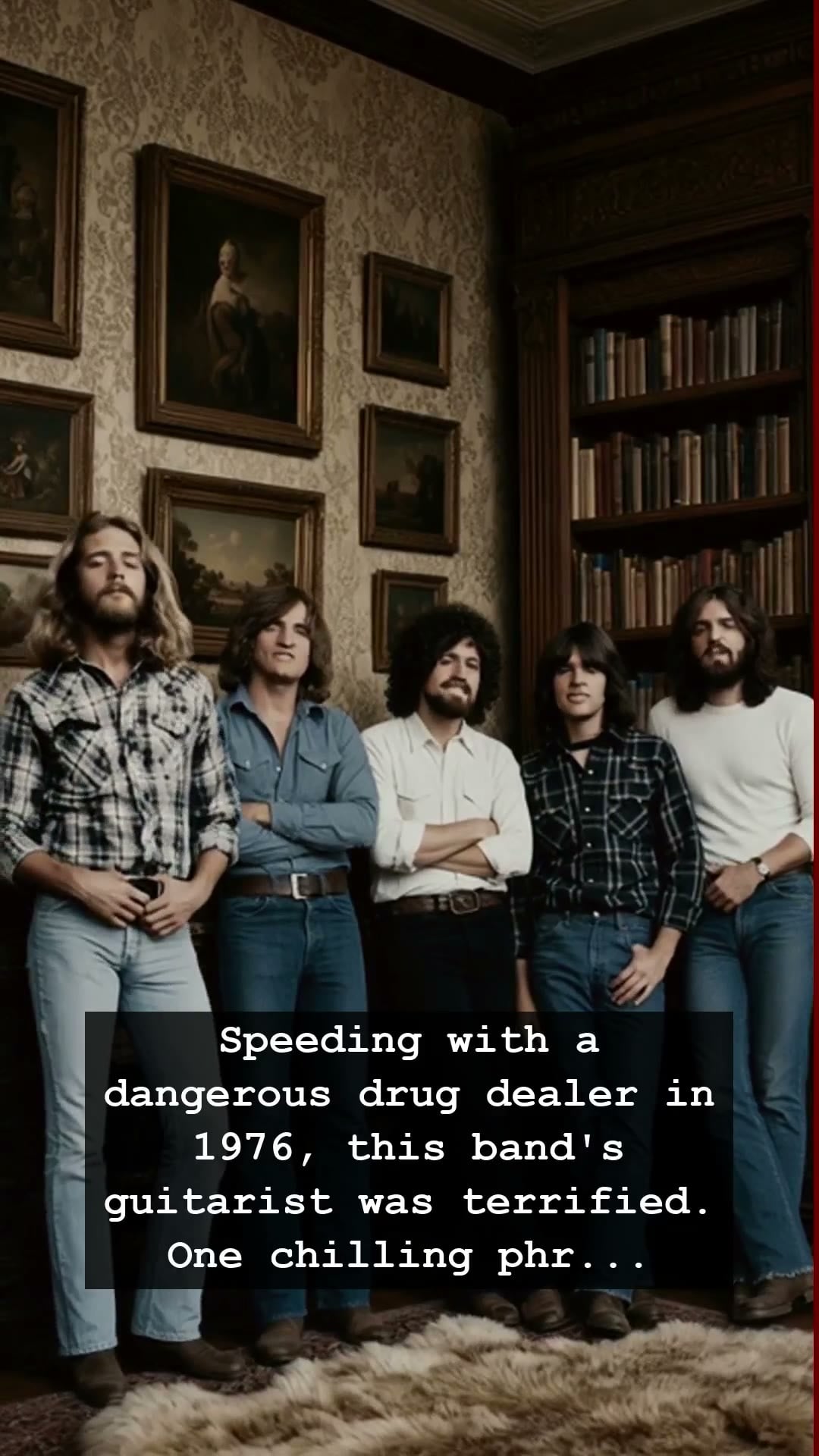
It was 1976, and the sun was setting on the glitzy, cocaine-fueled decade of the seventies. Somewhere on the desolate, winding highways of Los Angeles, Don Felder of the Eagles found himself in the passenger seat of a car that felt more like a death trap than a vehicle. Beside him, a notorious local drug dealer was driving at breakneck speeds, his eyes wild and his behavior unpredictable. As the tires screeched against the asphalt and the dark desert landscape blurred into an ominous shadow, Felder felt a cold shiver crawl down his spine. In a moment of pure, raw terror, he begged the man to slow down, fearing that this reckless ride might be his very last. Little did he know, that brush with mortality would soon ripple through the music industry and anchor itself into the fabric of rock history forever.
This high-speed nightmare was the crucible that forged one of the most mysterious anthems in American music: Hotel California. The Eagles were already titans of the Arena Rock era, but the exhaustion of fame and the murky excess of the L.A. music scene were beginning to take their toll. During that drive, the haunting imagery of a dark desert highway began to coalesce in Felder’s mind, a metaphor for the gilded cage of celebrity where one could check out anytime they liked, but could never truly leave. The song became more than just a melody; it became a cynical, shimmering eulogy for the excess that defined the era.
When the track finally hit the airwaves, it captured the collective anxiety of a generation. The 1970s were shifting from the optimistic communal vibes of Woodstock toward the isolation of the hedonistic nightlife epitomized by Studio 54. The Eagles managed to bottle that shift. The intricate, interlocking guitar solos between Felder and Joe Walsh became the sonic signature of the late seventies, heard on every transistor radio, car deck, and Walkman across the country. It was polished, professional, and deeply unsettling, masking its dark thematic roots behind the glossy production that defined the band’s peak.
Despite the massive success of Hotel California, the friction within the Eagles grew as dense as the smog over the Sunset Strip. The band members were living out the very decadence they sang about, trapped by the expectations of the record labels and the endless, grueling cycles of touring. The drama behind the scenes—the broken egos, the substance abuse, and the crumbling personal relationships—served as a stark reminder that the dream of California was often a gilded prison for those who rose to the top.
Decades later, the song remains a haunting relic of a bygone era. It transports listeners back to a time when rock stars were larger than life and the roads felt endless. Every time those iconic guitar chords echo out, we are reminded of the price of fame and that terrifying night when a simple, panicked plea turned into a legend. Tell us, when you hear the opening notes of Hotel California, where does it take you?