
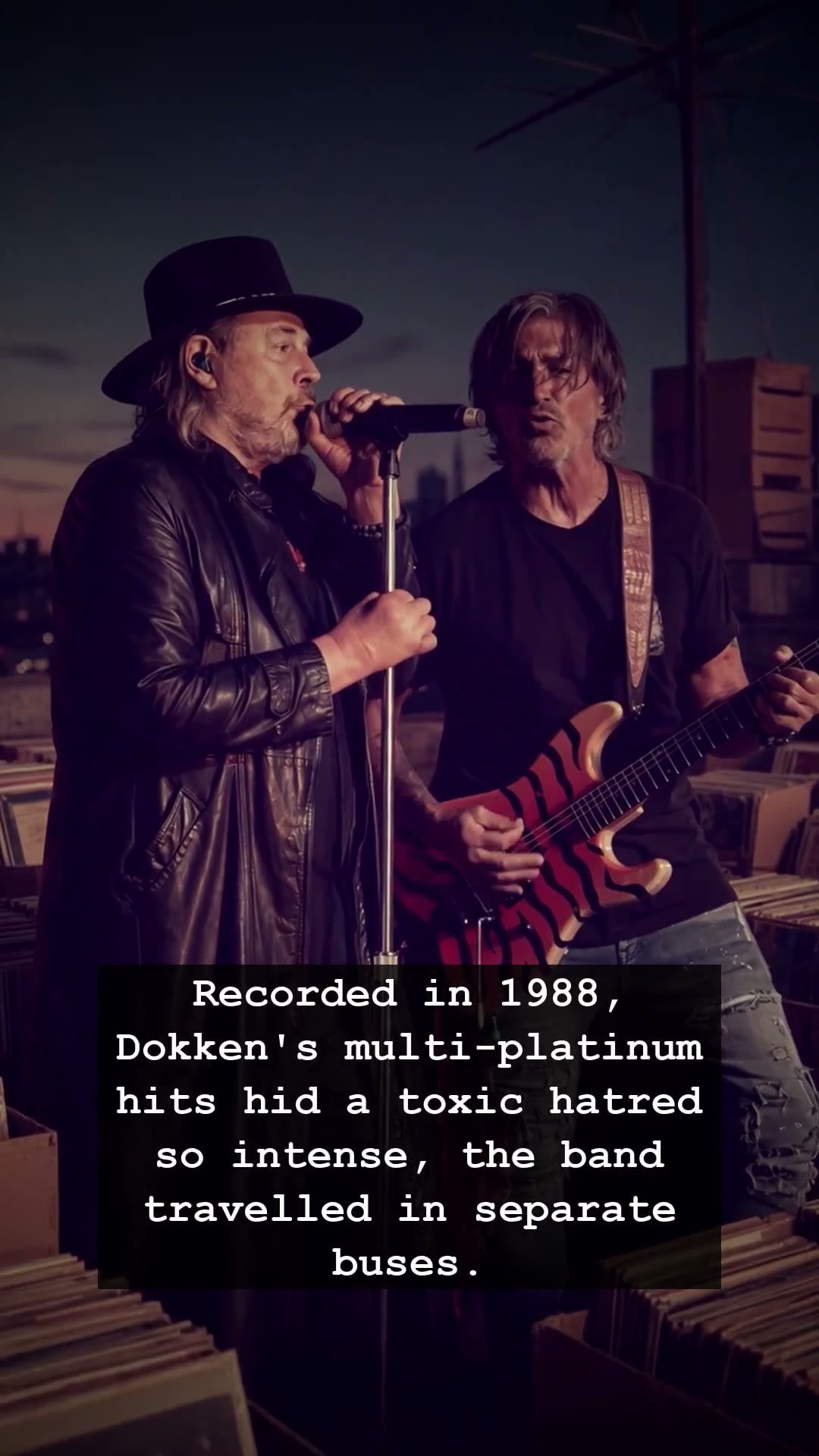
In 1988, heavy metal was the undisputed king of the cultural landscape. From the neon-soaked streets of Los Angeles to the hairspray-filled arenas of the Sunset Strip, the genre was a juggernaut. At the very center of this sonic explosion was Dokken, a band synonymous with melodic metal mastery and multi-platinum record sales. To the millions of fans who blasted their records on a Walkman or crowded into stadiums, Dokken seemed like the perfect assembly of virtuoso talent and effortless charisma. But behind the polished veneer of MTV stardom, the band was rotting from the inside out, fueled by a level of toxic hatred so intense that it turned their professional lives into a claustrophobic nightmare.
While the public saw the soaring vocals of Don Dokken and the blistering guitar wizardry of George Lynch, they were blind to the bitter reality unfolding backstage. By the late 1980s, the relationship between Don and George had devolved into a state of total, scorched-earth hostility. The creative tension that once sparked hits like In My Dreams had curdled into a genuine, visceral loathing. It reached a point where the band members could no longer bear to share the same air, let alone the same vehicle. For an entire tour, they travelled in separate buses, refusing to interact unless absolutely necessary for the performance. This was the dark, unglamorous truth of the glam metal era—a period where fame was often bought at the cost of one’s sanity.
The tragedy of Dokken lies in the sheer disconnect between their music and their internal combustion. How could two individuals, clearly operating at the pinnacle of their craft, reach such a profound state of resentment? It was an era defined by excess, ego, and the crushing pressure of label expectations, factors that turned simple artistic disagreements into life-altering feuds. The band was trapped in a cycle of constant friction, where even a recording session felt like a battlefield. Their story became a cautionary tale of the era, proving that even the most iconic harmonies are often built upon the foundation of fractured brotherhood.
Looking back from today, the Dokken saga resonates because it feels painfully human amidst the larger-than-life myth of 80s rock. It strips away the spandex and the hairspray to reveal the jagged edges of a fragile ego. Their music still echoes in the halls of classic rock radio, but for those who know the truth, each chord change carries the weight of those silent, lonely bus rides. It is a reminder that the loudest songs often come from the quietest, most agonizing silences between bandmates.
Today, as we look back at the golden age of hard rock, we celebrate the music, but we also acknowledge the toll it took on those who created it. The Dokken feud remains a legendary chapter in rock history, a chilling reminder that behind every anthem, there is a complex, often painful, human story waiting to be told. Whether you were there at the height of their success or discovering their legacy through modern streaming, it is impossible not to feel the raw, unfiltered friction of their prime. Music history is rarely pretty, but it is always fascinating to look back at how the legends survived the fire of their own making.