
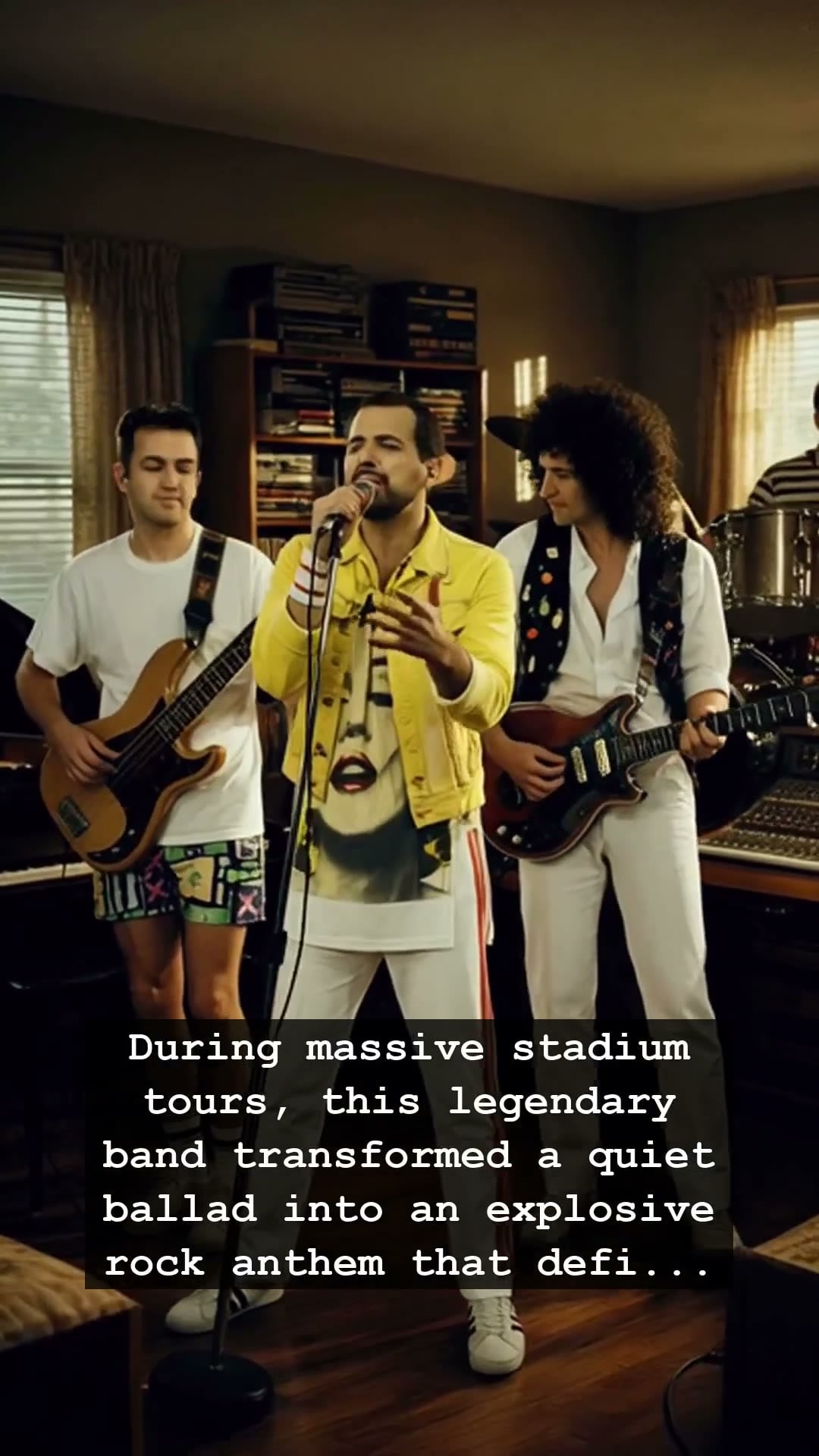
The roar of a packed stadium is a sound that defies time, a visceral vibration that settles deep in the bones of anyone who has ever felt the electricity of a live performance. In the mid-1980s, amidst the neon glare of the MTV era and the rise of massive arena spectacles, one band stood above the fray, transforming the very architecture of sound. Queen was not merely a musical group; they were architects of myth, and no moment better defined their dominance than when they took a quiet, unassuming ballad and weaponized it into a sonic force that could rattle the rafters of the globe’s largest venues.
Picture the scene: the stage lights dim, the air is thick with anticipation and the haze of a pre-digital concert world, and Freddie Mercury steps into a singular spotlight. This was a time when the Walkman was your constant companion and the Jukebox defined the social heartbeat of every corner bar. When Queen performed, they understood the geography of an arena. They knew that a song had to grow from a whisper to a thunderous roar to truly capture the collective spirit of thousands of people screaming in unison. It was this specific alchemy—the delicate blend of Freddie Mercury’s operatic intimacy and Brian May’s razor-sharp guitar riffs—that turned simple tracks into cultural monuments.
There was a certain audacity to how Queen operated. While their peers were often trapped in the stylistic boxes of the decade, Queen constantly blurred the lines. Whether it was the experimental flair of their earlier years or the sheer arena-filling power of their later anthems, they mastered the art of tension and release. They understood that the emotional weight of a ballad needed the sudden, crushing impact of heavy rock to resonate in a space as cavernous as a stadium. It was never just about the music; it was about the theater of it all, the way Freddie Mercury would hold the palm of his hand up to the audience, commanding them like a conductor of a chaotic, joyful army.
The backstory of these performances often reveals the grueling pressure behind the glamour of fame. Behind the glittering costumes and the massive production tours, there was the relentless pursuit of perfection. This was a band that pushed their studio equipment to the breaking point, layering tracks until they became orchestral masterpieces. Yet, it was on the road, amidst the sweat and the sheer intensity of the 1980s touring circuit, that these songs truly lived. They became the soundtracks to the lives of the Boomers and Gen Xers who filled those seats, a communal pulse that still beats today in the hearts of those who remember the sheer power of those nights.
Even now, decades after the curtains closed on their most legendary tours, the legacy of Queen remains untarnished by time. They taught us that music is not just something you hear; it is something you experience, a physical presence that lingers long after the final chord fades into the night. Their ballads, once quiet moments of reflection, became the catalysts for thousands to unite. When you listen to those classic tracks today, you are not just hearing a song; you are hearing the echo of a band that understood exactly how to turn a fragile human emotion into a thunderous, immortal rock anthem. Do you remember the moment the music took hold of you?