
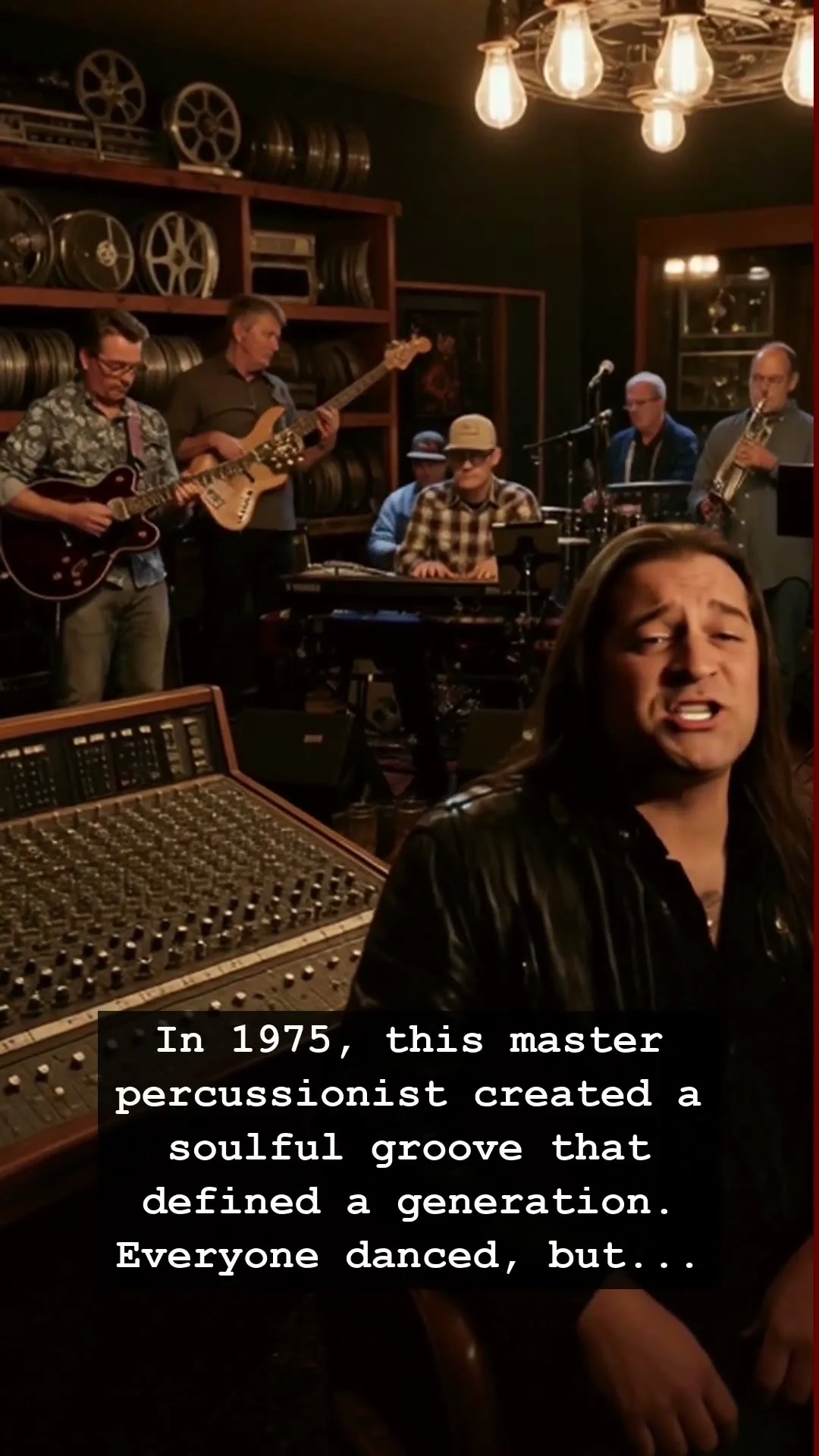
In 1975, the American airwaves were suddenly paralyzed by a rhythm so infectious, so undeniably soulful, that it felt less like a song and more like a heartbeat shared by an entire nation. While listeners across the country were busy losing themselves in the velvet textures of the era’s greatest hits, few realized that the rhythmic pulse driving the magic was being masterfully curated by a quiet giant named Ralph MacDonald. He was the percussionist who never sought the spotlight, yet his hands were responsible for the groove that defined a generation. It was an era defined by the shimmering lights of Studio 54 and the communal power of the Jukebox, yet the soul of the decade was hidden in the intricate, percussive layers that Ralph MacDonald wove into the very fabric of 70s music.
Born into a lineage of rhythm, Ralph MacDonald was not just a musician; he was an architect of sound. His career was a tapestry of legendary collaborations, acting as the secret weapon for icons like Bill Withers and Grover Washington Jr. When you hear the lush, sophisticated arrangements of that golden age, you are often hearing the subtle artistry of Ralph MacDonald. He understood that a song was not just melody and lyrics; it was a physical experience. His percussion work brought a warm, human pulse to tracks that might have otherwise felt sterile, bridging the gap between jazz precision and the raw emotion of soul music.
Behind the scenes, the life of a session musician of his caliber was far from a quiet walk in the park. It was a high-stakes world of long nights in smoke-filled studios, where perfection was the only acceptable standard. Ralph MacDonald operated in this pressure-cooker environment, maintaining his composure while crafting beats that would eventually serve as the foundation for what we now consider the soundtrack of the 70s. While others chased the fleeting fame of the glam rock era, MacDonald remained committed to the integrity of the groove, proving that true artistry lies in the ability to make millions dance without ever needing to say a word.
Even as music transitioned from the organic warmth of the mid-70s into the synthetic, neon-drenched dominance of the early 80s, the influence of Ralph MacDonald remained evergreen. His contributions helped define the transition from soul to the early days of disco, providing a rhythmic bedrock that allowed artists to experiment with new textures. When you look back at that time, through the lens of a scratched vinyl record or the hazy memory of a transistor radio, his influence is inescapable. He was the man behind the curtain, ensuring that every beat was steeped in genuine emotion.
Today, we look back at the work of Ralph MacDonald as a masterclass in subtlety and soul. In an age where digital production often loses the human touch, his legacy serves as a reminder that the best music comes from the heart. As we listen to those timeless tracks, let us celebrate the unsung heroes like Ralph MacDonald, whose rhythmic genius continues to make the world sway, forty years and counting.