
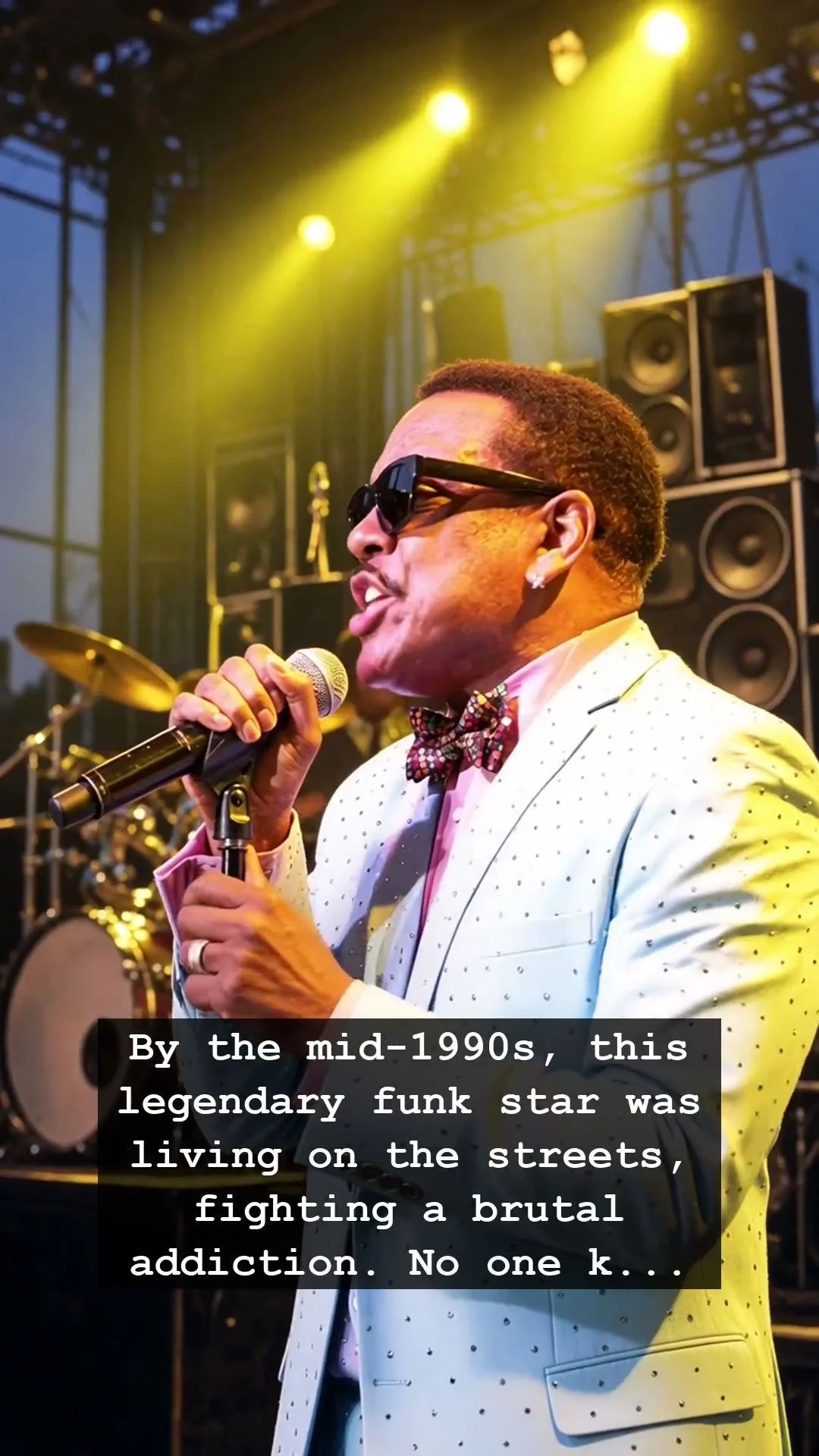
In the mid-1990s, the golden era of funk seemed like a distant, hazy memory. The vibrant sounds that once echoed through the neon-drenched halls of Studio 54 had been replaced by the gritty, evolving landscape of modern hip-hop and grunge. Yet, hidden in the shadows of the Hollywood streets, a man once revered as the lead voice of the Gap Band, Charlie Wilson, was fighting a silent, brutal war against addiction. Homeless and stripped of his former glory, his velvet voice was silenced by the harsh reality of dependency. Most of the music industry had written him off, assuming he was destined to be another tragic footnote in the volatile annals of 1970s soul music history.
To understand the magnitude of his fall, one must remember the heights Charlie Wilson had reached. As the face of the Gap Band, he was a pillar of the funk movement that defined the late seventies and eighties. Hits like You Dropped a Bomb on Me dominated the charts and fueled the spirit of a generation. But behind the glitz of the stage lights and the pulsing basslines lay a vulnerability that eventually shattered under the pressure of fame. By the nineties, while the world moved on to the birth of the MTV era and new musical trends, Charlie Wilson was literally living on the pavement, lost in a haze that threatened to swallow his talent forever.
However, the story of Charlie Wilson is not one of a permanent ending, but of a transcendent, near-impossible return. After finding the strength to enter rehabilitation, he did something few aging legends achieve; he reinvented himself for a new century. He refused to let his legacy fade into obscurity. Instead of clinging to the past, he began to collaborate with a younger generation of hip-hop icons like Snoop Dogg and Kanye West. He became the soulful bridge between the classic funk of the seventies and the contemporary soundscapes of modern urban music, proving that raw, authentic talent possesses a shelf life that transcends mere decades.
What makes the rise of Charlie Wilson so resonant today is the undeniable humanity behind the music. It is a testament to the resilience of the human spirit. Seeing him reclaim his throne, not through nostalgia alone but through genuine artistic evolution, serves as an inspiration to anyone who has ever felt forgotten. He transformed his trauma into a new form of wisdom that bleeds through every note he sings. He is no longer just the man behind the funk hits; he is a survivor who reclaimed his soul from the very depths of despair.
Today, as we look back on the evolution of American music, the trajectory of Charlie Wilson stands as a beacon of hope. His voice, once dampened by the streets, now carries the weight of a life fully lived. Whether you remember him from the classic radio days or discovered him through his modern collaborations, his journey reminds us that true greatness never really dies; it simply waits for the right time to roar back to life. As the final notes of his classic tracks echo on, let us celebrate the man who walked through fire to find his voice again.