
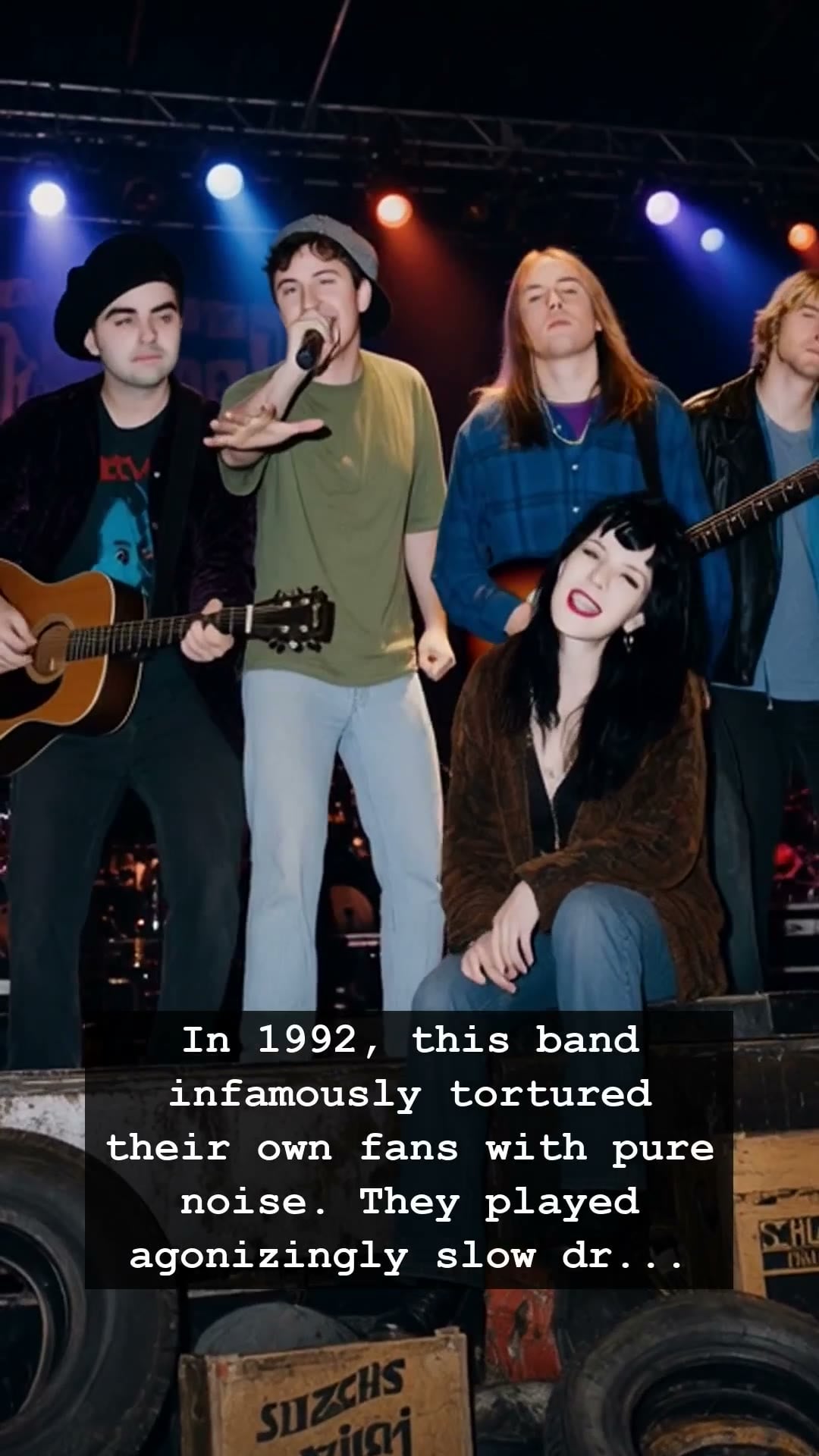
It was 1992, a pivotal year where the grit of the underground collided with the glossy aspirations of MTV. While the world was reeling from the explosion of grunge, a band from Washington state was busy orchestrating one of the most provocative experiments in live music history. The Melvins, those legendary architects of sludge metal, decided that being a touring act meant more than just playing hits. They chose to transform their live sets into a psychological gauntlet, famously torturing unsuspecting concertgoers with agonizingly slow, unreleased drone noise that pushed the limits of human patience. It was a chaotic, beautiful act of rebellion that left a trail of mass walkouts across the country.
To understand the madness of The Melvins, one has to revisit the landscape of the early nineties. This was a time when the Jukebox was being replaced by the CD player, and the raw, unrefined energy of the underground was struggling to survive the commodification of the mainstream. Buzz Osborne, the driving force behind The Melvins, never cared for the rules of the industry. Instead of offering a polished setlist, they stood on stage like monoliths, dragging out notes until they bled into feedback, purposely alienating fans who had come expecting a conventional rock show. It was a middle finger to the industry that was desperately trying to sign every band with a flannel shirt.
Those who stayed at The Melvins shows during that infamous 1992 run were treated to an auditory assault that defined the essence of sludge metal. This wasn’t about melodic hooks or radio-friendly choruses; it was about the crushing weight of sound. Each chord felt like a tectonic plate shifting deep beneath the stage, vibrating through the floorboards of dingy clubs. For the uninitiated, it was an endurance test, a test of will that separated the casual listeners from the true believers. It was this refusal to compromise that made The Melvins the godfathers of a genre that valued sonic texture over commercial accessibility.
Looking back, these walkouts were not a failure but a badge of honor. In an era before the instant gratification of social media, The Melvins proved that an artist’s greatest power lies in their ability to dictate the terms of engagement. They understood that the tension created by those long, agonizing pauses was just as important as the noise itself. They weren’t just playing music; they were curating an atmosphere of unease that lingered long after the house lights flickered back on. It was a dark, brilliant performance piece that highlighted the stark divide between those who sought comfort in melody and those who found liberation in the abyss of noise.
Today, the legacy of The Melvins remains a cornerstone of heavy music history. Their 1992 antics remind us of a time when the stage was a sanctuary for the uncompromising. While the industry has changed, the spirit of those sludge-drenched, drone-heavy nights still resonates. If you ever find yourself craving music that challenges the soul rather than soothing it, listen to The Melvins and remember the nights when they turned a concert into a legendary act of defiance.