
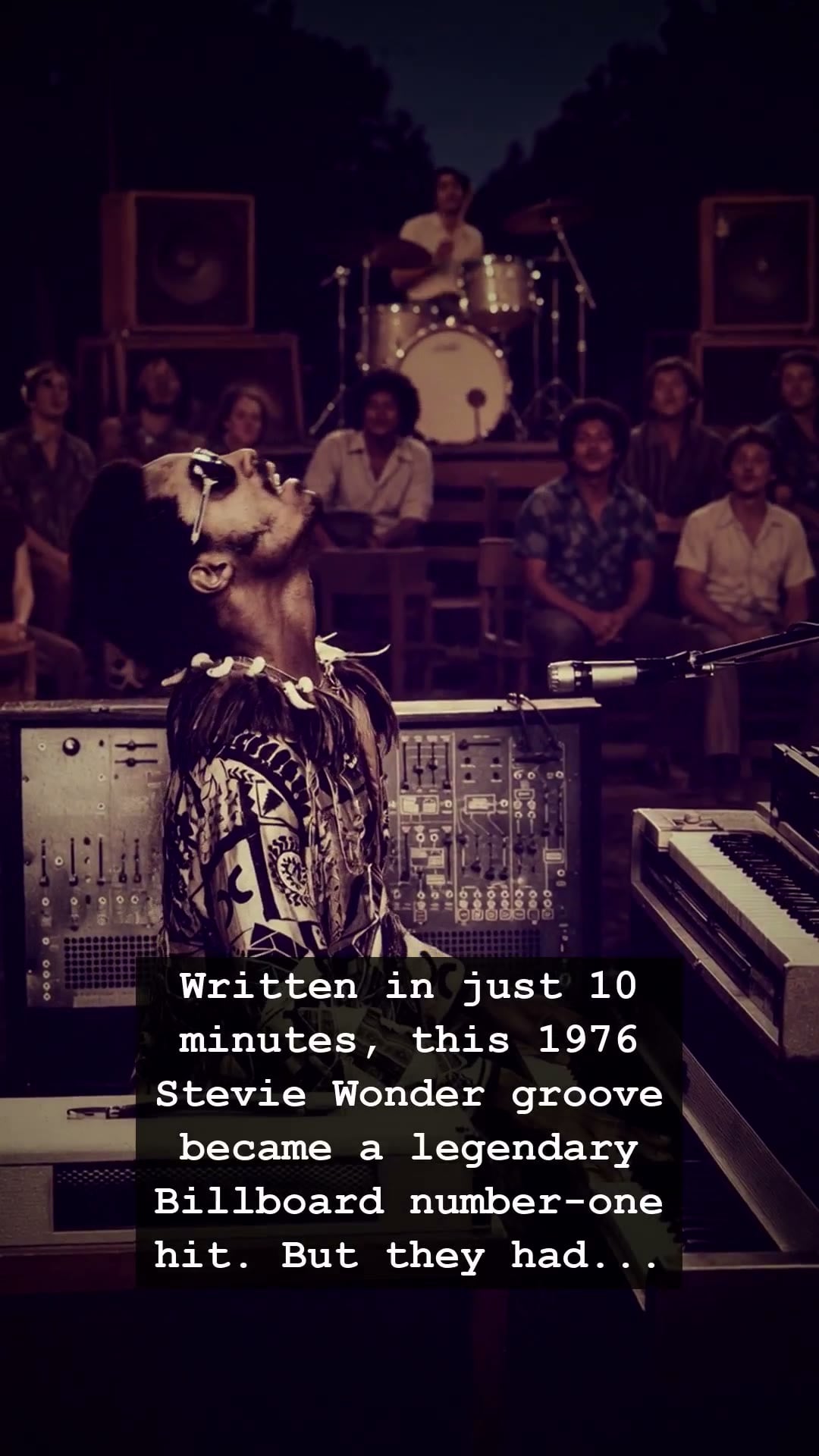
In the golden era of the 1970s, when the airwaves were saturated with the infectious energy of disco and the evolving soul of Motown, one genius stood apart. Imagine the scene: a dimly lit studio, the rhythmic hum of analog equipment, and the creative tension that birthed some of the most influential music in history. It was 1976, and Stevie Wonder was at the absolute peak of his creative powers. While the world was busy dancing under the flickering lights of clubs and recording tracks on their bulky cassette players, Stevie Wonder was busy crafting a sonic tribute that would become an immortal anthem. The song is Sir Duke, a masterclass in brass arrangement and pure, unadulterated joy that hit number one on the Billboard charts. But what many casual listeners missed was that the song was never just a dance floor filler; it was a profound, heartfelt letter to the legends who paved the road for his own ascent.
The most shocking revelation about this iconic track is the lightning speed of its inception. Stevie Wonder reportedly hammered out the foundational groove in a mere ten minutes. It was a spontaneous eruption of creative genius, a jam session that captured lightning in a bottle. During this high-stakes era, where studio perfectionism often led to grueling sessions, the ease with which Stevie Wonder composed this hit feels almost supernatural. He wasn’t just writing notes; he was channeling the spirit of the jazz pioneers who had come before him, capturing their essence in a way that felt both modern and deeply reverent to the history of black music.
By name-checking luminaries like Duke Ellington, Count Basie, Louis Armstrong, and Ella Fitzgerald, Stevie Wonder bridged the generational divide. For a generation of listeners raised on the radio hits of the mid-70s, these names might have sounded like relics from the big band era. Yet, through his signature keyboard wizardry and that unmistakable brass hook, he made the history of jazz feel vibrant and necessary. This was more than a tribute; it was an education delivered through the pulse of a pop song. It reminded the listeners of the era that their current musical heroes were standing on the shoulders of giants.
Beyond the studio, this song became a cultural phenomenon, a staple of every jukebox across the country. It echoed through suburban basements and crowded arenas, proving that complexity and accessibility could coexist. Behind the joyous horns and the tight, complex rhythm, there lies a story of deep musical respect. It is a testament to the fact that even in an industry fueled by fleeting fame and high-pressure expectations, true artists never forget their roots. The brilliance of Stevie Wonder lies in this duality—he was a revolutionary pushing the boundaries of technology and sound, yet he remained an anchor for the musical traditions that defined the century.
Decades later, the legacy of this 10-minute miracle persists. When we listen to the vibrant, brass-heavy opening of the track today, we are transported back to a time when music felt like a collective, living experience. It reminds us that behind every number-one hit is a human story, a moment of spontaneous inspiration, and a bridge connecting the past to the future. Next time you hear those iconic horns, remember that you are hearing the soul of a genius paying his respects to the legends who started it all.