
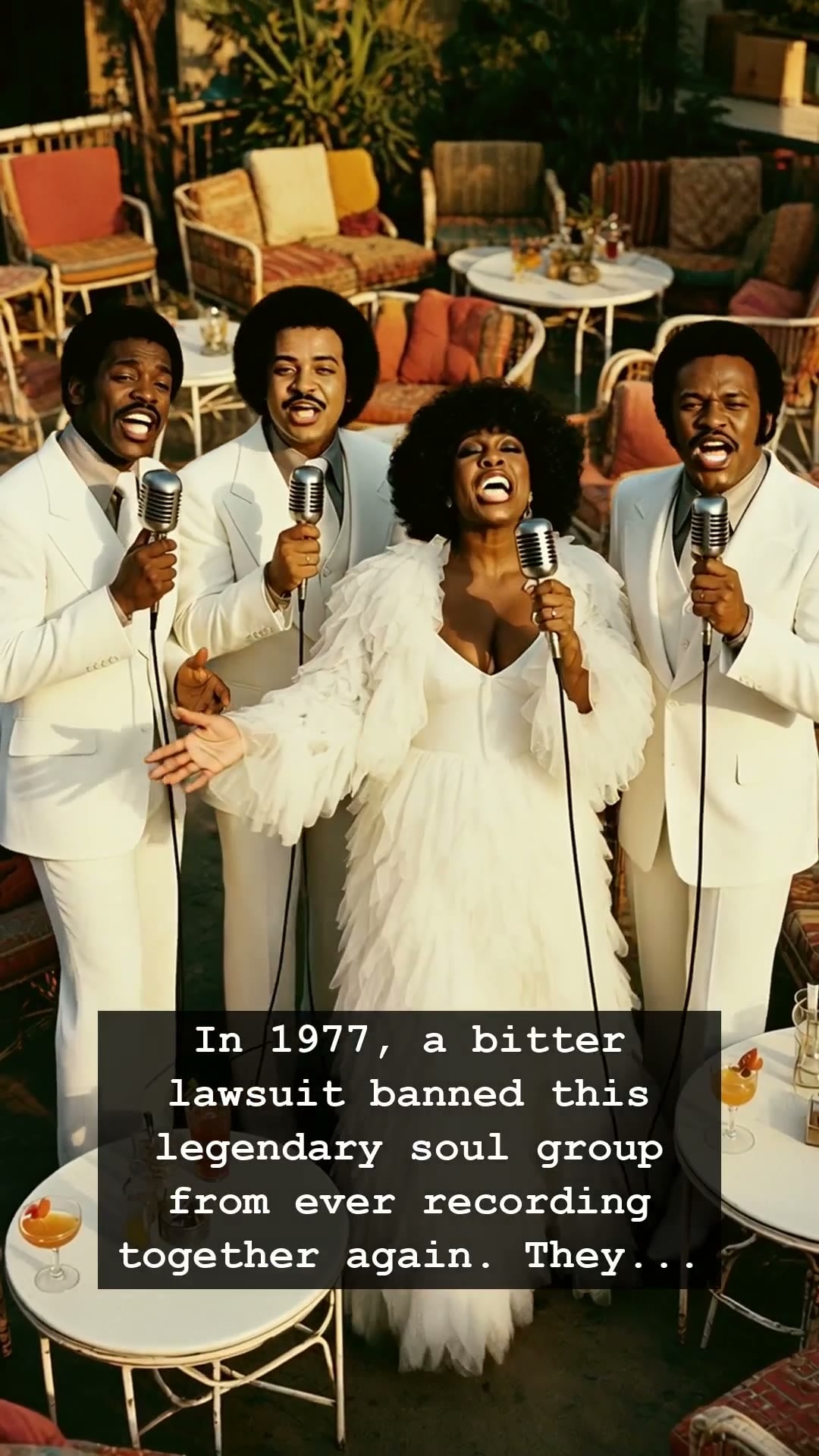
In the golden era of Motown and soul, few voices possessed the magnetic, velvet power of Gladys Knight. Together with the Pips—her brother Merald and cousins Edward and William—they defined a sound that bridged the gap between gospel intensity and pop sophistication. But behind the shimmering sequins and the polished choreography of their television appearances, a storm was brewing. By 1977, the group that had graced the airwaves for over two decades found themselves trapped in a legal nightmare so devastating it effectively halted their collective magic, forcing them to record in isolation while keeping a heartbreaking secret from the fans who idolized them.
At the height of their success, the industry was a cutthroat landscape of contracts and litigation. A massive, bitter million-dollar lawsuit erupted, pulling the group into a web of legal red tape. The court’s verdict was cold and unforgiving: Gladys Knight and the Pips were legally prohibited from recording music together in the studio. Imagine the silence in the recording booth for a family that had spent their entire lives harmonizing in perfect synchronicity. They were a singular unit, a family act that relied on the rhythmic dance of the Pips to complement Gladys’s powerhouse vocals. Suddenly, they were fragmented, forced to operate as separate entities in an era where the public expected nothing less than total unity.
While the disco fever of Studio 54 was taking over the charts and the world was changing with the rise of the personal Walkman, this iconic soul act had to navigate a professional purgatory. They kept the truth shielded from the media and their loyal fanbase, terrified that the revelation of their forced separation would shatter the image of the invincible family band. It was a time of immense pressure, where the glitz of the stage hid the crushing weight of legal fees and the agonizing longing to be back in the studio as a quartet. They were performers who lived for the stage, yet they were being denied the right to their own artistic voice.
This chapter of their history serves as a stark reminder of the dark side of fame. Even for legends like Gladys Knight and the Pips, the music business was never just about melody and rhythm; it was a battlefield of rights and ownership. The heartbreak of that period is still palpable today when you listen to their classic hits. It adds a layer of depth to their music, transforming them from mere hitmakers into survivors who weathered the storm of an industry that often chewed up its brightest stars.
As we look back at the late seventies, we remember not just the iconic songs, but the resilience of human connection. The story of Gladys Knight and the Pips is a testament to the fact that while contracts can be broken and studios can be locked, true soul can never be truly silenced. Do you still remember the song that first introduced you to their legendary sound?