
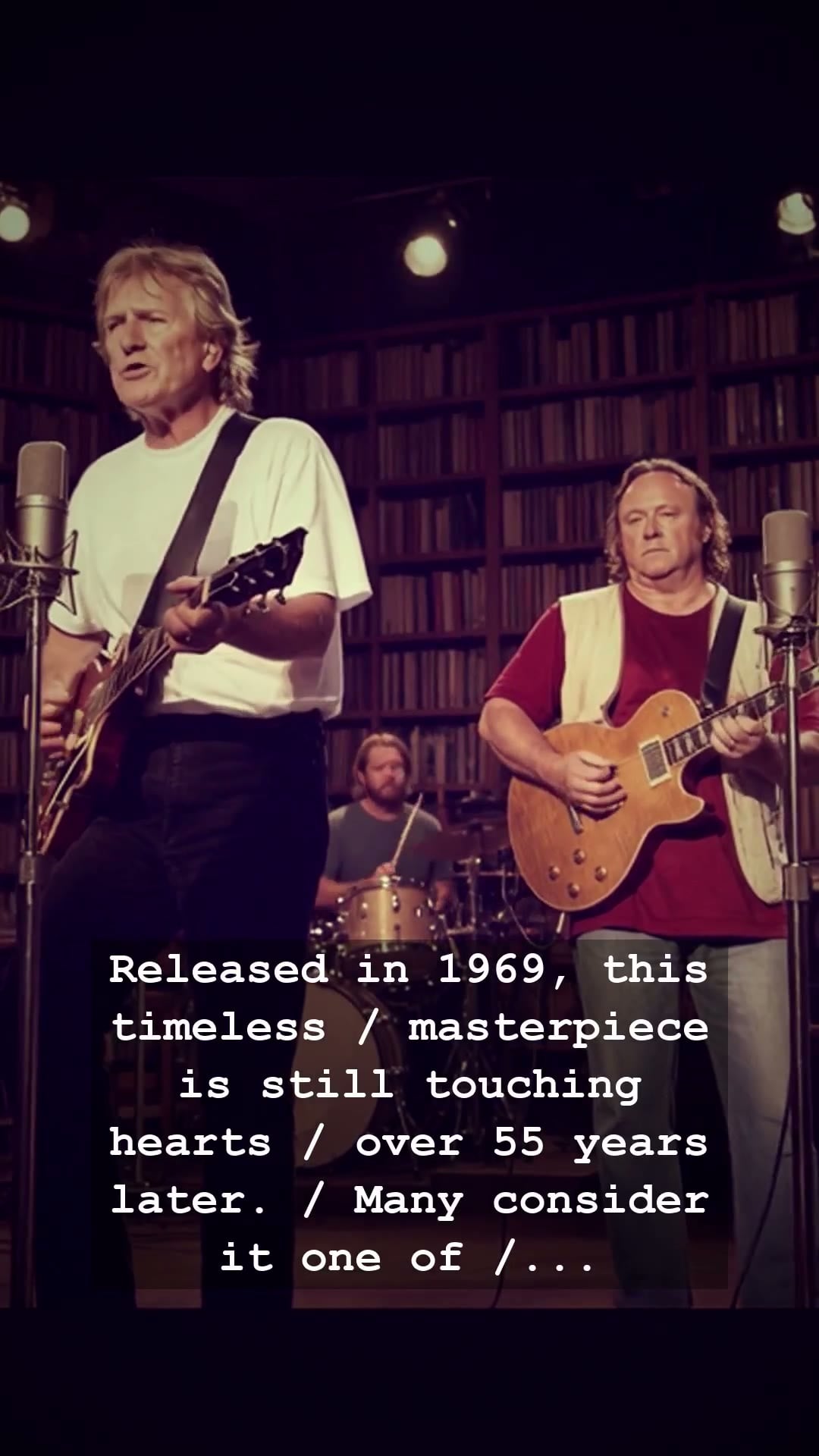
In the sweltering heat of the late sixties, the air was thick with the scent of rebellion and the hazy promise of a changing world. It was 1969, a year that would forever anchor itself in history through the lens of Woodstock and the birth of a new American sound. Amidst this cultural upheaval, one group stood apart, not for their volume or their pyrotechnics, but for the uncanny, almost supernatural precision of their voices. Crosby Stills and Nash arrived like a breath of fresh, melodic air, stripping away the excesses of the era to reveal something deeply human. Their self-titled debut was a masterpiece, but it was their live presence that truly cemented their legacy in the annals of rock and roll.
Picture a dimly lit stage, the hum of analog amplifiers, and the palpable tension of a room waiting to be transformed. When Crosby Stills and Nash stepped into the light, they brought with them a synergy that seemed plucked from the ether. Their harmonies were not just musical arrangements; they were a singular, living organism. Critics often speak of that specific 1969 magic—the way their acoustic guitars cut through the noise, providing a raw and precise backdrop for the intricate vocal layering that defined their signature sound. It was the era of the jukebox and the communal record player, a time when a song didn’t just play in the background; it demanded your absolute, undivided attention.
Behind the seamless melodies, however, lay the simmering intensity of three distinct, often clashing personalities. David Crosby, Stephen Stills, and Graham Nash were a volatile cocktail of ambition, ego, and creative genius. Their journey was rarely a smooth road, marked by the classic rock and roll pitfalls of internal power struggles and the psychological weight of overnight superstardom. Yet, it was precisely this friction that lent their music its soul. The vulnerability found in their performances during those early, formative months serves as a testament to what happens when disparate geniuses find a fleeting, perfect moment of alignment. They were the architects of a sound that transcended the simple tropes of the folk scene, bridging the gap toward something much more complex and enduring.
Fans who still return to these recordings fifty-five years later often describe a haunting sensation, as if the ghosts of the sixties are speaking directly to them through the speakers. There is a particular acoustic guitar solo from that era that remains a touchstone for musicians today—a delicate, evocative sequence that changed the trajectory of acoustic performance. It wasn’t about speed or flair; it was about the intention behind every vibration of the steel string. It remains a flawless example of how high the bar was set before the excess of the glam metal eighties ever began to dominate the airwaves.
As we look back, it is clear that Crosby Stills and Nash were more than just a musical group; they were the soundtrack to a generation’s search for meaning. Their ability to capture the melancholy of the era while maintaining a hopeful resonance is why their music continues to thrive in our modern, hyper-digital landscape. When you listen to those pristine harmonies today, you are listening to a lost world, one where the human voice was the most powerful instrument available. It is a timeless experience that never loses its luster. Perhaps it is time you put on the record, close your eyes, and let that legendary 1969 sound wash over you once again.