
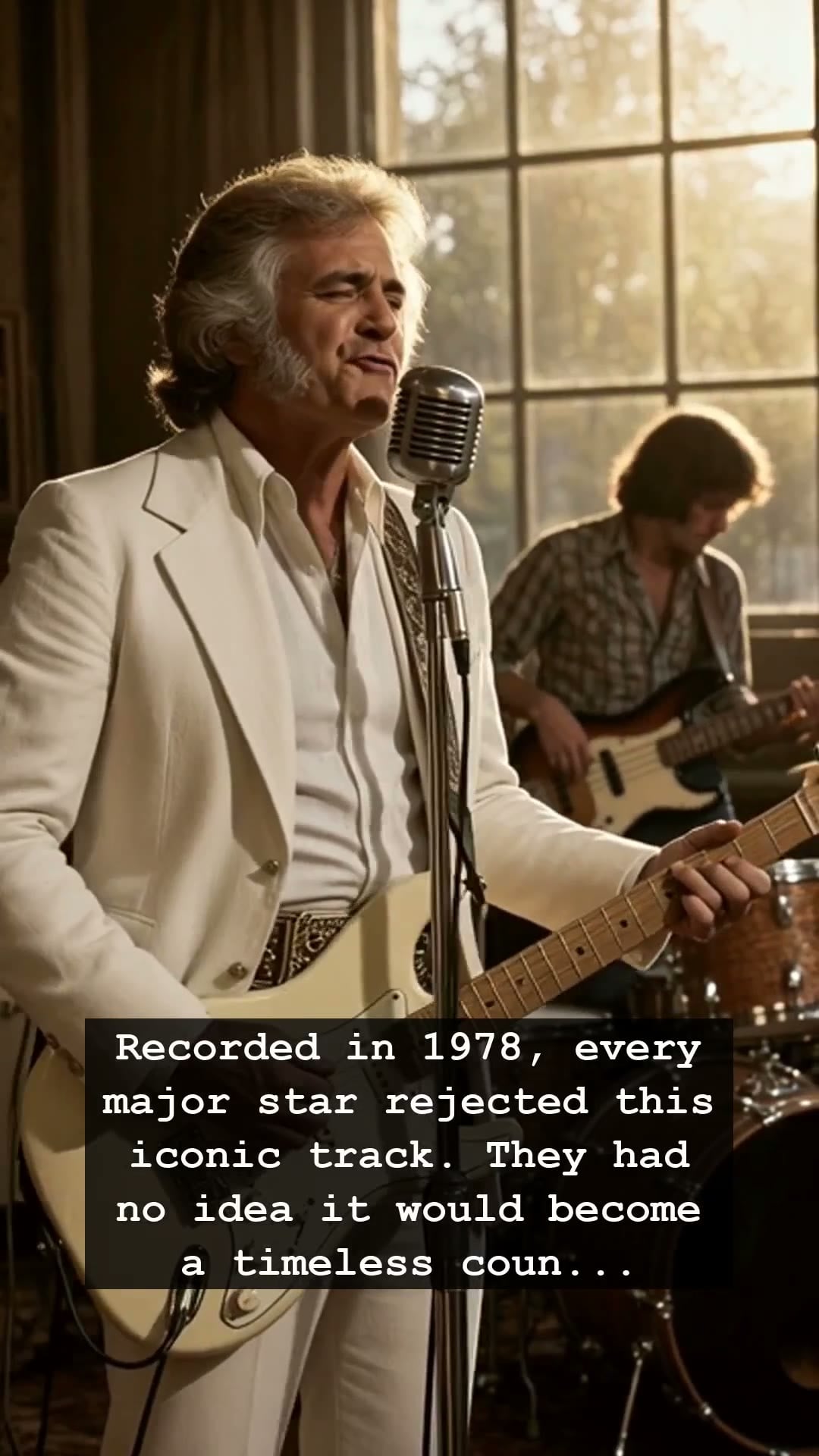
The year was 1978. While the airwaves were crowded with the shimmer of disco and the pulsing synths of a changing musical landscape, a quiet storm was brewing in the heart of Nashville. A songwriter named Don Schlitz had penned a narrative ballad about a weary card player on a train, a song that would eventually define a career and a generation. But back then, it was just a piece of paper that nobody wanted. Every major country star in the business heard the demo, and every single one of them passed. It was too long, too risky, and perhaps a bit too cynical for the radio giants of the era. They had no idea they were looking at a timeless goldmine.
Then came Kenny Rogers. With his signature raspy baritone and a flair for the dramatic, Kenny Rogers saw something in the lyrics that the others couldn’t grasp. He didn’t just hear a song; he heard a cinematic story waiting to be told. The studio session was a gamble in every sense of the word. At a time when the industry was chasing the safe, upbeat rhythms of the late seventies, Kenny Rogers decided to double down on a dark, gambling metaphor that demanded the listener’s absolute attention. He wasn’t just singing; he was acting out a scene from a dusty train car in the middle of the night.
When the track was finally released, the impact was immediate. The Gambler didn’t just top the country charts; it crossed over, infiltrating the living rooms of millions via the Jukebox and the burgeoning cultural force of television. It was the era of the Walkman and the slow transition into the neon-soaked excess of the eighties, yet this song anchored listeners back to the raw power of storytelling. Kenny Rogers managed to capture that fleeting moment where folk tradition met modern arena appeal. He took a rejected script and turned it into the definitive anthem of his life, proving that the best risks are often the ones you take alone.
Beyond the melody, the song became a cultural touchstone. It sparked a series of iconic television films, cemented the legend of Kenny Rogers, and forced the entire country music genre to reconsider the value of a well-told story. Beneath the glossy production of the late seventies, the authenticity of this track cut through like a knife. It was a testament to the fact that while trends in music may shift from Psychedelic Rock to the polished sheen of the eighties, a genuine narrative will always find a home in the soul of the public.
Today, when we hear those opening bars, we are transported back to a time of jukeboxes and flickering neon. Kenny Rogers left us with a legacy that goes far beyond the charts. He taught us that even when the world tells you to fold, if you have the vision to hold onto your conviction, you might just deal yourself a winning hand. Do you remember where you were the first time you heard the dealer drop his cards?