
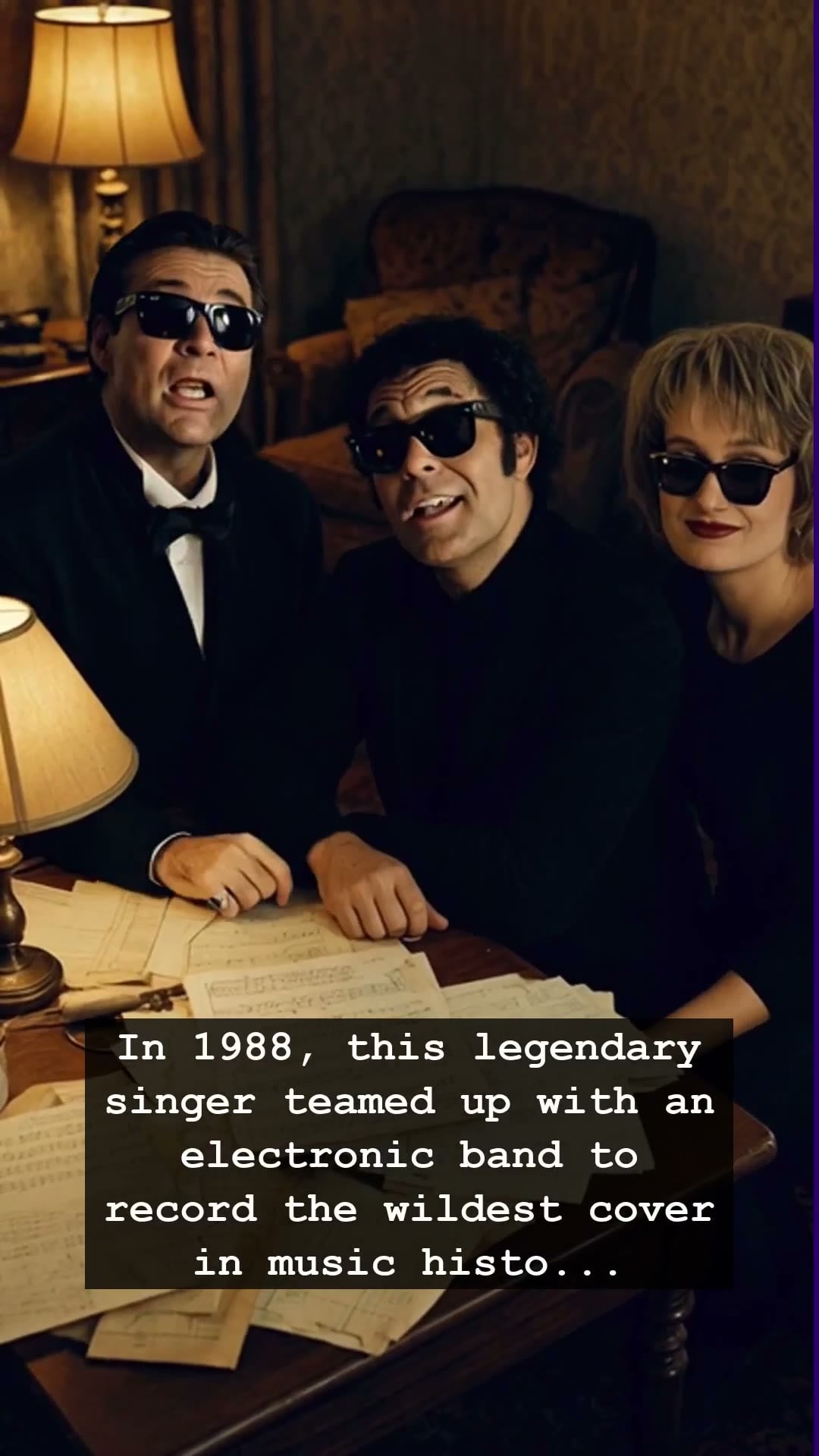
It was 1988, an era defined by the neon glow of MTV and the relentless pulse of synthesizers. For Tom Jones, the legendary Welsh crooner known for his soulful belting and velvet suits, the world felt like it was moving on. He had spent decades being the heartthrob of the jukebox generation, but by the late eighties, the industry viewed him as a relic of a bygone time. The music landscape was shifting toward cold, digital perfection, and many industry insiders were whispering that the career of Tom Jones had reached its final curtain call. They were wrong.
In a move that shocked the music world, Tom Jones decided to collaborate with The Art of Noise, an experimental synth-pop group known for their avant-garde soundscapes and studio wizardry. When the news broke that the king of Vegas schmaltz was recording a cover of Prince’s Kiss with these electronic innovators, critics immediately labeled it an act of professional suicide. The clash between his raw, earthy baritone and their mechanical, industrial beats seemed like a recipe for disaster. But when the track finally hit the airwaves, something electric happened. It was not just a song; it was a cultural collision that defied all expectations.
The recording process was a high-stakes gamble in the studio, a place where tradition met the technological unknown. The Art of Noise stripped away the orchestral fluff usually surrounding Tom Jones, leaving nothing but his powerful, gritty vocal delivery against a jagged, funky beat. This was the moment the Walkman generation finally understood the power of the man. The track did not just breathe new life into the charts; it completely dismantled the notion that a legendary singer could not reinvent himself for a younger, MTV-obsessed audience. It proved that true soul could survive even the most artificial of synthesizer layers.
This unlikely collaboration transformed Tom Jones into a global pop giant overnight, bridging the gap between the mid-century lounge era and the dawn of modern electronic music. It was a bridge built on risk and the refusal to fade into the background. For those who remember the sound of that era, the track remains a testament to the fact that talent, when paired with the right degree of madness, can overcome any narrative of decline. The drama of the collaboration, the biting skepticism of the critics, and the eventual triumph turned this single moment into a piece of music history that still resonates today.
Today, we look back at the late eighties as a time of excess and radical reinvention, and this pairing stands as its most fascinating chapter. It reminds us that no matter how much time passes, a voice like that of Tom Jones is never truly silent. Whether you heard it on a fuzzy cassette tape or through your first CD player, that sound remains an indelible part of the soundtrack of our lives. Sometimes, the most unexpected detours are the ones that lead us right back to the top of the mountain.