
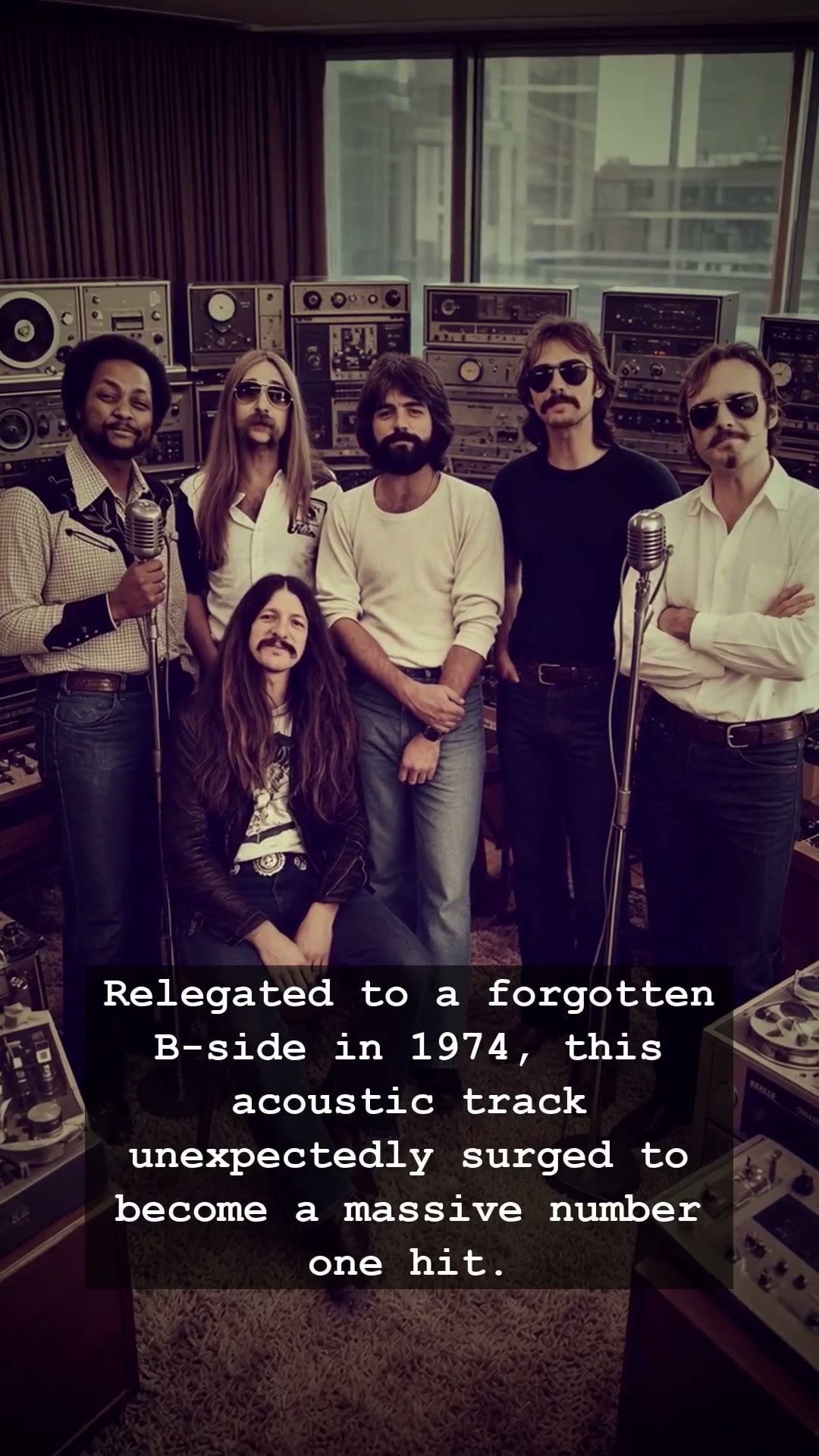
In the golden era of the mid-1970s, the music industry was a relentless machine fueled by cocaine, stadium tours, and the constant scramble for the next chart-topping hit. Most songs were groomed for radio success, meticulously polished in high-end recording studios, and backed by heavy marketing budgets. Yet, sometimes, the music industry is humbled by the raw, unpredictable power of the listener. This was exactly the case for The Doobie Brothers, a band that found their greatest triumph not in a carefully calculated lead single, but in a humble, acoustic B-side track that was almost destined for the dustbin of history.
The year was 1974, and The Doobie Brothers were riding high, yet searching for their next definitive sound. When they recorded Black Water, there was little expectation that this track would be anything more than a pleasant album filler. It was tucked away on the B-side of the Another Park, Another Sunday single, essentially relegated to the shadows of the vinyl. In an era where the Jukebox was king and radio programmers held the keys to fame, being relegated to a B-side was usually a death sentence for a track’s commercial viability.
But the magic happened in the humid, soulful heat of the American South. Local radio stations in places like Roanoke and New Orleans began spinning the track relentlessly. They saw something in the breezy, acoustic-driven harmony that the suits in Los Angeles had completely missed. Listeners couldn’t get enough of its swampy, feel-good rhythm. The grassroots demand grew so loud that the label had no choice but to push Black Water as an A-side. It surged up the charts, eventually claiming the number one spot on the Billboard Hot 100, forever cementing The Doobie Brothers as legends of the classic rock canon.
This unexpected ascent serves as a fascinating lens into the landscape of the 1970s music scene. It was a time when the sonic transition from the gritty rock of the late 60s to the polished, soft-rock sheen of the mid-70s was in full swing. The Doobie Brothers were caught in this beautiful pivot, blending the grit of their biker-bar roots with a newfound, sophisticated melodic sensibility. Black Water didn’t just transform the band’s trajectory; it became a defining anthem of the decade, capturing the carefree, hazy spirit of a generation before the rise of MTV and the rigid formatting of modern radio.
Looking back, the success of The Doobie Brothers with this hit is a reminder of the raw authenticity that defined that era. In a world before internet algorithms dictated our playlists, it was the raw, genuine connection between the listener and the music that turned a discarded track into a cultural touchstone. Today, when that iconic fiddle solo kicks in, it transports us back to a time when music felt unscripted and vital. It is a testament to the fact that sometimes, the best stories—and the best songs—are the ones that the world decides to save from being forgotten.