
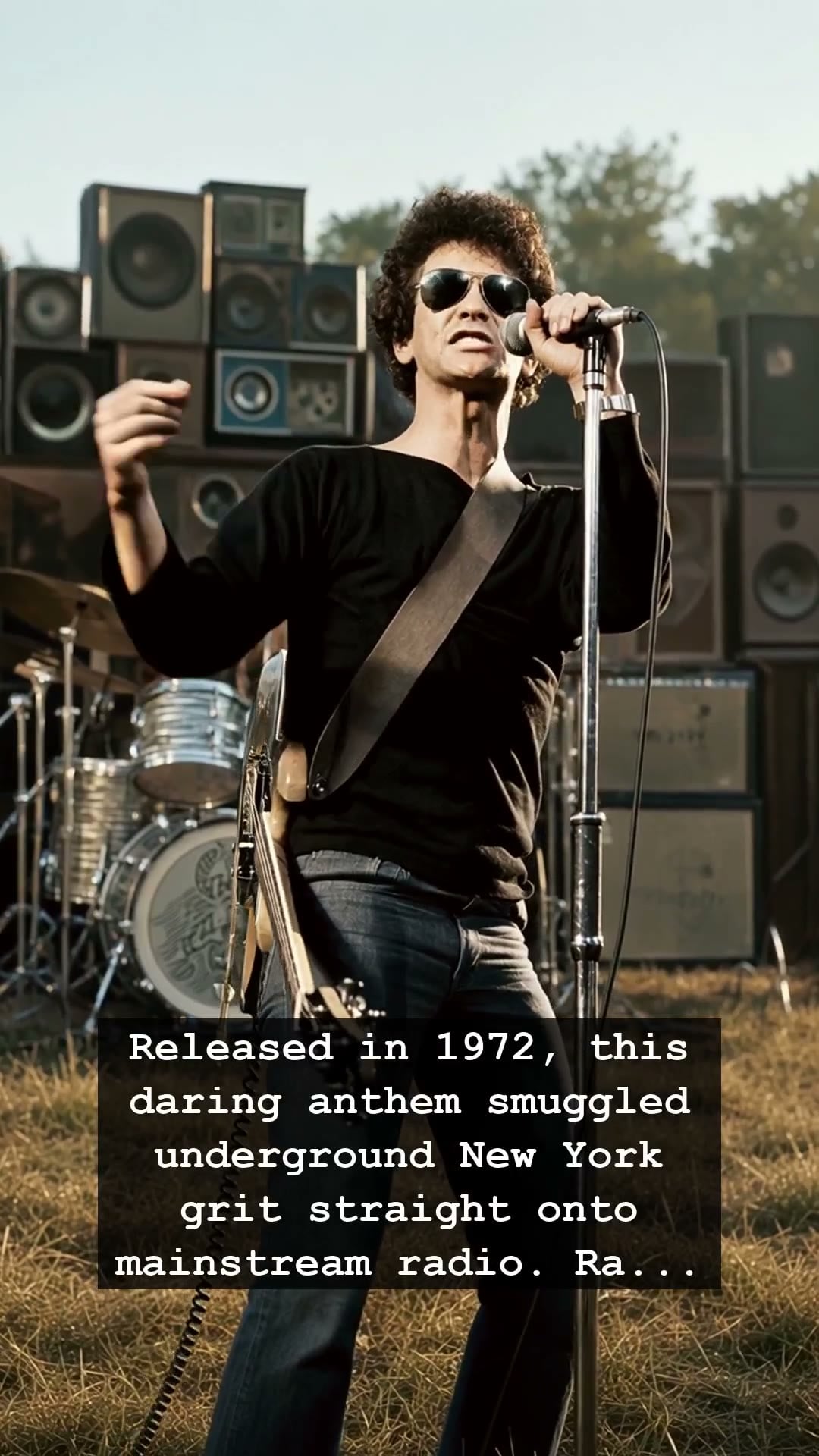
In 1972, the airwaves were dominated by the polished melodies of soft rock and the upbeat rhythms of bubblegum pop. Into this pristine landscape, Lou Reed dropped a grenade wrapped in a deceptively simple bassline. While radio censors were busy looking for overtly offensive lyrics, they completely missed the dark, gritty reality being smuggled into living rooms across America. Walk on the Wild Side became an anthem, but it was far more than just a catchy hit; it was a Trojan horse that brought the raw, unfiltered pulse of New York City’s counterculture directly to the suburban masses.
To understand the magnitude of this moment, one must look at the shadows of the era. Lou Reed was the quintessential street poet, a graduate of Andy Warhol’s Factory scene, where the boundaries between art, glamour, and ruin were constantly blurred. By 1972, the hazy, psychedelic optimism of the late sixties had largely evaporated, replaced by a cynical, hard-edged reality. Lou Reed captured this transition perfectly. He didn’t just write a song; he documented a cast of characters living on the razor’s edge of society, people whose lives were rarely deemed worthy of mainstream airplay. By putting their stories on the radio, he forced a complacent public to acknowledge a reality they preferred to ignore.
The genius of the track lay in its hypnotic, sliding bassline—a rhythmic anchor that kept listeners hooked while the lyrics detailed the lives of the outsiders. It was a masterpiece of subversion. David Bowie, acting as a producer, understood exactly what Lou Reed was achieving, helping to polish that New York grit just enough to make it palatable without stripping away its soul. For a brief moment, the velvet underground moved into the spotlight, and the radio censors, blinded by the song’s cool, languid delivery, let the entire subversive narrative slip through their fingers.
The impact was seismic. Suddenly, young listeners in small towns were hearing about drag queens, street hustlers, and the desperate neon glow of Times Square. It was a cultural collision, a direct transmission from the dark corners of Manhattan to the bedrooms of teenagers who were hungry for something more authentic than the manufactured pop hits of the day. Lou Reed became a bridge between the avant-garde and the mainstream, proving that a song could be both a commercial success and a bold act of defiance.
Decades later, the allure of this 1972 classic remains untouched. It serves as a reminder of a time when music could still shock, when artists like Lou Reed were willing to risk their reputations to expose the truths hidden in the alleyways. As we look back from an era where nothing is shocking anymore, we find ourselves returning to those bass notes, searching for that same sense of dangerous discovery. It remains a timeless artifact of an era when rock and roll was still a wild, untamed beast, and Lou Reed was its most poetic chronicler. Let yourself step into the dark again and remember how it felt when the music first opened your eyes.