
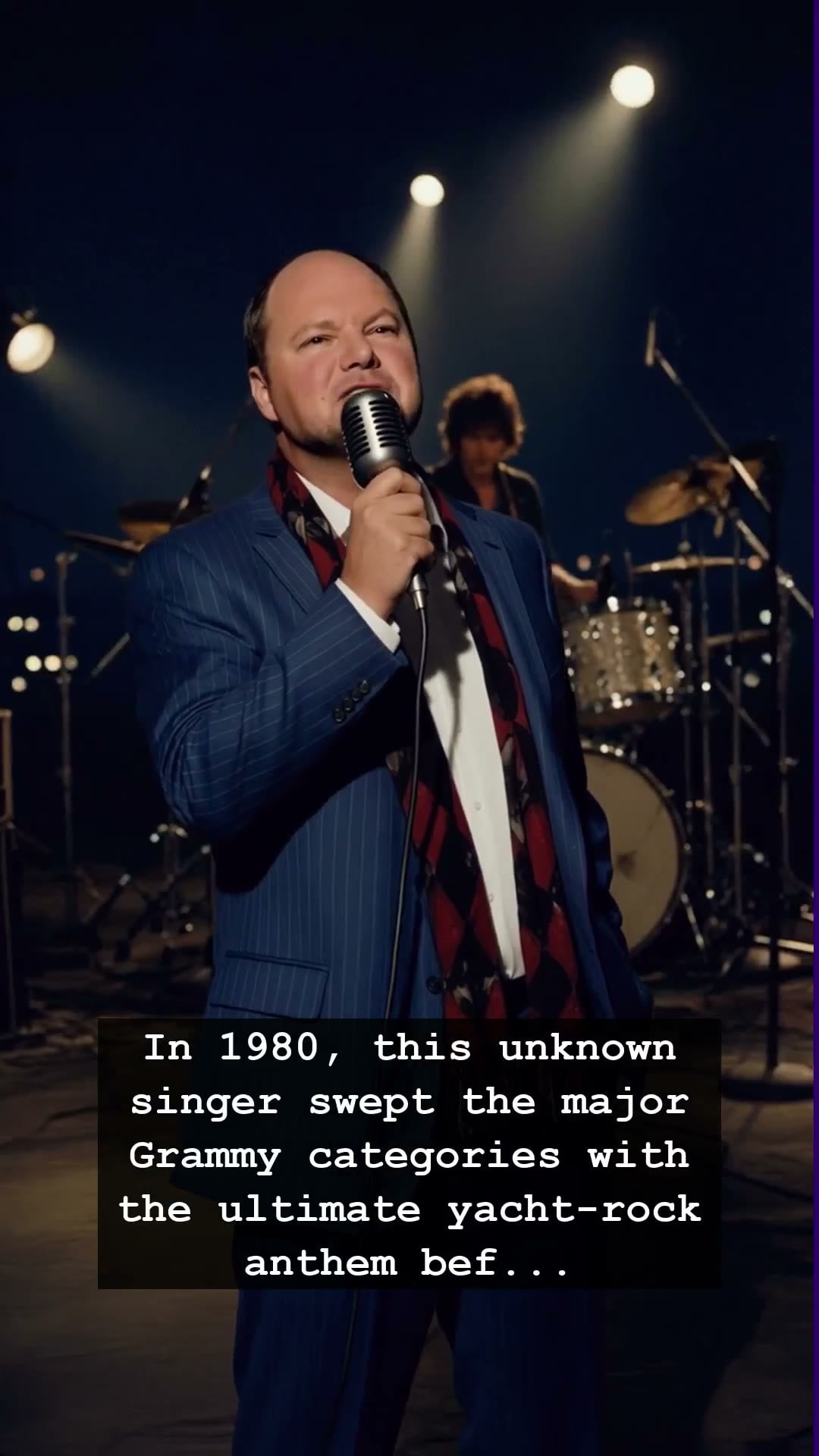
In 1980, the music industry stood still as an unassuming newcomer achieved the impossible. Before the world was obsessed with the rebellious grit of Grunge or the neon excess of Glam Metal, Christopher Cross captivated the airwaves with a sound that felt like a permanent sunset. He did not just win a Grammy; he shattered records by sweeping all four major categories in a single night, leaving industry titans like Frank Sinatra and Barbra Streisand stunned in his wake. Yet, for a man who reached the literal summit of pop stardom, his presence in the cultural landscape would soon become as elusive as a phantom melody drifting over the Pacific.
His breakout hit, Sailing, became the anthem of the Yacht Rock era, a genre defined by pristine production, smooth jazz influences, and the longing for escape. While teenagers were just beginning to embrace the portable freedom of the Sony Walkman and the visual revolution of the early MTV era, Christopher Cross provided a sophisticated, breezy soundtrack that felt tailor-made for the California coast. It was the peak of his commercial dominance, a moment when his soft-rock aesthetic reigned supreme over the charts. But beneath the polished veneer of his platinum-selling success, the pressures of instant, gargantuan fame began to exert a subtle, corrosive influence.
Music history is littered with meteoric rises, but the story of Christopher Cross is uniquely haunting because of how quickly he receded from the spotlight. As the decade progressed, the musical climate shifted toward the synthetic, percussive pulses of Synth-pop and the aggressive, high-octane energy of the burgeoning arena rock scene. The industry that had once crowned him king seemed to move on with a ruthless pace, leaving his style to be categorized as a relic of a gentler, more analog time. Many wondered if the weight of those four Grammys became an anchor rather than a launchpad, forcing him into a quieter life away from the relentless glare of fame.
Despite his gradual disappearance from the mainstream media, the legacy of Christopher Cross remains deeply embedded in the American consciousness. Every time a song like Ride Like the Wind or Sailing plays in a modern film or gets sampled by a new generation of artists, the golden-hued nostalgia of 1980 returns. His music serves as a time capsule, a reminder of a period where melody and craft were the ultimate currency. He didn’t just capture the charts; he captured a feeling of serenity that many listeners are still desperate to revisit today.
Looking back at his historic night in 1980, we are reminded that fame is often a fleeting phenomenon, yet true musical craftsmanship leaves a permanent scar on the heart of pop culture. Christopher Cross may have chosen to exit the spotlight, but the songs he gifted to the world remain as timeless as the tide itself. Whether you were there when the needle first dropped on his debut album or you are discovering the smooth elegance of his compositions for the first time, one thing is certain: he remains the undisputed captain of the Yacht Rock soul.