
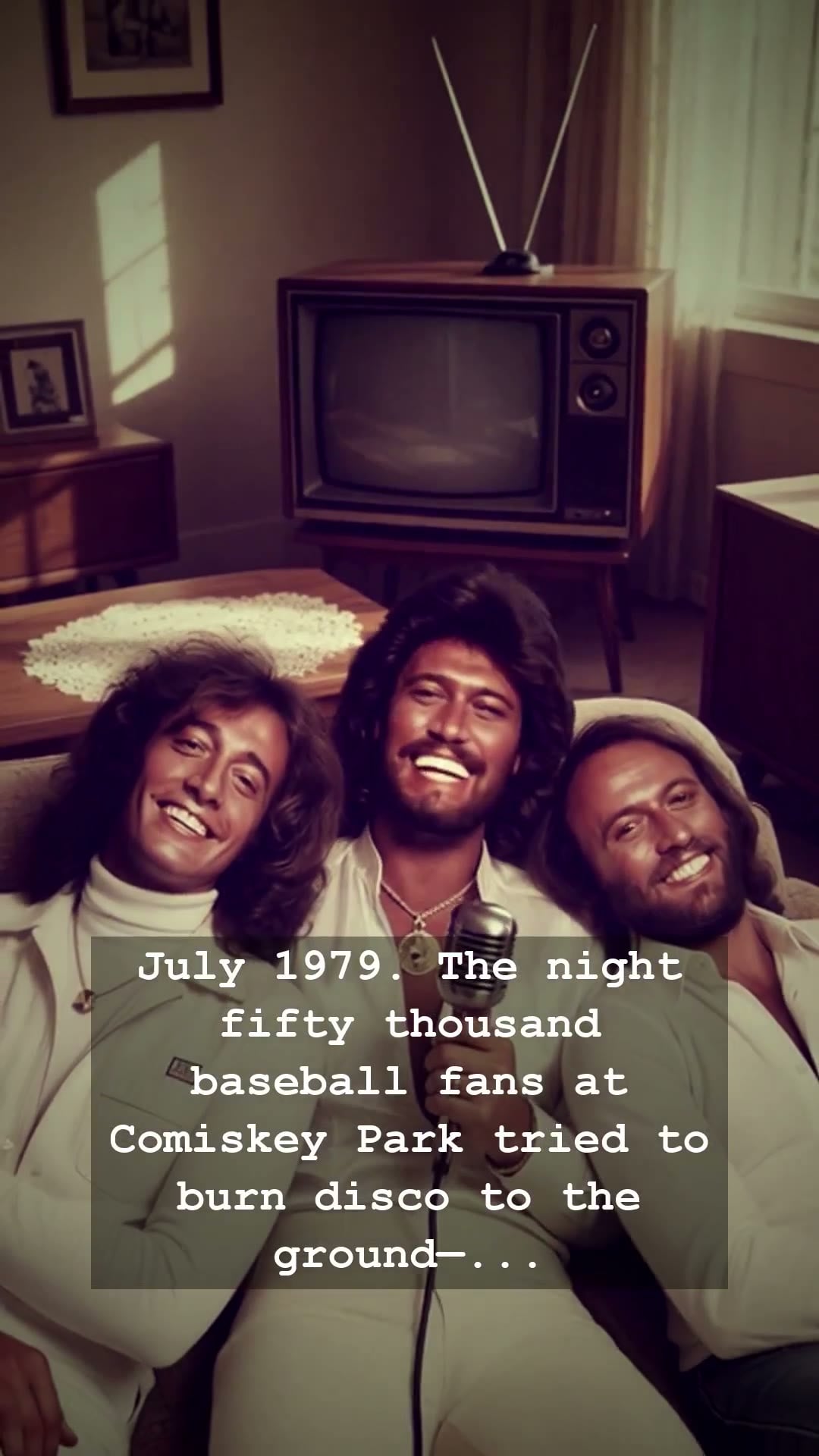
It was a humid July evening in 1979 when the soul of American pop culture was seemingly put on trial. Fifty thousand baseball fans poured into Comiskey Park in Chicago, but they did not come for the double-header. They came to watch a crate of vinyl records explode. This was Disco Demolition Night, a chaotic spectacle where the simmering resentment against a cultural phenomenon finally erupted into a violent, fiery riot. At the center of this debris sat the Bee Gees, the undisputed kings of the charts, who suddenly found themselves collateral damage in a vicious cultural war they never asked to fight.
The Bee Gees, led by the incomparable Barry, Robin, and Maurice Gibb, had been the architects of the late seventies. With their signature falsetto harmonies and the infectious, shimmering grooves of the Saturday Night Fever soundtrack, they were larger than life. They were everywhere—on every radio station, in every teenager’s Walkman, and lighting up the strobe-filled dance floors of every club from Studio 54 to suburban discotheques. They had achieved a level of dominance that few acts in history have ever reached, yet that very success fueled a deep-seated backlash that culminated in that fateful Chicago stadium.
As the stadium security lost control, the mob rushed the field, setting massive bonfires of disco records that sent plumes of black smoke into the humid air. The chant of Disco Sucks echoed through the stands, signaling a seismic shift in the musical landscape. For the Bee Gees, the fallout was instantaneous and brutal. Overnight, the industry turned its back on the group. Radio stations that had spun their hits a thousand times suddenly refused to play their records. The sheer hostility of that night in Chicago acted as a lightning rod for a broader public fatigue, effectively blacklisting the brothers from the American airwaves almost entirely.
It is deeply ironic that a band known for their incredible songwriting prowess and melodic genius were cast as the villains of the disco era. The Bee Gees were not just producers of dance music; they were prolific musicians whose influence stretched back to the rock and soul sensibilities of the sixties. Yet, the labels of the time were too rigid to appreciate their versatility. Watching their career falter after such a historic rise serves as a poignant reminder of the fickleness of fame and the often-irrational nature of cultural shifts. The trauma of being forcibly ejected from the mainstream forced the Bee Gees to retreat into the shadows, shifting their focus toward writing hits for others while they licked their wounds in private.
Today, history has rightfully restored their legacy, recognizing the Bee Gees as one of the greatest songwriting trios to ever grace a stage. Looking back, Disco Demolition Night stands as a cautionary tale about how easily public sentiment can turn into collective hysteria. While the flames at Comiskey Park might have scorched their reputation for a time, they could never burn away the timeless melodies that defined an entire generation. Next time you hear the opening chords of their most iconic hits, remember that behind that glittery facade lies a story of resilience, defiance, and a soundtrack that refused to be silenced by the ashes of the past.