
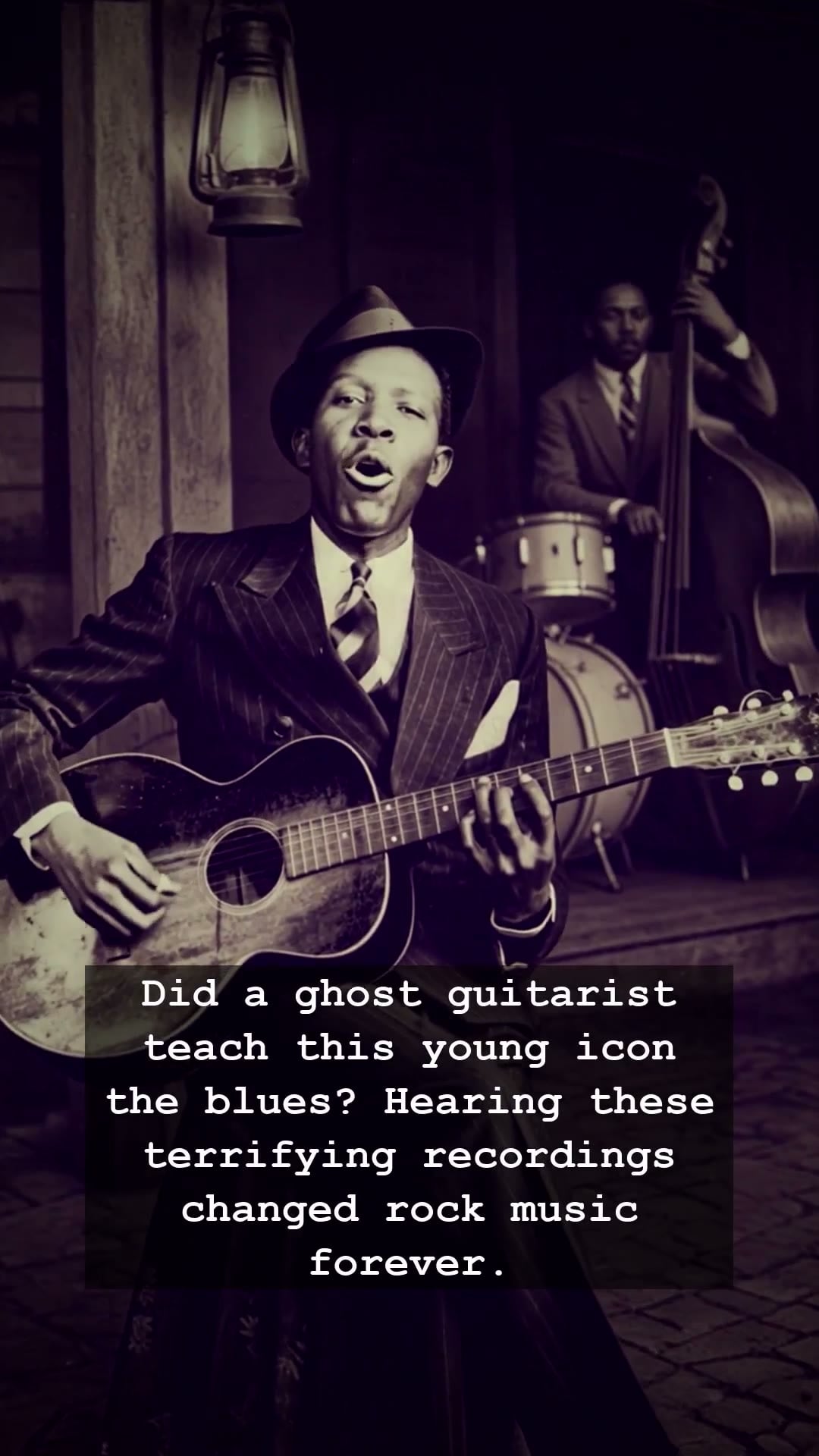
In the smoke-filled air of a mid-sixties London apartment, a young Eric Clapton sat hunched over his record player, the needle trembling as it touched the grooves of a scratchy, forgotten disc. What he heard next would not only define his career but would alter the trajectory of rock and roll forever. The sound was raw, jagged, and impossibly complex—as if one man was playing three guitars at once. It was the music of Robert Johnson, the elusive bluesman who supposedly sold his soul to the devil at a Mississippi crossroads for the gift of legendary musicianship. Clapton was paralyzed, convinced that he was listening to the voice of a ghost, a phantom guitarist who had mastered a darkness no other mortal could touch.
The blues had always been the backbone of American music, but in the hands of Robert Johnson, it became a terrifying exorcism. Before the invention of the sleek Jukebox or the high-fidelity stadium tours of the seventies, Johnson was playing on dusty porches in the Deep South, his music a lonely, desperate wail against the injustice of the world. He recorded only twenty-nine songs in his brief life, yet those recordings became the holy grail for every young guitarist of the British Invasion. When Eric Clapton first dropped the needle, the raw, visceral pain vibrating through the speakers felt dangerous. It was an authentic, chilling transmission from a man who had vanished before his time, leaving behind only the rumors of a pact made under the moonlight.
For Eric Clapton, this discovery was a turning point. He wasn’t just hearing a melody; he was hearing a haunting, a spiritual challenge that demanded his total devotion. He began to obsessively transcribe Johnson’s frantic fretwork, trying to decipher how a single human could channel so much grief and electricity into an acoustic box. The impact was seismic. It led to the formation of Cream and later, Derek and the Dominos, as Clapton infused the grit of the Delta blues into the high-octane distortion of the rock era. He became the vessel through which Robert Johnson’s spirit lived on, translating the existential dread of the 1930s into the rebellious, heavy sound that defined the late 1960s.
The legend of the crossroads remains one of music’s most enduring mysteries. It speaks to our fascination with the price of genius—the idea that such brilliance must surely come with a dark bargain. Whether you believe in the folklore or simply recognize the unparalleled human genius of Robert Johnson, the impact is undeniable. It reminds us that behind every iconic riff lies a human history, often stained with struggle and myth. The music industry of the 1950s and 60s thrived on these stories, weaving them into the fabric of our culture until the line between reality and legend blurred completely.
Decades later, we still reach for those old records, looking for a piece of that same magic. We listen to the crackle and the slide of the steel string, searching for the ghost that terrified a young legend. Robert Johnson gave us the blueprint, and Eric Clapton gave it a voice for a new generation. It is a reminder that the most profound art never truly dies; it simply waits for the next listener to be brave enough to press play.