
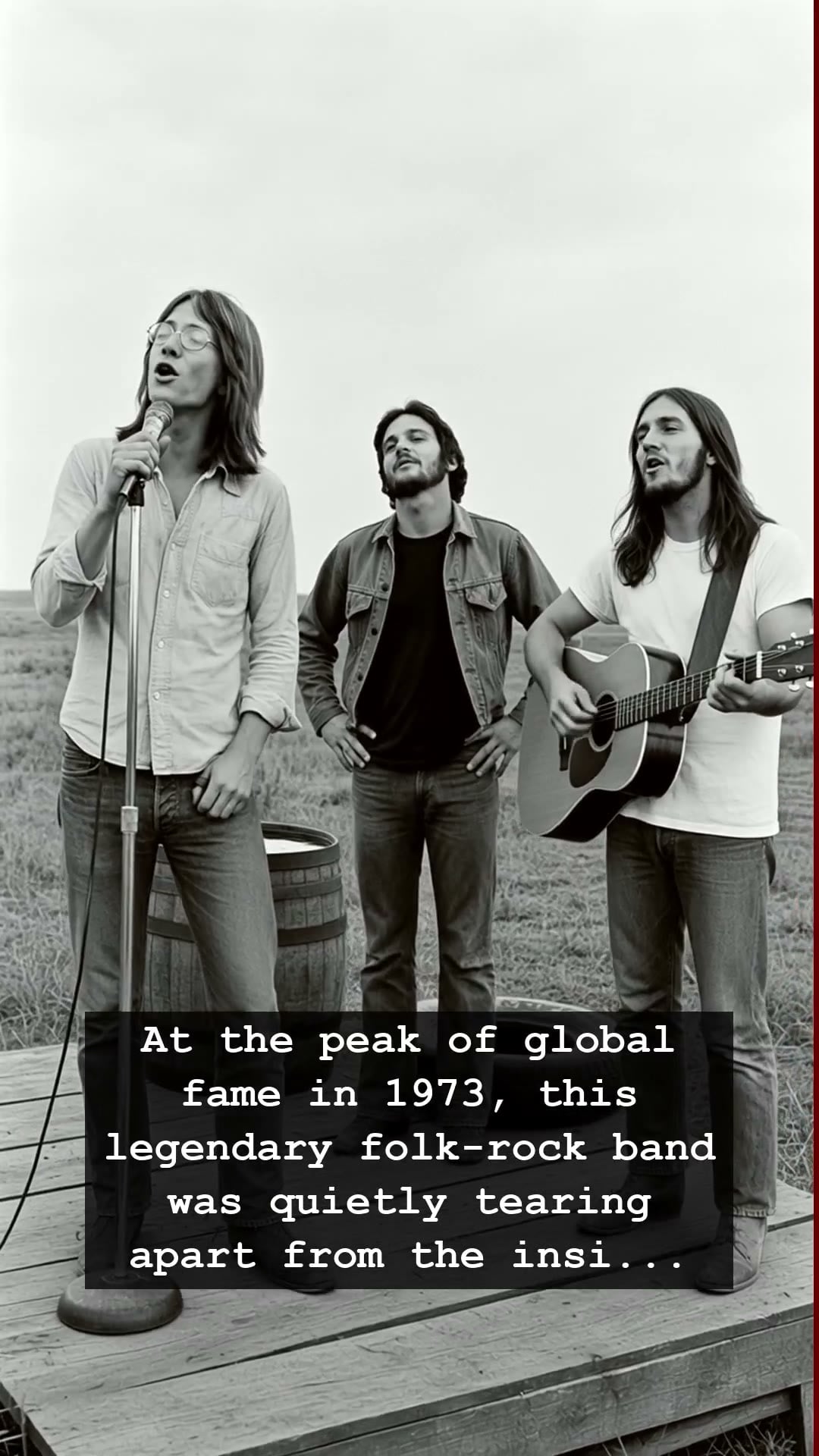
In 1973, the world was entranced by the shimmering, acoustic harmonies of America. With a string of hits that seemed to capture the very essence of a breezy, sun-drenched highway, the trio—Gerry Beckley, Dewey Bunnell, and Dan Peek—were the golden boys of folk-rock. Their signature sound felt like a permanent vacation, a pristine escape from the hardening realities of a post-Woodstock era. Yet, while radio stations across the globe played their records on heavy rotation, the band itself was experiencing a slow, agonizing disintegration that remained hidden from the public eye. Behind the polished veneer of their studio success, a silent battle of creative isolation and personal friction was tearing the foundation of the group apart.
The irony of their success was stifling. As they navigated the landscape of early seventies fame, the pressure to replicate the magic of ‘A Horse with No Name’ became an albatross. The band members found themselves trapped in a cycle of relentless touring and the suffocating demand for perfection. In an era where the Jukebox was king and the airwaves belonged to soft rock, America was forced to act as the pristine architects of a sound they were increasingly growing out of. The camaraderie that had bonded them during their formative years in London began to fray, replaced by the cold, metallic isolation of hotel rooms and the mounting tension of divergent artistic visions.
It was not a sudden explosion of ego, but rather a quiet, creeping erosion of trust. By 1973, the internal landscape of America had become a battlefield of silence. As the glam rock movement began to take hold and the music industry pivoted toward the excesses of Arena Rock, the trio struggled to maintain their identity. Dan Peek, in particular, began to sink into a deep, drug-fueled darkness, seeking solace in substances to cope with the alienation of being a star. His descent was the shadow side of the band’s bright light, a stark contrast to the breezy, carefree image being projected on the posters hanging in bedrooms everywhere.
This period marked a turning point in their history that fans rarely saw. While the industry pushed them to keep churning out hits, the creative spark was being extinguished by the friction of their internal conflicts. The struggle they faced is a haunting reminder of the high price of musical stardom in the 1970s. It was a time when the glamour of the stage often masked the profound loneliness of the individual. Even as they continued to produce music that defined the decade, the authentic connection between the three men was already a ghost of its former self.
Today, listening to their classic tracks carries a bittersweet weight. When you hear the opening chords of those timeless melodies, you aren’t just hearing a song; you are hearing the echo of a band holding onto the light while the dark crept in at the edges. The story of America is a testament to the fact that even the most beautiful harmonies are often born from the deepest discord. Their journey remains a vital piece of the American musical tapestry, reminding us that behind every classic hit lies a human story, often far more complicated than we ever dared to imagine.