
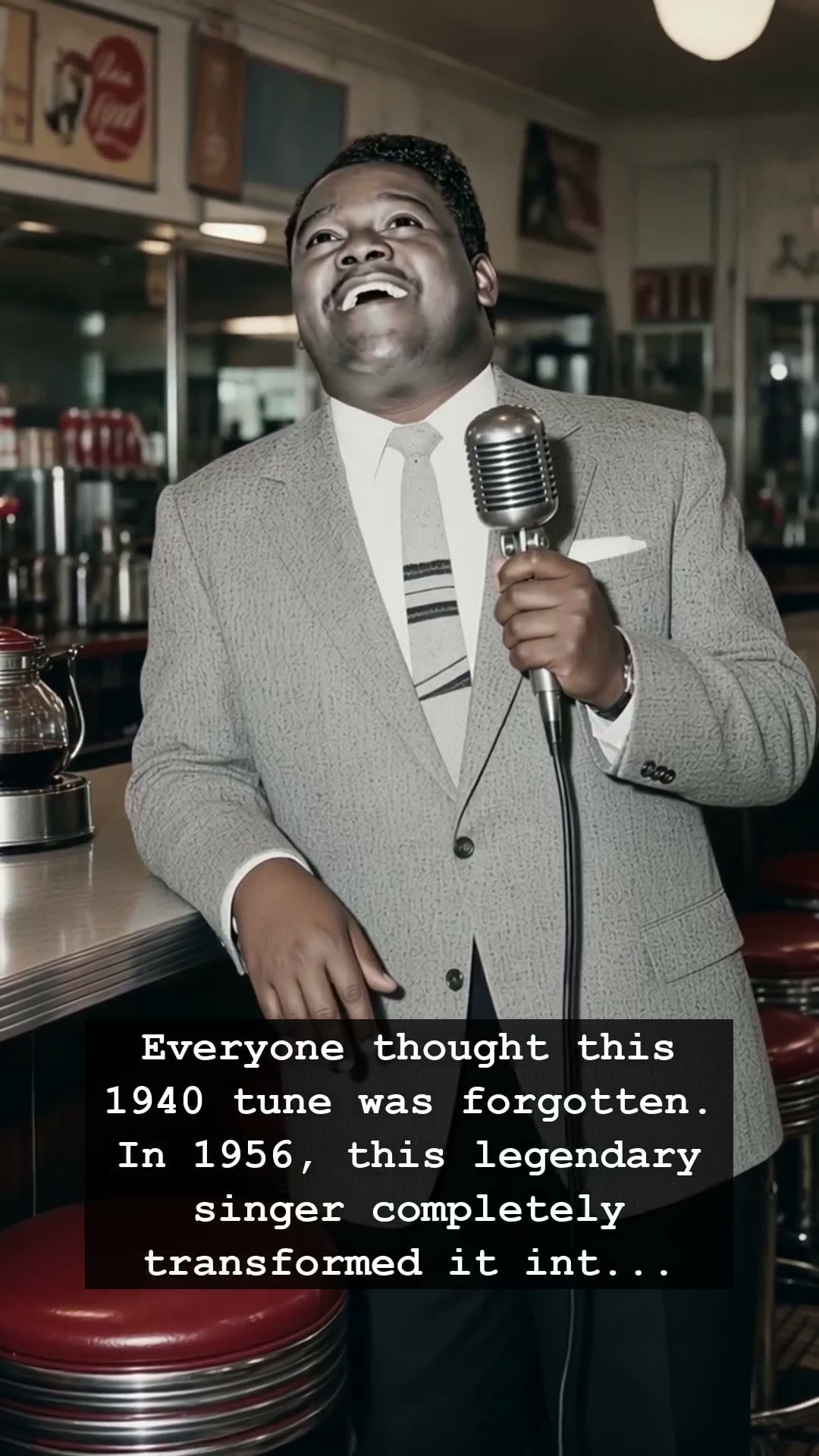
Picture the smoke-filled air of a 1950s Jukebox joint, where the neon glow flickered against the walls and the world was on the brink of a sonic revolution. For years, the American airwaves were dominated by stiff arrangements and polite crooners. But in 1956, a man with a gentle smile and thunderous fingers changed the trajectory of popular music forever. Fats Domino, the pride of New Orleans, took a dusty, long-forgotten 1940 cowboy tune and injected it with the raw, rhythmic pulse of the Crescent City. The song was Blueberry Hill, and in the hands of Fats Domino, it stopped being a western relic and transformed into an immortal rock and roll masterpiece that defined a generation.
The original version of Blueberry Hill had been a modest success for country singers of the past, but by the mid-1950s, it was widely considered a relic of a bygone era. It felt stiff, dated, and largely ignored by the rebellious youth who were busy discovering the electric charge of early rock and roll. Fats Domino, however, heard something deeper in the melody. He didn’t just sing it; he re-imagined it through the lens of a New Orleans barrelhouse. With his rolling, triplet-heavy piano style and that unmistakable, soulful Louisiana drawl, he stripped away the cowboy polish and replaced it with a swing-driven swagger that felt both intimate and revolutionary.
This wasn’t just a cover song; it was a cultural pivot point. As Fats Domino hit those keys, he bridged the gap between the fading sounds of the swing era and the explosive, raw power of the emerging rock and roll movement. The recording session itself was shrouded in the chaotic, high-pressure atmosphere that defined the mid-century studio experience. Yet, when the track hit the airwaves, it became an instant smash. It blasted from the speakers of every local malt shop and diner, proving that a true musical genius could breathe life into the most unexpected places. It became a soundtrack for the post-war boom, played on portable radios and worn-out vinyl records that would eventually give way to the era of the Walkman.
Beyond the chart success, the story of Fats Domino and his take on Blueberry Hill represents the deeper truth of mid-century American music: it was all about alchemy. Artists were taking the blueprints of the past and scorching them into something entirely new. While others were chasing gimmicks, Fats Domino stayed true to his sound, proving that soul and rhythm were the only things that truly mattered. Even as the decades rolled on—from the psychedelic haze of the late sixties to the glitter of disco and the synth-heavy eighties—this version remained a touchstone of pure, unadulterated talent.
Decades later, the echo of that piano still resonates. It reminds us of a time when the world felt smaller, more dangerous, and incredibly vibrant. Fats Domino didn’t just resurrect a song; he cemented his legacy as a titan of American music. Next time you hear those opening piano notes, take a moment to drift back to 1956, and remember the man from New Orleans who taught the world that a melody never truly dies as long as someone has the heart to play it.