
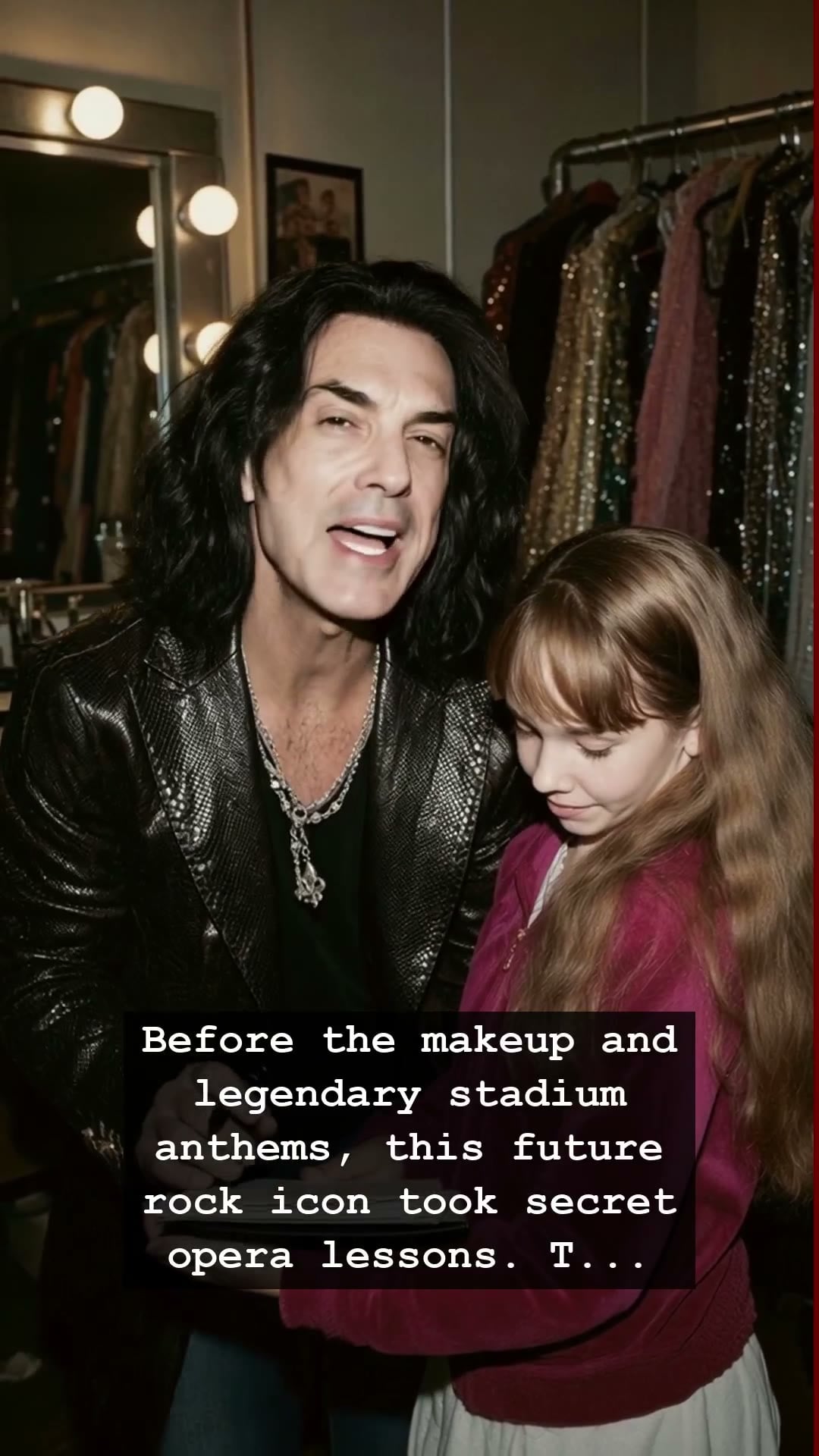
Before the pyrotechnics, the towering platform boots, and the iconic star-eyed makeup that defined the seventies, Paul Stanley was just a young man with a vision and a hidden secret. While his peers in the gritty New York club scene were focused purely on raw, unpolished distortion, Stanley was quietly honing a craft that would eventually transform him into the definitive frontman of stadium rock. Long before KISS became a global phenomenon, he was taking secret opera lessons, a rigorous classical discipline that would become the backbone of his explosive, commanding stage presence. This clandestine preparation was not about subtlety; it was about theatrical endurance and the ability to project pure, unadulterated power to the back of the largest arenas on the planet.
In the era of the Walkman and the rise of the spectacle, Paul Stanley understood that rock and roll was as much about drama as it was about melody. While the critics often dismissed the band as a mere gimmick, they missed the technical genius hiding behind the greasepaint. Those early morning vocal sessions provided the foundation for the distinct, piercing range that could cut through the wall of sound created by Marshall amplifiers. It was a fusion of high-art discipline and blue-collar attitude that changed the trajectory of Arena Rock forever. The theatricality he brought to the stage wasn’t just a costume choice; it was a calibrated performance piece designed to turn a standard concert into a religious experience for the thousands of fans screaming in the dark.
Yet, this commitment to excellence came with a price. The life of a rock icon in the height of the seventies and eighties was a whirlwind of excess and exhaustion. Navigating the pressures of superstardom, Paul Stanley had to reconcile the disciplined artist with the larger-than-life character demanded by the public. Beneath the leather and studs, there was a man constantly pushing his physical limits to ensure that every single night, the show was bigger, louder, and more intense than the last. He treated every stadium tour like a grand opera production, where the roar of the crowd was the ultimate applause for a craft perfected in shadows.
Today, we look back at the legacy of Paul Stanley not just as a guitarist, but as a master of dramatic showmanship. His story reminds us that behind the most rebellious icons often lies an unexpected dedication to craft that separates the legends from the trends. Whether you remember catching a glimpse of their explosive performances on early MTV or you discovered their records through a dusty Jukebox, the impact of that hidden classical training remains undeniable. It was the secret ingredient that allowed Paul Stanley to command a stage like no other performer in history.
As we reflect on the golden age of rock, we realize that the myth of the overnight success is often just that—a myth. The true architects of our favorite anthems were often studying, practicing, and refining their skills while the world was sleeping. Paul Stanley remains a testament to the fact that when you combine raw rock energy with the discipline of a classical tradition, you don’t just create music; you create a permanent mark on culture. Next time you spin one of those classic records, listen closely for the opera singer beneath the roar of the guitar, and you will hear exactly how history was made.