
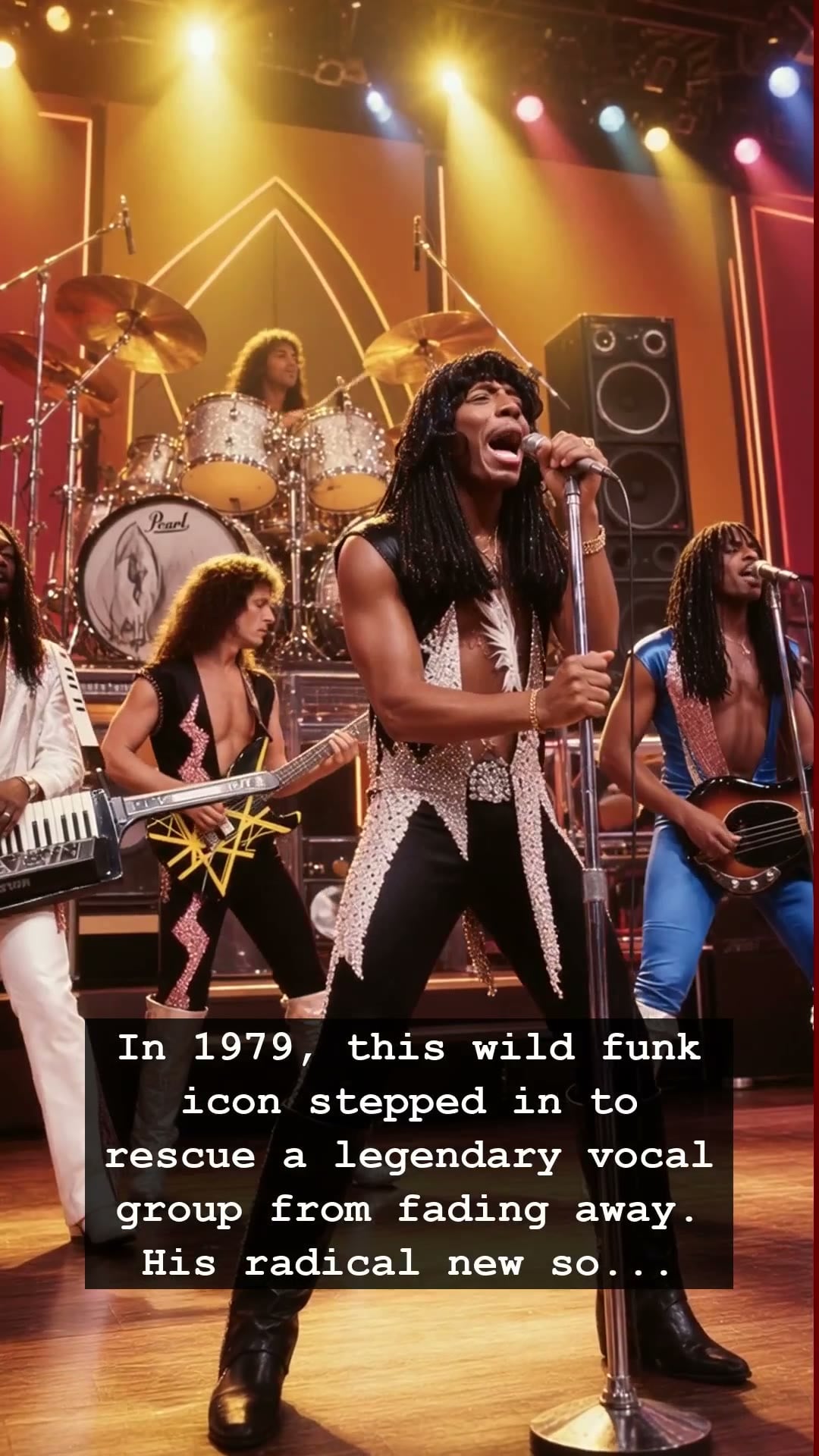
The year was 1979, and the airwaves were dominated by the neon pulse of the disco era. For many, the golden age of classic Motown felt like a fading memory, flickering like a dying candle in the shadow of Studio 54. Among those struggling to navigate the shifting sands of the music industry were the legendary Temptations. Once the kings of soul, they found themselves adrift, their iconic harmonies seemingly out of place in a world demanding a harder, grittier edge. They needed a miracle, or at the very least, a sonic revolution. Enter Rick James, the wild, unpredictable, and undeniably brilliant icon of funk who was about to turn the music industry upside down.
Rick James was never a man to do things quietly. With his flamboyant stage presence and a reputation for living as hard as he played, he brought a dangerous, electric energy to the Motown roster. When he stepped into the studio to collaborate with The Temptations, it was a clash of eras and temperaments. The group was polished, professional, and rooted in the smooth traditions of the sixties. Rick James, however, was the embodiment of the funk-driven rebellion. He didn’t just want to write a song for them; he wanted to tear down their image and rebuild it with a bass-heavy, visceral groove that would slap the radio audiences into a trance.
He pushed the legendary vocal group into a new dimension, crafting the 1979 masterpiece Street Life. The sound was raw, aggressive, and undeniably modern, marking a radical departure from the symphonic soul that had made them household names. It was a risky gamble that almost felt like an act of musical sacrilege at the time. Yet, the transformation worked. By injecting his signature punk-funk attitude into their velvet-smooth textures, Rick James proved that even the most established legends could adapt to the shifting tides of the late seventies. It was a masterclass in creative tension that effectively rescued a legacy from the brink of obscurity.
Behind the scenes, the friction was palpable. The collaboration was fraught with intense artistic debates and the sheer force of personality that Rick James brought to every recording session. He demanded perfection through chaos, pushing the singers to explore vocal registers and rhythmic pockets they had never touched before. For fans of the era, the result was a revelation. Hearing those familiar voices ride over such an unapologetically heavy funk beat was a moment that redefined the potential of Motown. It was the sound of a torch being passed, not from one generation to the next, but across a divide of style and philosophy.
Decades later, the impact of this partnership still resonates with those who remember the smell of vinyl, the crackle of a warm tube amp, and the heavy basslines that made every dance floor vibrate. It serves as a reminder that the most compelling stories in music are often born from the friction between the old guard and the unpredictable visionaries. Rick James may have been known for his excesses, but in 1979, he was the essential spark that kept a legendary group alive. Do you remember the first time that jagged, funky rhythm hit your ears and made you realize the game had changed forever?