
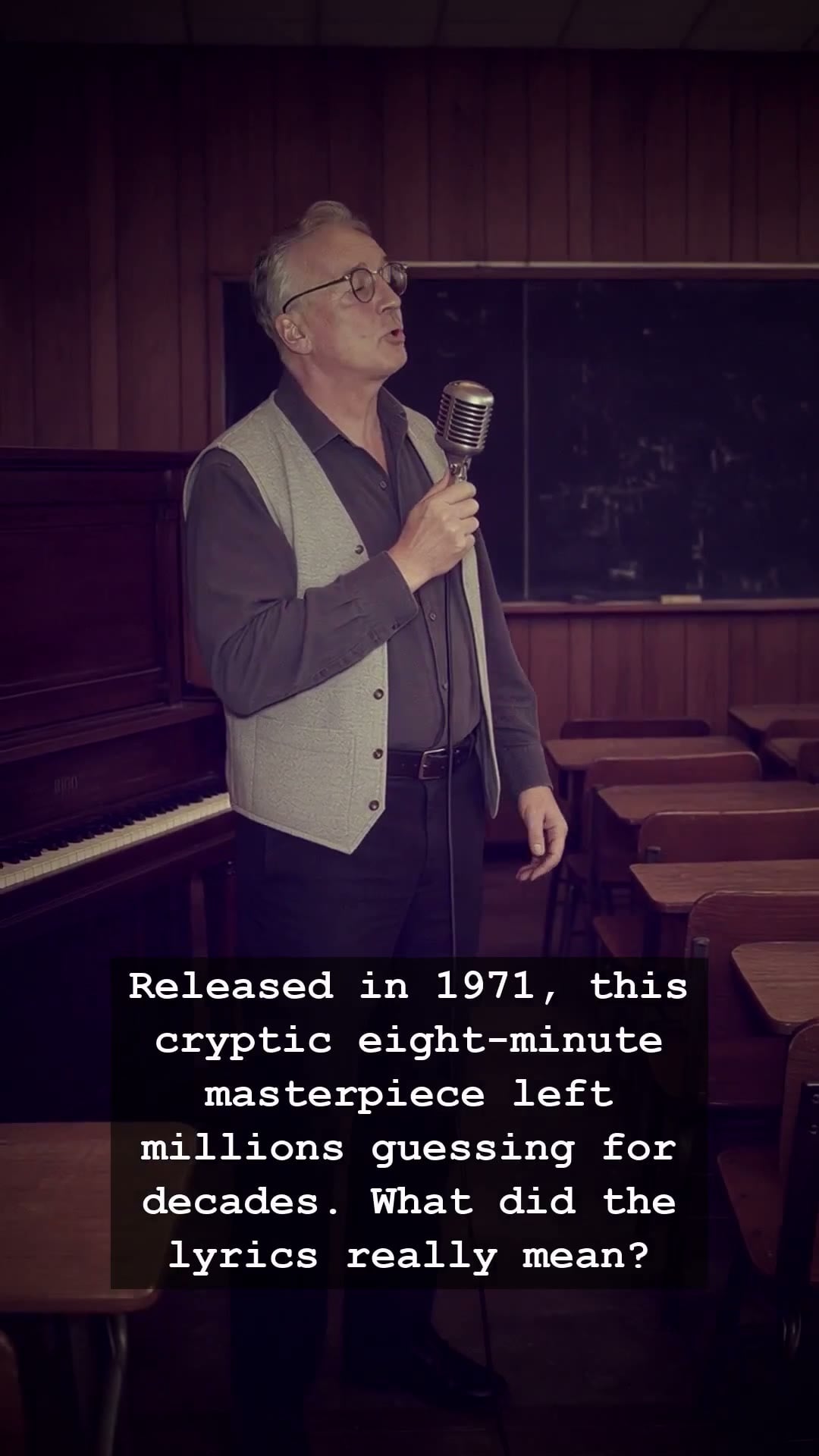
It began with a whisper in 1971—a haunting eight-minute epic that felt less like a song and more like a funeral dirge for a generation. When Don McLean released American Pie, he didn’t just drop a chart-topping hit; he ignited a cultural obsession that would span half a century. For decades, listeners huddled around their record players and scratched their heads over cryptic lyrics like the jester, the king, and the girl who sang the blues. Don McLean had crafted a puzzle, and for years, he kept the key locked firmly away, letting the mystery consume the American psyche while the world searched for ghosts in his verses.
The early 1970s was a period of profound disillusionment. The idealism of the sixties had withered into the ash of the Vietnam War and the cynical reality of the post-Woodstock era. In this landscape, Don McLean emerged as a storyteller of epic proportions. His song was a requiem for the innocence lost on February 3, 1959, the day a small plane crash claimed the lives of Buddy Holly, Ritchie Valens, and the Big Bopper. By framing the tragedy as the day the music died, he tapped into a collective grief that resonated through the static of every AM radio station across the country.
Yet, Don McLean was never one to make things easy. He famously quipped that the lyrics meant he would never have to work again, a dry, enigmatic response that only fanned the flames of speculation. Was the jester Bob Dylan? Was the king Elvis Presley? Fans obsessed over every stanza, pouring over lyrics like religious texts, desperate to decode the metaphors of a songwriter who seemed to be reciting the history of Rock ‘n’ Roll through a dark, melancholic lens. The mystery became a shared language for a generation raised on Jukeboxes and the sudden, jarring intrusion of reality into their pop-fueled dreams.
Beyond the lyrical riddles, the sheer endurance of American Pie speaks to the craftsmanship of a man who understood the power of myth. In an era before the internet, where music was discovered in the aisles of record stores and shared through the hiss of a Walkman, Don McLean transformed a personal tragedy into a communal catharsis. He captured the transition from the golden, sunshine-soaked melodies of the fifties to the jagged, introspective sounds that defined the coming decades. He wasn’t just singing about dead stars; he was singing about the death of our own collective optimism.
Today, we listen to the track with a different kind of nostalgia. It serves as a reminder of a time when a song could hold the nation hostage in wonder and debate. Don McLean eventually admitted that the song was simply an act of letting go, a way to process a world that kept moving forward despite the scars left behind. As the final notes fade into silence, we are still reminded that some mysteries are best left unsolved, lingering in the air like the fading echoes of a jukebox in an empty diner, waiting for the next listener to find their own meaning in the music.