
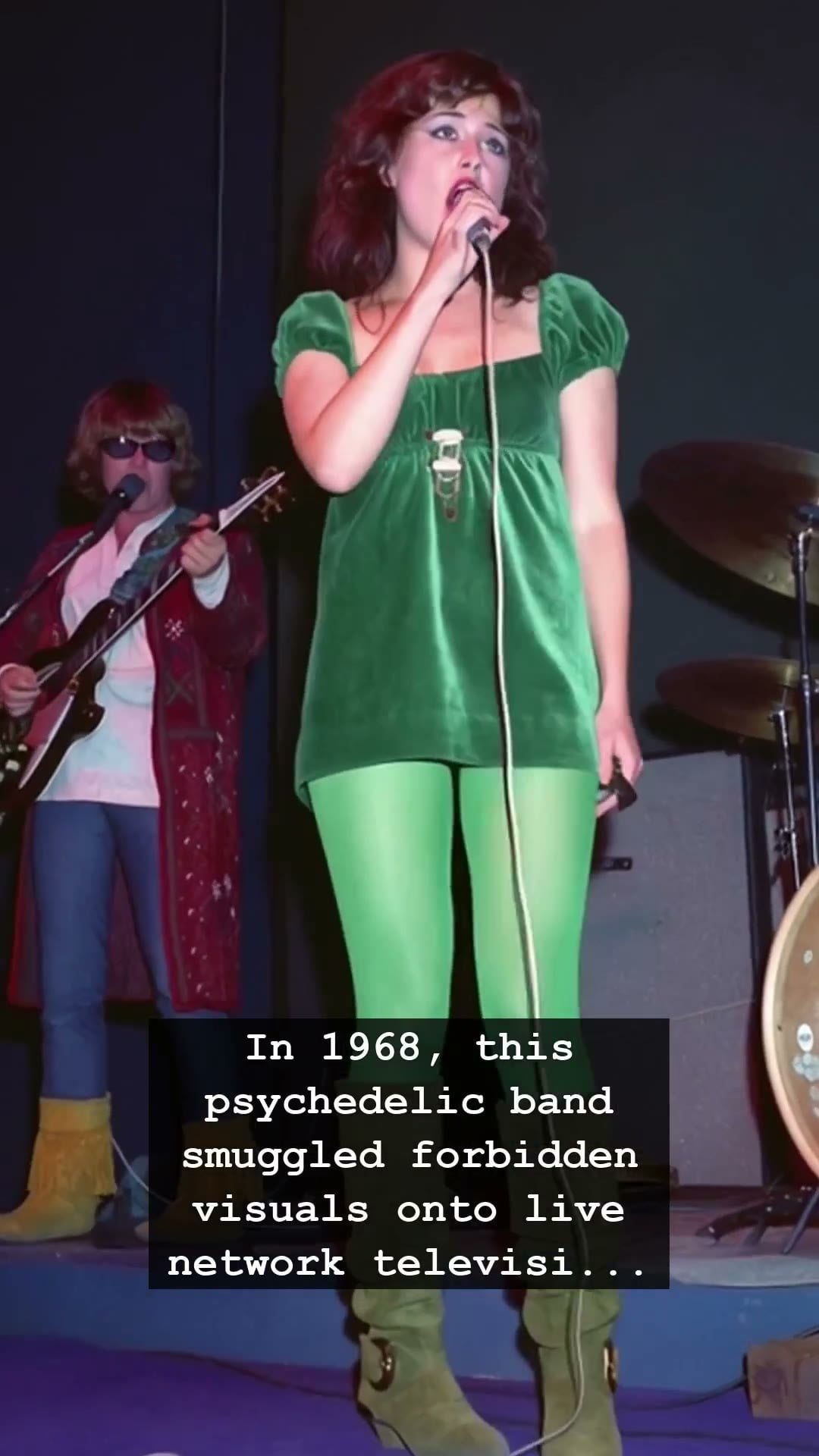
It was 1968, a year defined by unrest, and the television sets of middle America were about to become a battlefield. As families gathered around their glowing screens expecting the usual polished variety shows, Jefferson Airplane stepped onto the stage of the Smothers Brothers Comedy Hour. They were not just there to perform their iconic anthem, Crown of Creation; they were there to stage a silent, psychedelic rebellion that would haunt network executives for decades to come.
At the height of the Vietnam War, Jefferson Airplane did the unthinkable. As they began their hypnotic, ethereal set, the band ensured that the television audience saw more than just musicians in velvet and lace. They projected swirling, dizzying light shows—classic hallmarks of the acid rock era—superimposed with jarring, raw footage of military operations and political chaos. For the censors at CBS, this was absolute anarchy. They had expected a standard musical act, not a visceral, multi-sensory critique of the American establishment. The production staff scrambled in a panic, trying to cut the feed or obscure the visuals, but the damage to the status quo was already done.
This moment captured the very essence of Jefferson Airplane. They were never just a band; they were the sonic architects of the San Francisco counterculture. Grace Slick, with her commanding, icy vocals, and the rest of the crew operated on a wavelength that the rigid television industry simply could not comprehend. In the shadow of Woodstock and the rise of FM radio, they used the limited technology of 1968 to turn a primetime broadcast into a radical art installation. The tension between the band’s raw, unapologetic creativity and the sterile, fearful nature of 1960s broadcasting created a drama that felt more like a revolution than a television special.
That night remains one of the most significant intersections of rock history and mass media. It proved that rock ‘n’ roll was not merely entertainment, but a powerful instrument for cultural disruption. The band’s refusal to sanitize their performance for the sake of network harmony solidified their legacy as outsiders who were willing to risk everything to challenge the narrative of their time. They operated in the flickering light of the television age, forcing millions of Americans to confront realities that the nightly news usually preferred to hide behind a veil of professionalism.
Looking back, the Jefferson Airplane performance serves as a haunting reminder of an era where art still had the power to make institutions tremble. Today, in our world of instant, infinite streaming, it is difficult to fathom the impact of that singular, forbidden broadcast. Yet, the story of Jefferson Airplane continues to echo, reminding us of a time when a simple guitar chord and a haunting visual projection could hold an entire nation in a state of suspended, terrified wonder. Their defiance was the spark that changed how we view the intersection of music, media, and truth forever.