
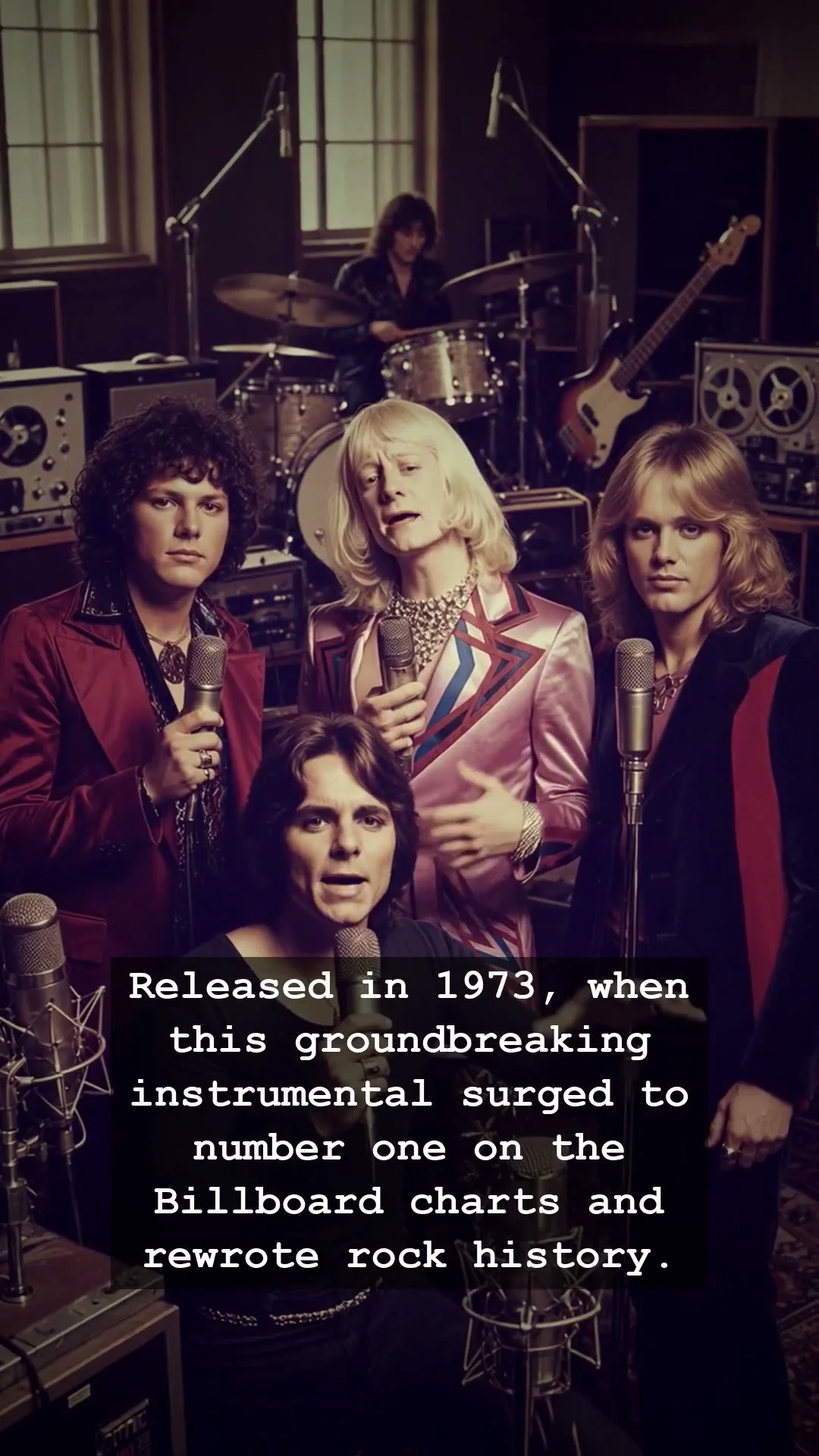
In the sweltering heat of 1973, the world of rock music was comfortably obsessed with the guitar god archetype. We lived in a landscape defined by the raw, distorted riffs of blues-rock and the burgeoning grit of stadium giants. Then, out of the shadows of the recording studio, came a sonic experiment that defied every law of the Billboard charts. It was a chaotic, pulse-pounding instrumental called Frankenstein, and it did not just reach number one; it dismantled the barrier between progressive jazz-fusion and the mainstream FM radio waves forever. The Edgar Winter Group had just birthed a monster, and for a moment, the world stopped to listen.
At the heart of this masterpiece was Edgar Winter, a visionary who refused to let the synthesizer remain a mere background texture. Before this track arrived, the synthesizer was often viewed as a cold, clinical machine, relegated to the fringes of experimental prog-rock. Edgar changed that narrative by wearing his keyboard like a weapon. He famously strapped his ARP 2600 to a harness, allowing him to roam the stage with the predatory prowl of a lead guitarist. Watching him manipulate those oscillators live on stage felt like witnessing a mad scientist at work, bringing the electronic future into the gritty present of 1970s rock.
The story of the track’s name is just as legendary as its composition. During the intense editing sessions, the band had physically spliced together various pieces of magnetic tape, literally sewing together different segments of the jam session to create the final, blistering arrangement. As they pieced the sonic corpse together, it became clear that this track was a Frankenstein creation—a patchwork of high-octane energy that somehow possessed a life of its own. It was reckless, unpredictable, and undeniably brilliant, capturing the adrenaline of a live performance within the rigid constraints of a vinyl record.
This was the era of the Walkman’s precursor, a time when teenagers huddled around Jukeboxes in diners to catch the latest hits. When Frankenstein hit the airwaves, it broke the pattern. It wasn’t a love song, it wasn’t a protest anthem, and it certainly wasn’t a radio-friendly pop ditty. It was pure, unadulterated musical prowess that bridged the gap between the complex arrangements of the jazz world and the visceral impact of American rock. The Edgar Winter Group proved that music didn’t need lyrics to convey deep, primal emotion; it only needed a rhythm that could shake the foundations of the studio.
Even today, listening to the driving rhythm of Frankenstein feels like stepping into a time machine back to that golden age of sonic exploration. It reminds us of a period when artists took massive risks, unafraid to sound weird or alien if it meant pushing the boundaries of what a band could be. The legacy of The Edgar Winter Group remains a testament to the fact that when you stop following the rules, you might just build something immortal. Turn the volume up, close your eyes, and let that synth melody take you back to a time when rock and roll was still busy reinventing itself.