
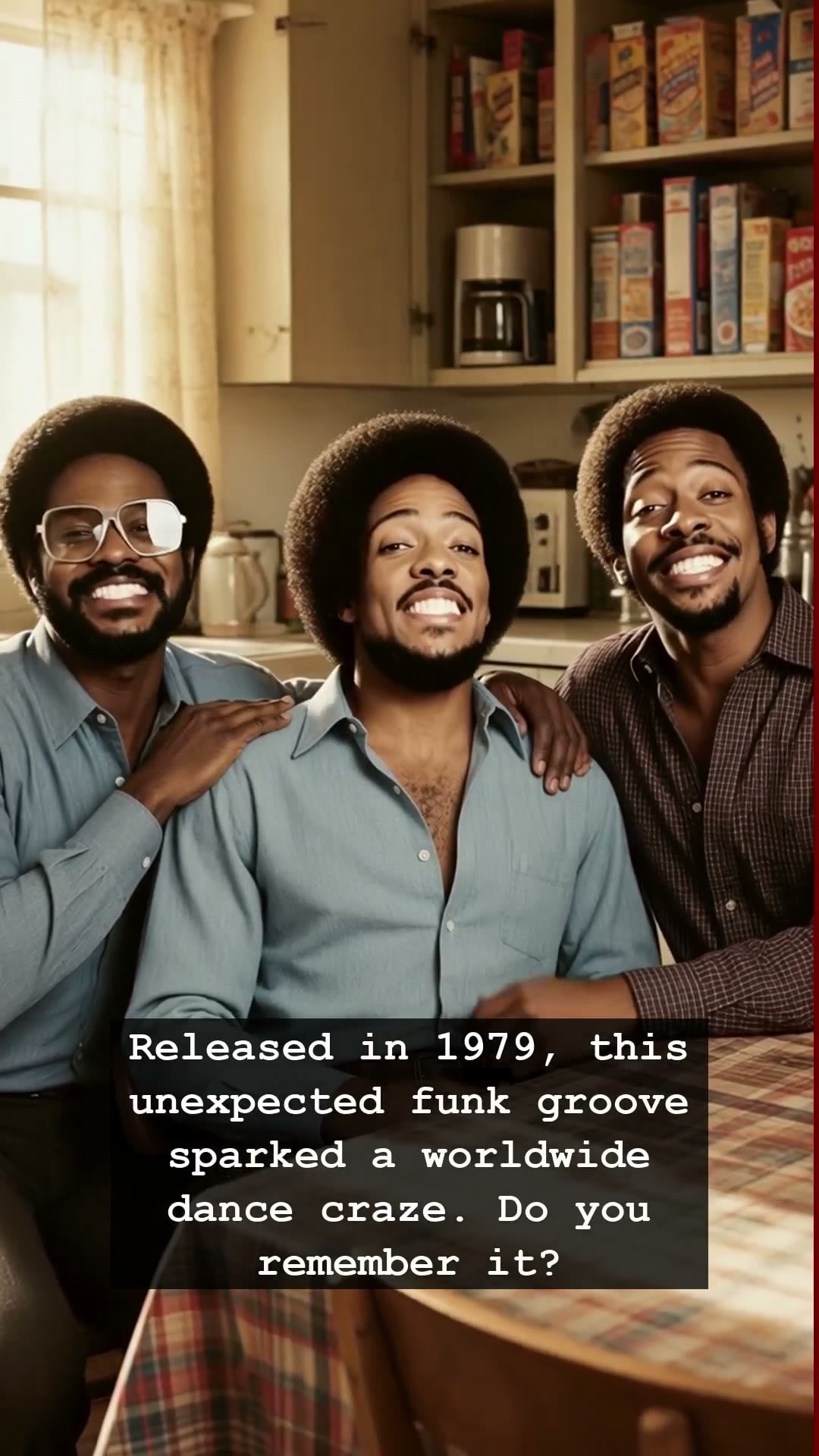
It was 1979, the peak of the disco era, when the airwaves were saturated with polished beats and glitter-covered melodies. Yet, amidst the neon lights of Studio 54 and the rhythmic clatter of roller rinks, a song emerged that felt different—raw, organic, and undeniably infectious. The Gap Band did not set out to create a global phenomenon that would force the world to move in perfect unison, but with the release of their breakthrough funk groove, they inadvertently sparked a dance craze that rippled across continents. Decades later, that bassline remains a sonic trigger for anyone who remembers the golden age of funk.
The Gap Band, comprised of brothers Charlie, Ronnie, and Robert Wilson, had been grinding in the music industry for years before finding their groove. Originating from Tulsa, Oklahoma, they carried the soulful weight of their heritage into the slick production rooms of the late seventies. They were not just a band; they were a powerhouse of musical chemistry that thrived on the tension and release of live instrumentation. When they stepped into the studio to record their iconic hits, there was no master plan for international dominance. They were simply chasing a sound that moved their own spirits, unaware that they were about to craft the heartbeat of a generation.
There is a specific, tactile nostalgia attached to the sound of The Gap Band. For those who grew up tethered to their Walkmans or glued to the nascent broadcasts of early music television, their music represents a transition. It was the era where analog soul began to flirt with the synthetic precision of the coming decade. When those basslines dropped, they did not just fill a room; they commanded it. Whether it was in the darkened corners of a local club or the bustling energy of a roller rink, the music provided a soundtrack to a specific kind of freedom—the freedom of movement that only true funk could provide.
Behind the success, however, lay the harsh reality of the music business in the late seventies. The Gap Band navigated the turbulence of a changing cultural landscape, dealing with the pressures of maintaining relevance as the disco backlash loomed on the horizon. Despite the external drama and the shifting trends of the industry, they remained authentic to their core sound. They bypassed the superficial sheen of bubblegum pop, choosing instead to lean into the deep, syncopated rhythms that defined the soul and funk movement. Their resilience is a testament to the power of artistic integrity.
Today, the legacy of The Gap Band continues to echo through modern music. Their samples have been lifted by hip-hop producers and their dance floor staples are still mandatory at any celebration. They captured a lightning-in-a-bottle moment where funk became a universal language, connecting strangers under the glow of a disco ball. As we look back at that transformative year of 1979, it is impossible to ignore the seismic shift they created. Do you remember where you were when the needle dropped and the floor started to move?