
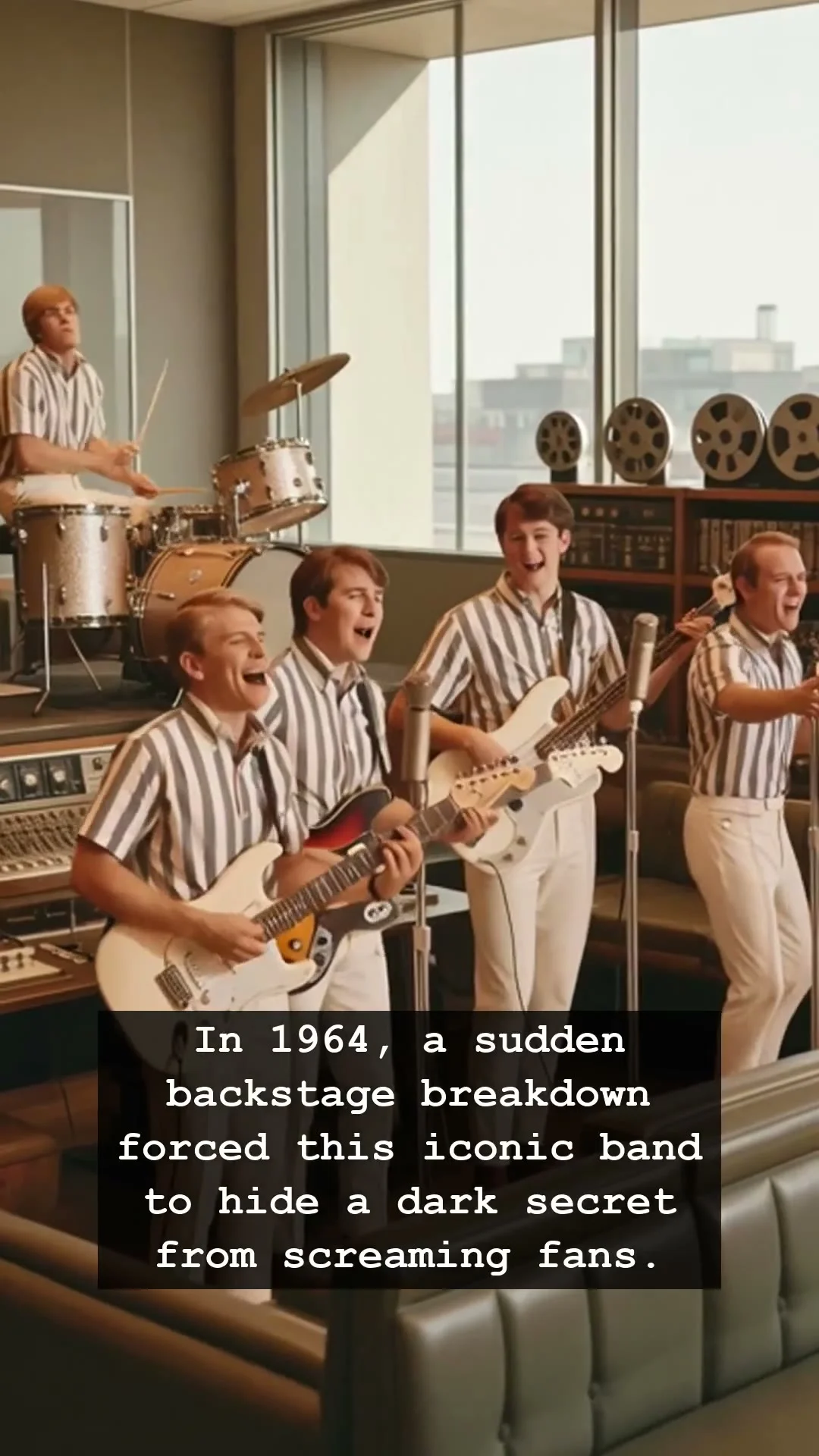
It was the golden era of surf-pop, a time when the AM radio crackled with the harmonies of endless summers and the promise of California sunshine. For The Beach Boys, the year 1964 was supposed to be their definitive ascent into global superstardom. Yet, beneath the veneer of matching striped shirts and infectious melodies, a shattering mental health crisis was brewing that would forever alter the trajectory of rock history. The image of the clean-cut American boys was about to be challenged by the fragile reality of genius under pressure.
On a bleak January day in 1964, the high-octane pressure of non-stop touring finally pushed Brian Wilson to his breaking point. Standing at the terminal, surrounded by the mechanical roar of airport machinery, the mastermind behind the band’s intricate sound suffered a terrifying, full-scale panic attack. He simply refused to step onto the plane. While fans screamed for their idols at upcoming venues, the band was forced to make an impossible choice: cancel the tour or leave their creative heart behind. The solution was as desperate as it was surreal—a stranger was hurriedly brought in to play the piano and occupy Brian’s space on stage, a temporary mask to hide the band’s growing internal fracture from a public that had no idea their surf-pop heroes were unraveling.
The Beach Boys were not just a band; they were a cultural phenomenon that defined the spirit of an era, but Brian Wilson’s breakdown exposed the raw, ugly truth of the music industry’s relentless grinding machine. The frantic pace of the mid-sixties, characterized by the omnipresent Jukebox hits and the feverish demands of teen adoration, left little room for the human toll of artistic brilliance. As Brian retreated from the public eye, he began his long, internal journey toward the complex arrangements that would eventually birth masterpieces like Pet Sounds. It was a transition from the carefree innocence of surf anthems to the introspective, haunting depths of a troubled soul.
Looking back, this 1964 incident serves as a grim foreshadowing of the price paid for legendary status. The tension between the band members—the conflict between Mike Love’s desire for commercial consistency and Brian’s pursuit of sonic experimentation—would fuel decades of drama that captivated music historians and fans alike. The struggle was not merely artistic; it was deeply personal, reflecting the fragile equilibrium required to maintain the image of the perfect American rock group while the psyche was tearing itself apart.
Today, the legacy of The Beach Boys remains etched in the tapestry of American music, but it is deeper than just the hits. We hear the echoes of Brian’s 1964 struggle in the melancholic undertones of his later compositions, a reminder that the most beautiful music is often born from the most profound pain. As we dust off our old vinyl records and let the harmonies wash over us, we aren’t just listening to surf-pop; we are listening to the echoes of a generation’s dreams and the quiet, hidden battles fought in the shadows of the spotlight. May we always remember the human faces behind the music that defined our lives.