
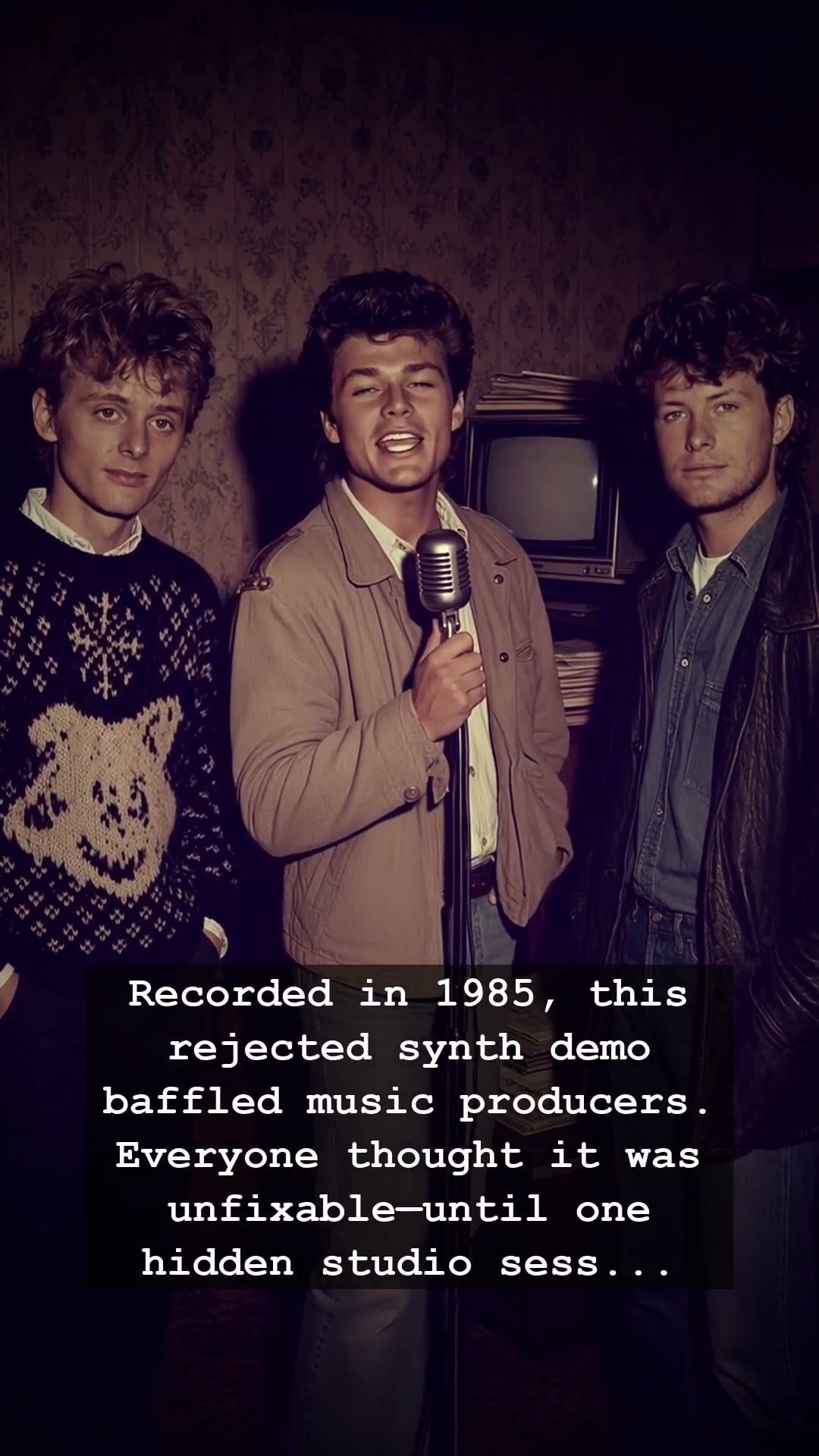
In the neon-soaked landscape of 1985, the music industry was obsessed with the cold, precise pulse of the synthesizer. It was an era where the sound of the future was being manufactured in cramped studios, fueled by caffeine and the relentless demand for the next big hit. Amidst this whirlwind of drum machines and hairspray, a demo tape landed on the desks of major producers. It was a track that sounded brittle, hollow, and utterly unfixable. Most industry veterans dismissed it as a messy experiment, destined for the bottom of a cardboard box. Yet, behind the scenes, one man saw the soul beneath the static. That man was Alan Tarney, a producer whose ears were tuned to the frequencies that everyone else had simply ignored.
The demo in question was a jagged piece of electronic soundscape that defied the radio-friendly structures of the mid-eighties. When Alan Tarney first listened to the raw files, he didn’t hear failure; he heard a raw, untapped potential that just needed the right surgical touch. At the time, the studio scene was dominated by the slick production values of the MTV generation, where image was often prioritized over depth. Alan Tarney, however, brought a different philosophy to the console. He understood that a song shouldn’t just be a collection of programmed beats; it needed an emotional core that could resonate through the speakers of a Walkman or across the crowded, smoke-filled dance floor of a local club.
Working in the quiet solitude of his studio, Alan Tarney began the painstaking process of dismantling the track. He stripped away the clunky synthesizers that were stifling the melody and rebuilt the arrangement from the ground up. It was a high-stakes gamble. If he failed, the project would have been permanently scrapped, and a piece of pop history would have vanished into the archives of unreleased tracks. For days, Tarney worked in isolation, obsessively tweaking the reverb and the compression, ensuring that the synth lines didn’t just rattle—they breathed. He wasn’t just mixing a track; he was resurrecting a vision that had been labeled as impossible by his peers.
When the final version was finally played back, the transformation was nothing short of miraculous. What was once a rejected, chaotic demo had evolved into a polished, chart-topping masterpiece that would define the sound of the year. The resilience of the song stands as a testament to the influence of producers like Alan Tarney, who acted as the invisible architects of our favorite memories. It serves as a reminder that in the golden age of pop, even the most promising ideas were one wrong production choice away from total obscurity.
Looking back, the story of this record reminds us why we cherish the sounds of the eighties. It wasn’t just about the technology; it was about the human drama and the relentless pursuit of perfection in an industry that rarely gives second chances. Alan Tarney proved that sometimes, the most iconic music is born from the scrap heap, rescued by someone who simply refuses to give up on a melody. It is a timeless lesson that today’s digital era still struggles to capture—that genius often hides in the noise, waiting for the right pair of ears to turn it into magic.