
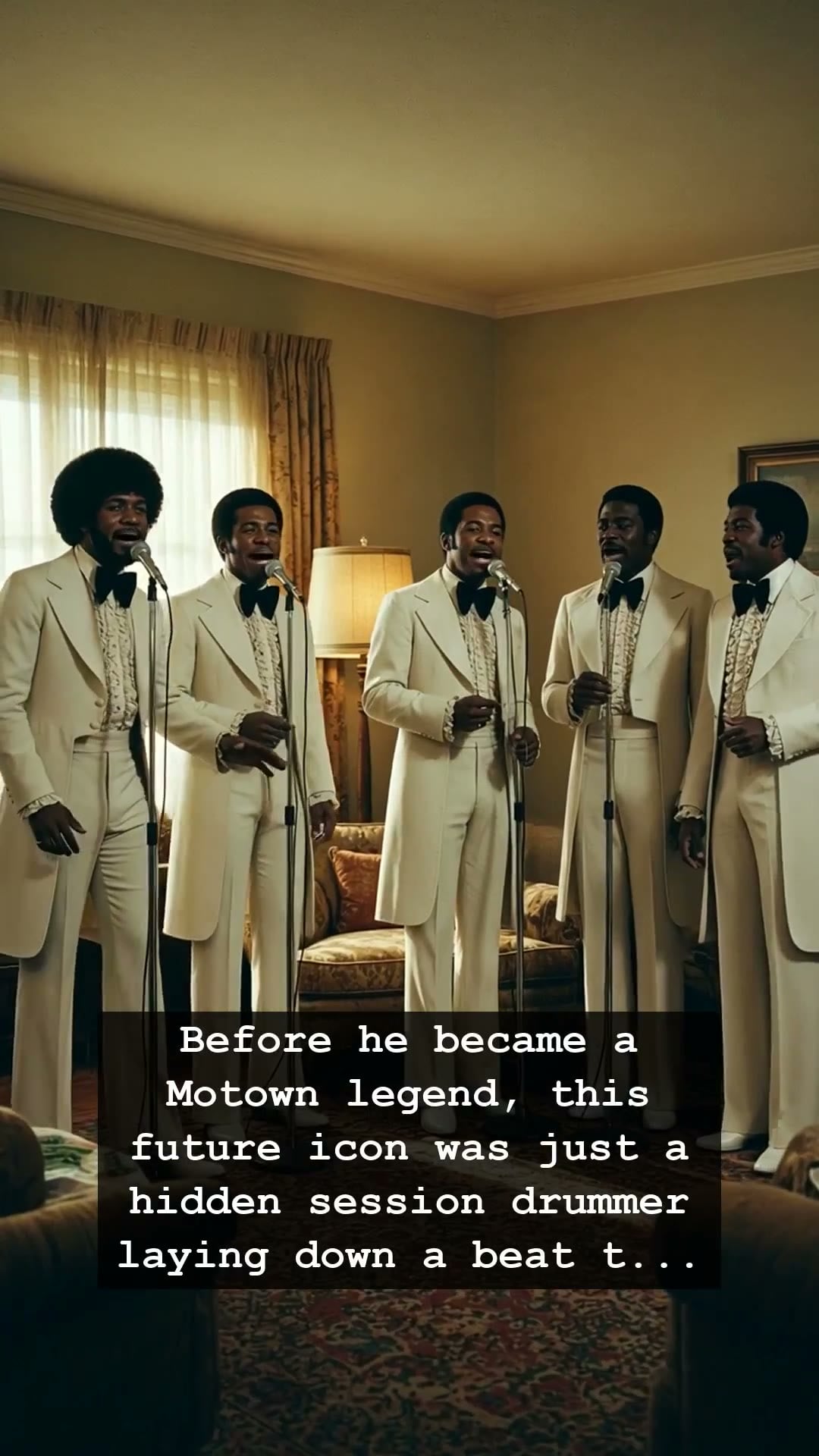
In 1961, the world did not yet know the silky, soul-stirring voice that would eventually define a generation. Long before he became the prince of Motown, Marvin Gaye was just another hungry musician trying to find his footing in the bustling, competitive landscape of Detroit. While we remember him today for his socially conscious ballads and intimate love songs, his journey to superstardom began in the shadows, hidden behind a modest drum kit in the legendary Hitsville U.S.A. studio. It is a story of grit, rhythm, and a moment of destiny that most casual listeners have completely overlooked.
Picture the scene: the air in the studio was thick with the scent of coffee and the buzzing intensity of creative ambition. Marvin Gaye, possessing an innate sense of rhythm, was called upon to provide the heartbeat for The Marvelettes and their breakout smash, Please Mr. Postman. He wasn’t the frontman. He wasn’t the face on the album cover. He was the invisible engine, hammering out the percussive backbone that would propel the track to the top of the Billboard charts. That song did more than just top the charts; it became the first Motown record to reach number one, signaling a seismic shift in the American musical landscape.
There is something profoundly human and nostalgic about this early chapter of Marvin Gaye. In those days, the Motown assembly line was a pressure cooker of talent, where artists often swapped roles, wrote for each other, and pushed the boundaries of what pop music could be. Marvin Gaye was observing, learning, and absorbing the soul of the city. He wasn’t just a drummer; he was a student of the craft, internalizing the interplay between soul, rhythm, and blues that would later influence his own revolutionary work, such as the masterpiece What’s Going On. Every thud of his drumsticks on that early record was a quiet promise of the legends he would soon become.
As the sixties progressed, the transition from the studio drummer to the charismatic icon was nothing short of cinematic. He would go on to survive the cutthroat politics of the music industry, grapple with his own internal demons, and navigate the shifting cultural tides of the Woodstock and Vietnam era. Yet, whenever I hear the opening notes of Please Mr. Postman on an old jukebox, my mind drifts back to that session. I think of a young Marvin Gaye, eyes closed, lost in the pocket, unaware that he was laying the foundation for a legacy that would eventually touch millions across the globe.
Today, we listen to Marvin Gaye with a sense of reverence, understanding that the man who sang of love and pain was once the man who kept time for others. His evolution serves as a haunting reminder that every great legend is built upon small, forgotten moments of labor and dedication. The next time you find yourself spinning an old Motown vinyl, listen closely for the beat. You are hearing the heartbeat of a man who was destined to change pop history forever, one rhythm at a time.