
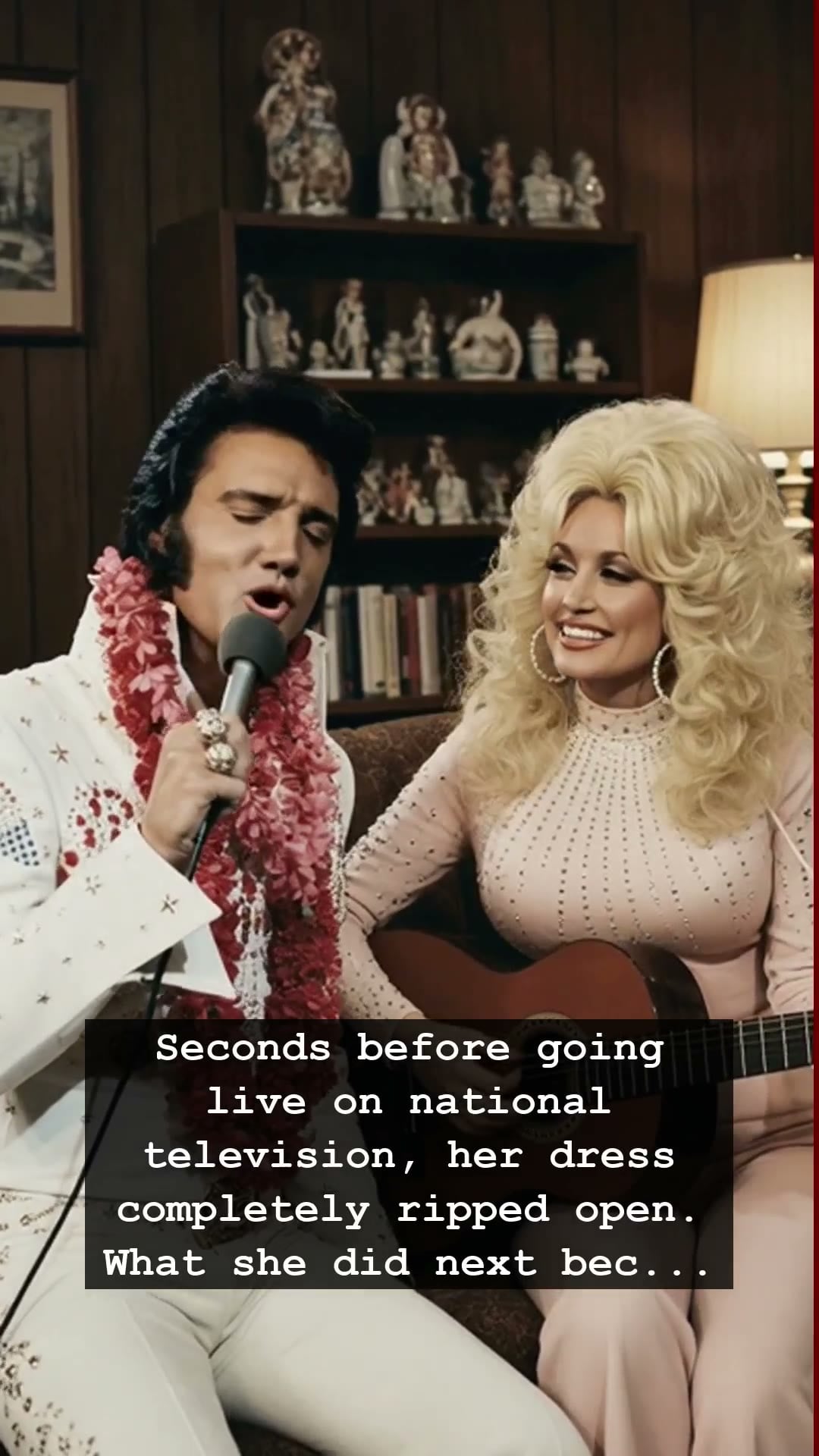
It was 1978, the golden age of country music television, when the CMA Awards were not just an industry event, but a living room ritual for millions of American families. The air was thick with the scent of hairspray and the nervous energy of stars waiting for their cue. Dolly Parton, already a titan of the genre, stood backstage moments away from appearing on national television. Suddenly, a sickening sound tore through the silence of the dressing room—the seams of her skin-tight gown had completely given way. With the countdown to live broadcast ticking down in seconds, the situation was nothing short of a public relations nightmare.
Most performers would have crumbled under the pressure of such a mortifying wardrobe malfunction. For Dolly Parton, however, panic was never part of the script. She reached for the heaviest, most elaborate fur coat available, wrapping it tightly around her frame to conceal the gaping disaster beneath. She stepped out into the blinding glare of the studio lights, exuding the kind of magnetic, unshakable confidence that only she could muster. What the audience saw was a glamorous, composed country icon; what Dolly was actually doing was fighting to keep her dignity and her gown intact through sheer willpower and a cleverly placed heavy coat.
This incident at the 1978 CMA Awards perfectly encapsulates why Dolly Parton has remained an enduring figure in American culture for decades. It was a time when the Jukebox was still king, and the polished veneer of country music stars was held to impossible standards of perfection. The industry thrived on the drama of live television, where a single misstep could be immortalized on tape forever. By turning a potential scandal into a legendary piece of television history, Dolly Parton proved that her quick wit and indomitable spirit were far more powerful than any dressmaker error.
Looking back, this moment reminds us of a simpler era in entertainment, one before the digital age where every movement is scrutinized by social media. Yet, the lessons from that night remain timeless. It highlights the vulnerability hidden behind the bright lights of fame and the incredible resilience required to navigate the pressures of stardom. Dolly Parton was always more than just a voice or a face; she was a master of self-presentation who understood that true star power isn’t about being perfect, but about how you handle the chaos when things go wrong.
Today, we look back at the seventies as a decade of both excess and authentic human spirit. From the rise of radio hits to the glitz of award shows, icons like Dolly Parton navigated a world that was rapidly changing. Her ability to pivot in the face of disaster has become a masterclass for artists and fans alike. So, the next time you hear one of her classic anthems, remember the woman behind the music—the one who could laugh in the face of a crisis and emerge as an even bigger legend, reminding us all to keep smiling, no matter how tight the seams of life might get.