
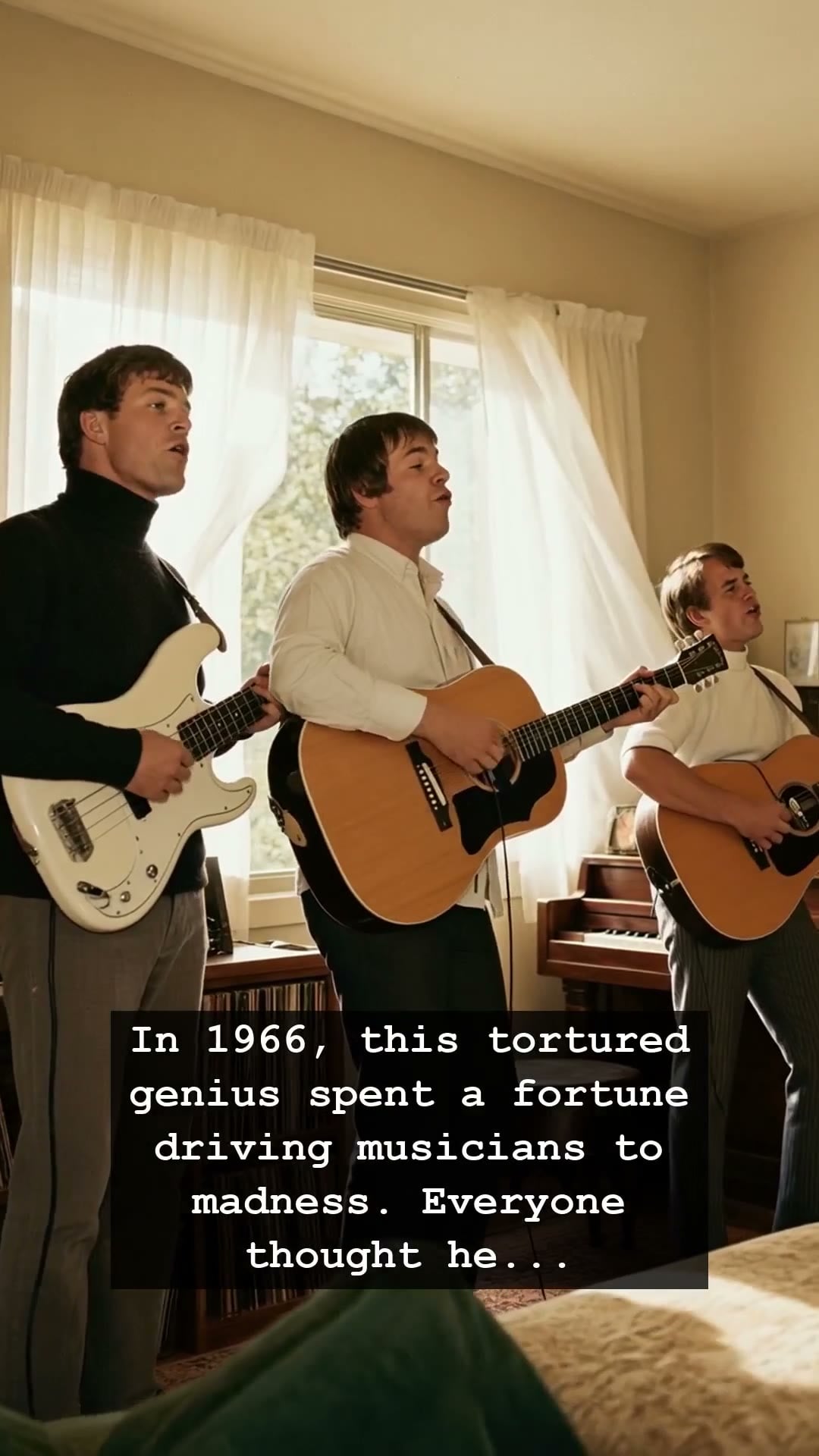
In 1966, the airwaves were dominated by the upbeat, surf-drenched harmonies of the Beach Boys, but behind the scenes, a different kind of storm was brewing. Brian Wilson, the mastermind behind the band, had retreated from the road to capture a sound that existed only in his dreams. He locked himself in a recording studio, driven by an obsessive need to surpass the Beatles, and in doing so, he pushed everyone around him to the absolute brink. To the outside world, Brian Wilson was becoming a cautionary tale of success, a tortured genius who spent an unprecedented fortune to craft a pocket symphony that many feared would never be finished.
He demanded the impossible from session musicians, forcing them to record the same intricate arrangements over and over again until their fingers bled and their patience withered. It was a time when the Jukebox culture was shifting, and Brian Wilson felt the pressure to evolve or vanish. He turned to unconventional instruments, including bicycle bells and barking dogs, turning the studio into a laboratory of madness. His bandmates were bewildered, his record label was losing faith, and his father was openly critical, yet Wilson pressed on with a singular, haunting focus that alienated almost everyone he loved.
This era, synonymous with the birth of psychedelic experimentation and the decline of innocent pop, served as the backdrop for one of the most significant musical shifts in history. The result was Pet Sounds, an album that was initially met with confusion by the public but eventually hailed as a masterpiece of baroque pop. The cost of this perfectionism was steep, as Brian Wilson descended into a dark period of mental health struggles, exacerbated by the isolation of his own ambition. It is a story that captures the raw, painful reality behind the polished records we still spin on our turntables today.
Yet, even amidst the shadows of that breakdown, the artistry of Brian Wilson remains undeniable. He was not just making an album; he was trying to build a cathedral of sound out of his own fractured psyche. This era of the mid-sixties, caught between the tail end of traditional rock and the dawn of the avant-garde, reflects the immense pressure placed on artists of that time to constantly reinvent themselves in the face of rapid cultural change. It was a high-stakes game played in dimly lit studios, far away from the screaming fans and the sunlight of California beaches.
Looking back, we realize that the madness and the genius were inextricably linked. Brian Wilson changed the landscape of popular music forever, proving that a true artist often has to go to the edge of the abyss to bring back something truly transcendent. Today, his work serves as a reminder that every great hit has a heartbeat, and every heartbeat carries the weight of the human struggle. If you listen closely to those harmonies, you can still hear the echoes of that frantic, beautiful madness that defined a generation. Does the music sound different to you now, knowing the ghosts that live within the melodies?