
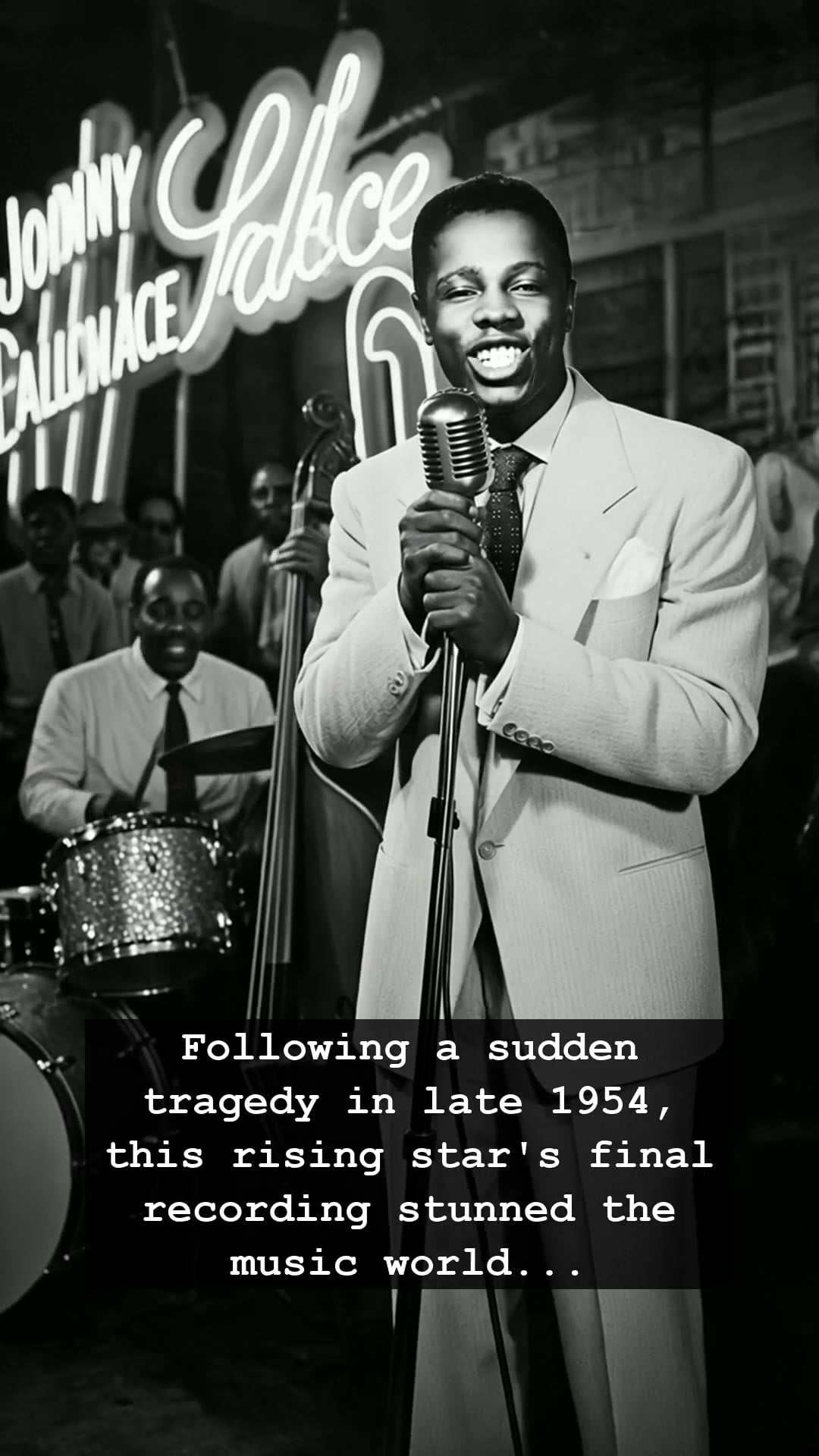
It was the cold, hollow winter of 1954, a time when the jukebox was the beating heart of every roadside diner and the crackle of a vinyl record felt like a sacred transmission from the beyond. The world of rhythm and blues was mourning a rising star, a man whose velvety voice had captured the soul of a generation. Johnny Ace, the charismatic crooner poised to define the era, was gone in an instant. Yet, in the weeks that followed his sudden, violent departure, his final recording became more than just a song; it became a ghostly heartbeat that refused to stop echoing through the American airwaves.
Johnny Ace was more than just a talented performer; he was a bridge between the smoky, intimate clubs of the post-war era and the blossoming promise of rock and roll. His death on Christmas Eve of 1954 was a shock that rippled through the music industry. During a backstage gathering at a Houston venue, a playful gesture with a .22 caliber pistol turned into a nightmare. In one tragic heartbeat, a bright future was extinguished, leaving behind a silence that the world was not ready to accept. It is the kind of dark, sensational narrative that defined the precarious reality of early touring musicians who lived life on the edge of a stage light.
Following this tragedy, his haunting ballad, Pledging My Love, climbed the charts with a momentum that felt almost supernatural. By early 1955, the song was everywhere. For ten consecutive weeks, Johnny Ace dominated the R&B charts, a historic milestone achieved entirely from beyond the grave. Listeners would drop their coins into the slots, watching the mechanical arm retrieve the record, hearing his smooth, melancholic tone fill the room. It was as if the artist himself was reaching back from the shadows to whisper one last promise to his grieving audience.
This phenomenon created a legacy that would haunt the annals of music history forever. The irony was palpable: while the world was dancing to the upbeat, emerging sounds of a new rock and roll revolution, the ghost of Johnny Ace held them captive with a slow, aching masterpiece. His story became a cornerstone of music folklore, proving that true artistry transcends the physical limitations of life. The tragic nature of his exit cast a long, mysterious shadow over his work, turning his discography into a sacred archive for those who crave the raw, unfiltered emotions of 1950s R&B.
Even decades later, the name Johnny Ace resonates with those who cherish the vintage soul of mid-century America. He remains a symbol of the fragile, fleeting nature of fame during an era where stars burned brightly and vanished into the night. His story reminds us that music is the only medium capable of keeping a soul alive long after the final curtain falls. As the needle drops on a worn record today, you can still feel the weight of that tragic winter night. When you listen to his voice, you aren’t just hearing a song; you are listening to a legend who found immortality in the silence that followed his final bow.