
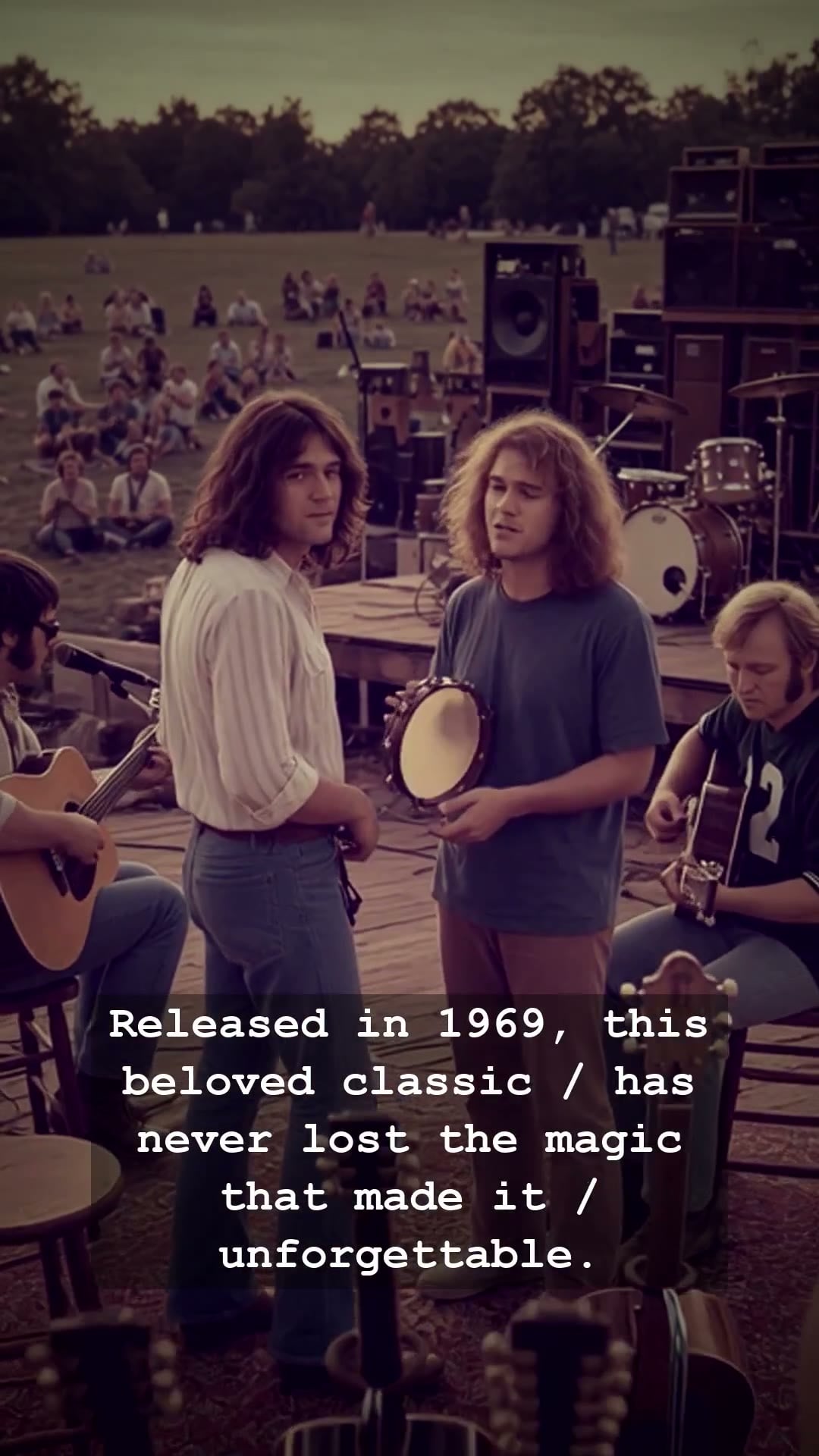
The year was 1969, and the air across America was thick with the scent of rebellion, gasoline, and the promise of a new dawn. It was the era of the jukebox and the transistor radio, where every note hummed with the spirit of Woodstock. Amidst this cultural firestorm emerged a group that would define a generation: Crosby, Stills, Nash & Young. They were not just a band; they were a tempest of egos, brilliance, and fragile harmonies that seemed destined to burn out as quickly as they ignited. If you were there, you remember the exact moment you first heard their voices interweave, a sound that felt like a collective sigh of relief for a nation at war with itself.
Yet, behind those shimmering vocal layers lay a foundation built on shifting sand. David Crosby, Stephen Stills, Graham Nash, and Neil Young were four distinct musical forces, each accustomed to being the architect of their own sound. Bringing them together was like trying to bottle a lightning strike. The tension was palpable from the very first recording sessions. They were perfectionists, often locking themselves away in studios until the early hours, fueled by late-night caffeine and the sheer pressure of expectation. The drama was constant—a volatile mixture of artistic clashing, personal addiction, and the undeniable weight of the folk-rock mantle they had inherited.
Neil Young, the elusive enigma of the group, was always hovering on the periphery, his guitar work cutting through the sweetness of their harmonies like a serrated blade. He famously drifted in and out of the lineup, an unpredictable presence who refused to be shackled by the expectations of the others. During the chaotic months of 1969, the studio became a pressure cooker. It was here, amidst the fallout of broken relationships and the looming shadow of the Vietnam War, that they captured the lightning in a bottle. The music they produced became the anthem for a generation searching for meaning in a landscape rapidly losing its innocence.
Today, listening to their records on a worn-out vinyl feels like opening a time capsule. You can almost hear the grit of the era, the crackle of the protest lines, and the whispered secrets of a decade that changed everything. The magic of Crosby, Stills, Nash & Young is that despite the internal wreckage, they created something that felt indestructible. Their songs provided a sanctuary for those listening on their bulky headphones or tuning in to the latest broadcast. It was the soundtrack to a radical transformation, one that never quite lost its haunting, bittersweet relevance.
Many decades later, the stories of their feuds and reconciliations continue to fascinate. They represent a time when music was more than just background noise; it was a battleground for the soul of a country. As you revisit those golden melodies, remember that the beauty you hear is inseparable from the struggle that forged it. Do you remember where you were when the world turned to them for an answer? The harmonies of Crosby, Stills, Nash & Young still echo, reminding us that even the most fractured souls can create something that lasts forever.