
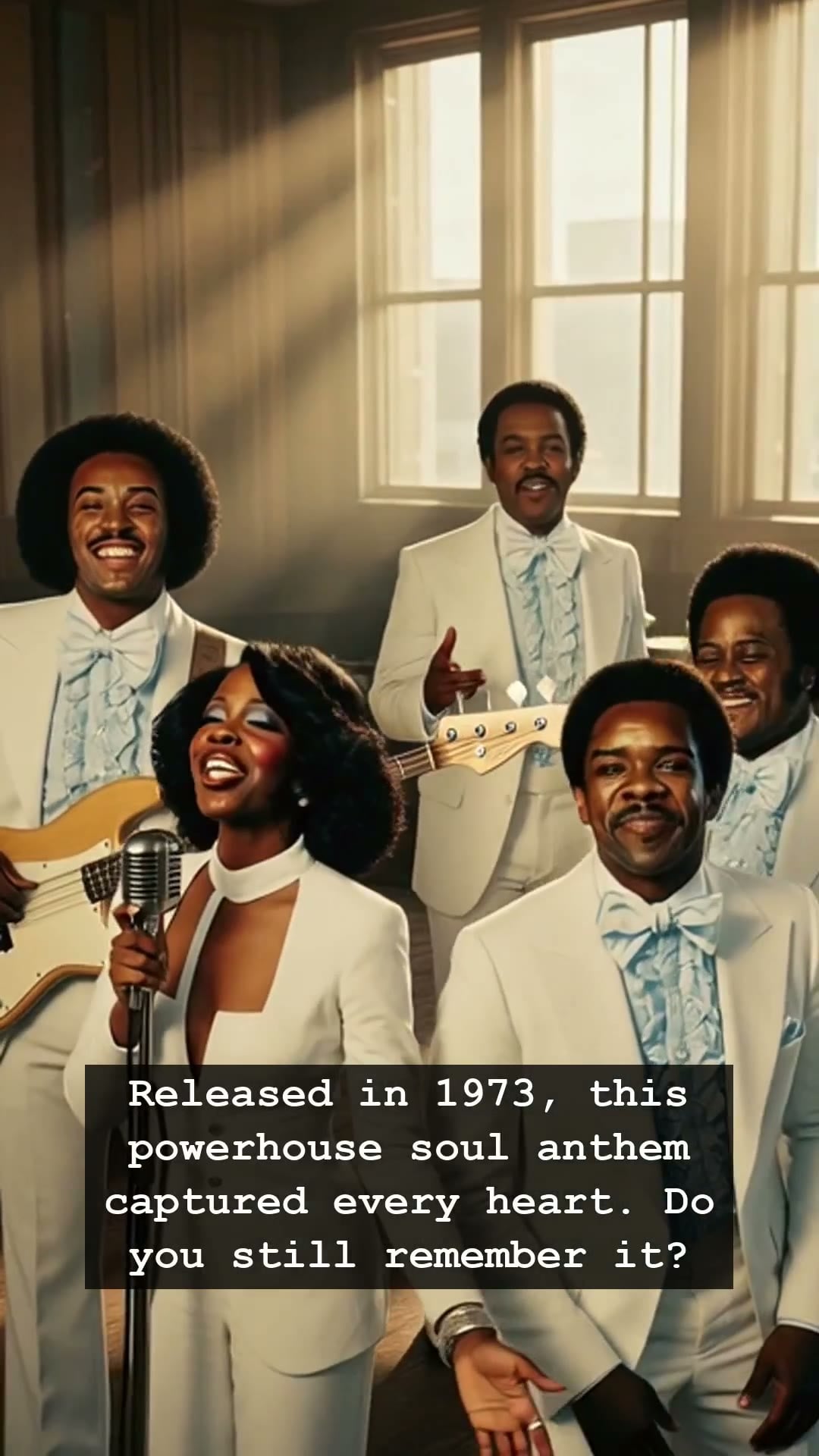
The year was 1973, a time when the AM radio airwaves were shifting, and the polished veneer of Motown was meeting the raw, gritty reality of a changing America. Amidst the chaos of the post-Woodstock era, a powerhouse soul anthem emerged that would stop listeners in their tracks. Gladys Knight and the Pips released Midnight Train to Georgia, a song so dripping with bittersweet ache that it sent chills down the spines of record executives. They were terrified. They believed it was too sad, too slow, and entirely too honest to be a hit. How could a simple, somber tale of leaving the bright lights of the big city for a humble life in the South break every rule in the industry handbook?
Yet, that is exactly what it did. Gladys Knight and the Pips tapped into a collective longing that defined a generation caught between the frantic energy of city life and the fading memory of home. The story behind the song is just as poignant as the melody itself. Originally written by Jim Weatherly as Midnight Plane to Houston, the lyrics were transformed into the version we know today after a conversation with the legendary Cissy Houston. When Gladys Knight and the Pips took hold of the arrangement, they didn’t just sing the notes; they lived them. Gladys provided the soulful, weary-yet-resilient heartbeat of the track, while the Pips provided the gospel-inflected harmonies that anchored the song in the deep traditions of American soul.
To listen to this track is to be transported back to a world of analog warmth, the static hum of a jukebox in a dimly lit diner, and the comfort of a heavy velvet curtain. At the time, the music scene was rapidly evolving, with Arena Rock beginning to dominate and the disco movement lurking just around the corner. In such a high-octane landscape, the restraint shown by Gladys Knight and the Pips was revolutionary. They proved that you did not need pyrotechnics or distorted synthesizers to command an audience. You only needed a story that felt like a secret whispered in the dark, a truth that resonated with anyone who had ever loved someone enough to let go of their own ambitions.
The genius of the track lies in its pacing. Gladys Knight and the Pips understood the power of a slow burn, letting the narrative unfold with a cinematic clarity that television and radio of the early seventies rarely permitted. It became an instant classic, not because it was manufactured for the charts, but because it felt like a shared memory. It captured the exact moment when the glittering promise of success faded into the realization that peace is often found in the places we leave behind.
Decades later, the song remains a fixture of American culture, immortalized in films and referenced by artists across every genre. It serves as a reminder of the era when Gladys Knight and the Pips reigned supreme, turning heartbreak into a masterpiece. Whenever that unmistakable piano intro kicks in, it is as if the world stands still, inviting us once more to board that midnight train and lose ourselves in the haunting, beautiful ache of a perfect song. Do you still remember where you were the first time those harmonies hit your soul?