
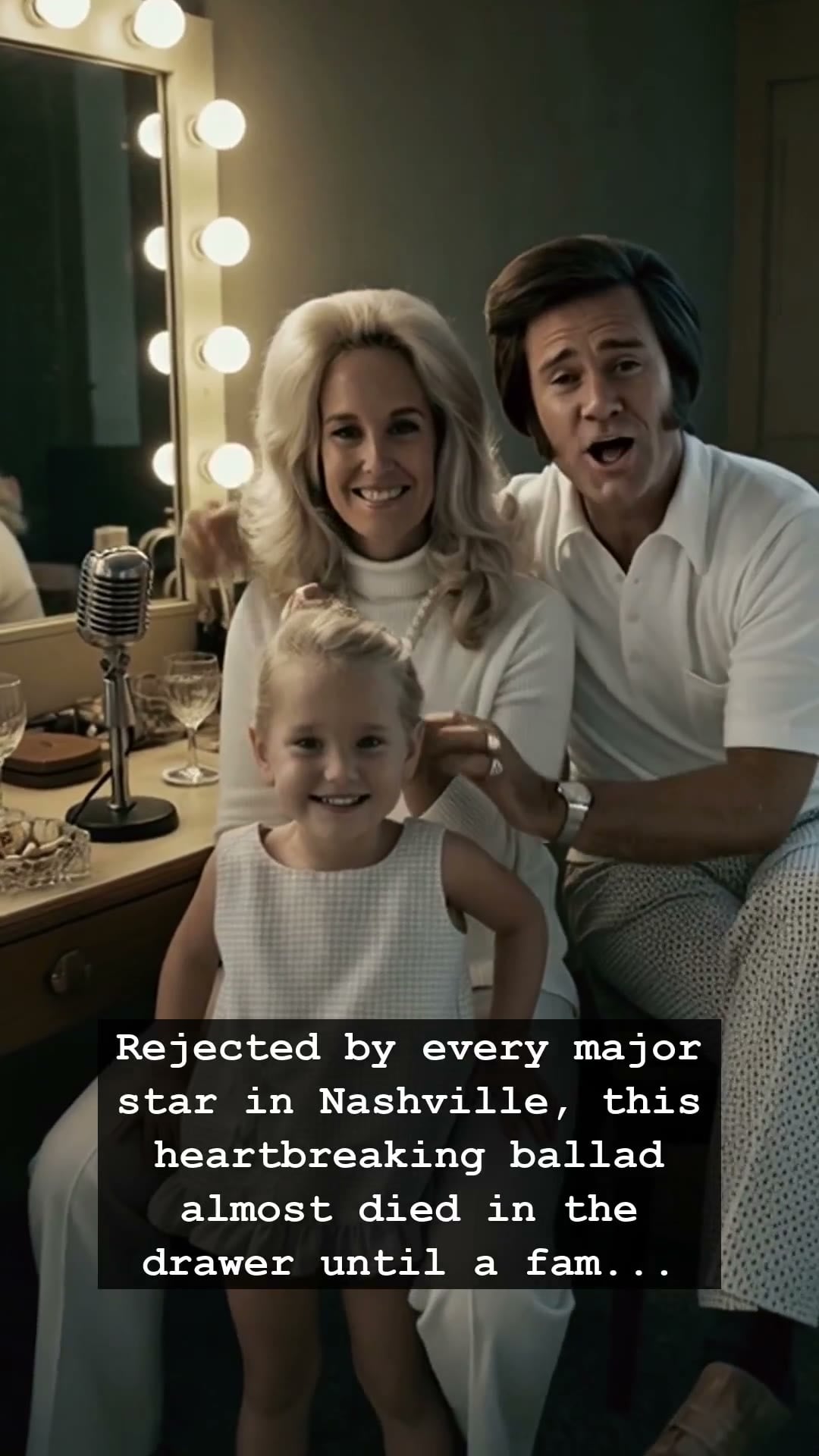
The year was 1976, and a devastating country ballad was gathering dust in a Nashville drawer. Every major star in the industry had turned it down, deeming the lyrics too raw, too painful, or perhaps simply too close to the bone. It seemed destined to vanish into the archives of unrecorded melodies. That is, until a legendary divorced duo walked into the studio, their voices carrying the weight of a love that had already burned to the ground. When George Jones and Tammy Wynette stepped up to the microphone, they didn’t just record a song; they poured their own broken marriage into every single note, transforming a rejected manuscript into an immortal number-one hit.
To understand the magnitude of this moment, one must remember the landscape of the mid-seventies. This was an era defined by the crackle of vinyl on a turntable and the amber glow of a jukebox in a roadside tavern. George Jones and Tammy Wynette were the reigning King and Queen of Country, but their crown was tarnished by alcohol, volatile arguments, and the crushing pressure of public scrutiny. Their off-stage reality was a stormy backdrop to a country music golden age that thrived on heartbreak. When they sang, the listeners weren’t just hearing a fictional story; they were eavesdropping on the dissolution of a soul-stirring romance that had captivated the nation.
For those who grew up in that era, listening to a George Jones and Tammy Wynette duet was like witnessing a private tragedy performed under the blinding lights of fame. The song they resurrected—Golden Ring—became a definitive anthem of their complicated legacy. It was a masterclass in emotional endurance. Producers were initially skeptical, but when the two voices blended, the tension in the room was palpable. The song spoke of a simple band of gold, bought in a pawn shop, representing a dream that soured. It was a reflection of their own reality, a narrative arc that mirrored the cycle of love, marriage, and eventual divorce that defined their tumultuous lives.
What makes this story resonate decades later is the sheer, uncomfortable authenticity of it all. In an age before digital polish, George Jones and Tammy Wynette were the real deal, flaws and all. Their collaboration reminds us of a time when country music was the unfiltered diary of the working class. It was a period when the heartache felt heavy, the whiskey tasted stronger, and a song could provide the only solace for a broken heart on a lonely highway. The track wasn’t just a hit; it was a haunting reminder that the best art often comes from the deepest personal agony.
Today, as we look back at the era of the Walkman and the slow fade of the traditional recording studio, the legacy of George Jones and Tammy Wynette remains untouched. Their story is a bittersweet reminder that some of the greatest music ever made was never meant to be easy listening. It was meant to be felt. Do you remember the first time those harmonies hit you? Even after all these years, the echo of their voices still lingers, proving that while relationships may end, a perfectly sung truth can last forever.