
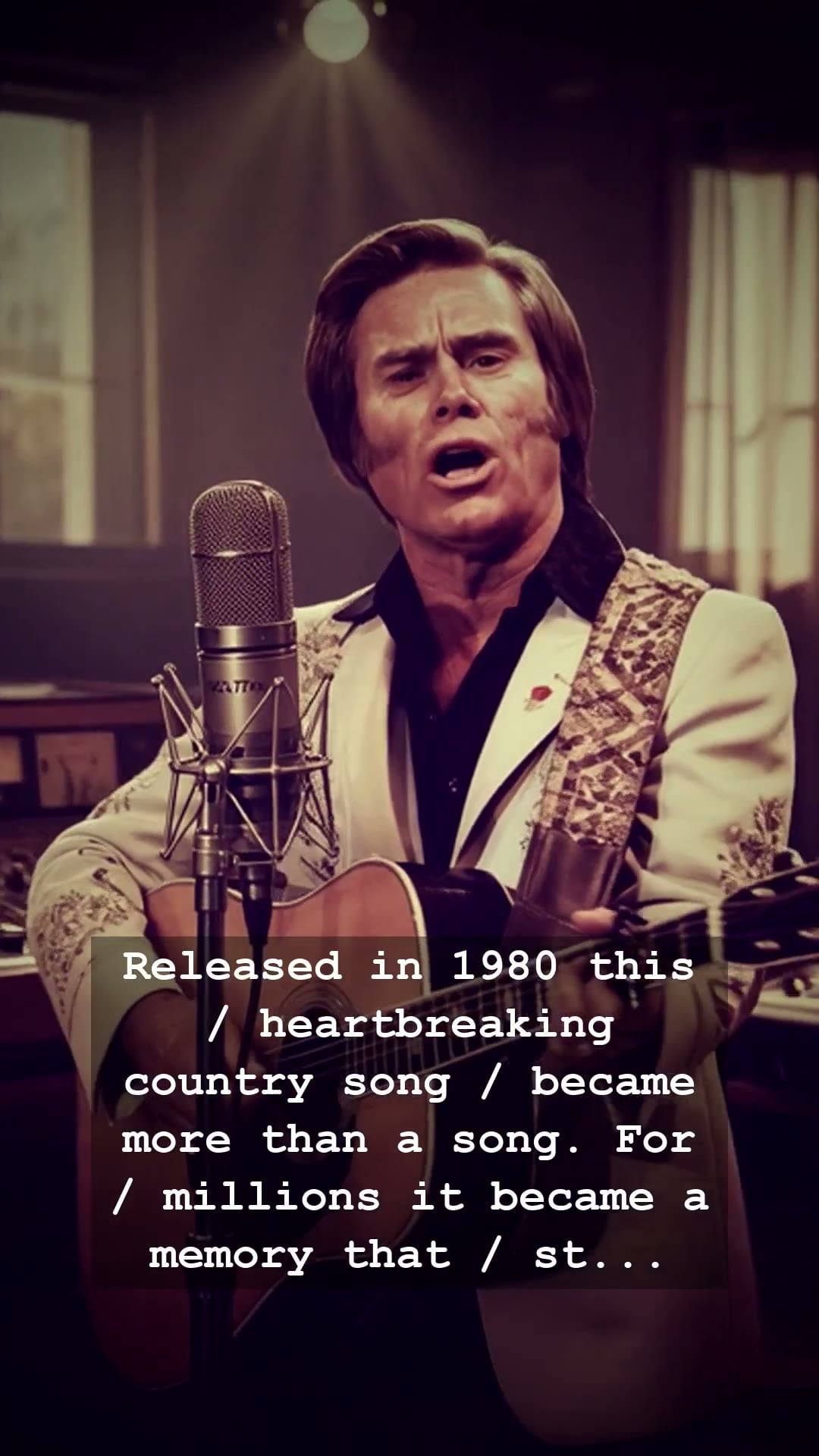
In 1980, the airwaves were dominated by the neon glow of the disco era and the rising dominance of MTV, yet one man pierced through the synthetic sheen of the decade with a voice that sounded like it was forged in a cathedral of broken glass and solitude. George Jones, a titan of country music, stepped into the studio that year to record a song that would eventually define not just his career, but the very essence of human heartbreak. It was a time when the Jukebox was still the king of the local watering hole, and George Jones had an uncanny ability to turn a simple melody into a confessional booth for the lonely souls of America.
The song in question, He Stopped Loving Her Today, was initially met with skepticism. Even George Jones himself reportedly hated the melody, famously declaring it too depressing for anyone to actually want to listen to. He predicted it would be a failure. Yet, the song resonated with an almost dangerous intensity. It told the story of a man who promised to love his partner until the day he died—a promise he ultimately kept. The weight of the delivery, combined with the unmistakable grit in the voice of George Jones, transformed a standard ballad into a visceral experience that brought millions of listeners to their knees.
To understand the gravity of this performance, one must look at the life of George Jones during that period. He was a man perpetually shadowed by his own demons, struggling with addiction and a life that often mirrored the tragic lyrics he sang. When he stood before the microphone, he wasn’t just performing; he was exorcising ghosts. The recording process was notoriously difficult, as the singer struggled to find the right emotional pitch, but once he captured that final, haunting note, it became clear that he had created a masterpiece that stood in stark contrast to the emerging pop hits of the 1980s.
This era of music was shifting toward spectacle, yet George Jones reminded the world that raw, unfiltered emotion was the only true currency that lasted. The song hit the charts like a thunderclap, climbing to number one and staying there, proving that the public was starving for authenticity. It was a moment of profound artistic triumph amidst a sea of personal chaos. Even as the culture moved toward synthesizers and polished production, the gravelly, tear-stained delivery of George Jones remained a haunting anchor for anyone who had ever suffered the agony of loss.
Decades later, the song remains a staple of late-night reflection, a phantom memory that transports us back to the days of AM radio and slow dancing in dimly lit rooms. It serves as a reminder that the greatest music isn’t always the kind that makes you want to move, but the kind that forces you to feel. George Jones may have left us, but the legacy of his greatest performance continues to echo, proving that when the truth is sung with enough conviction, it truly never dies.