
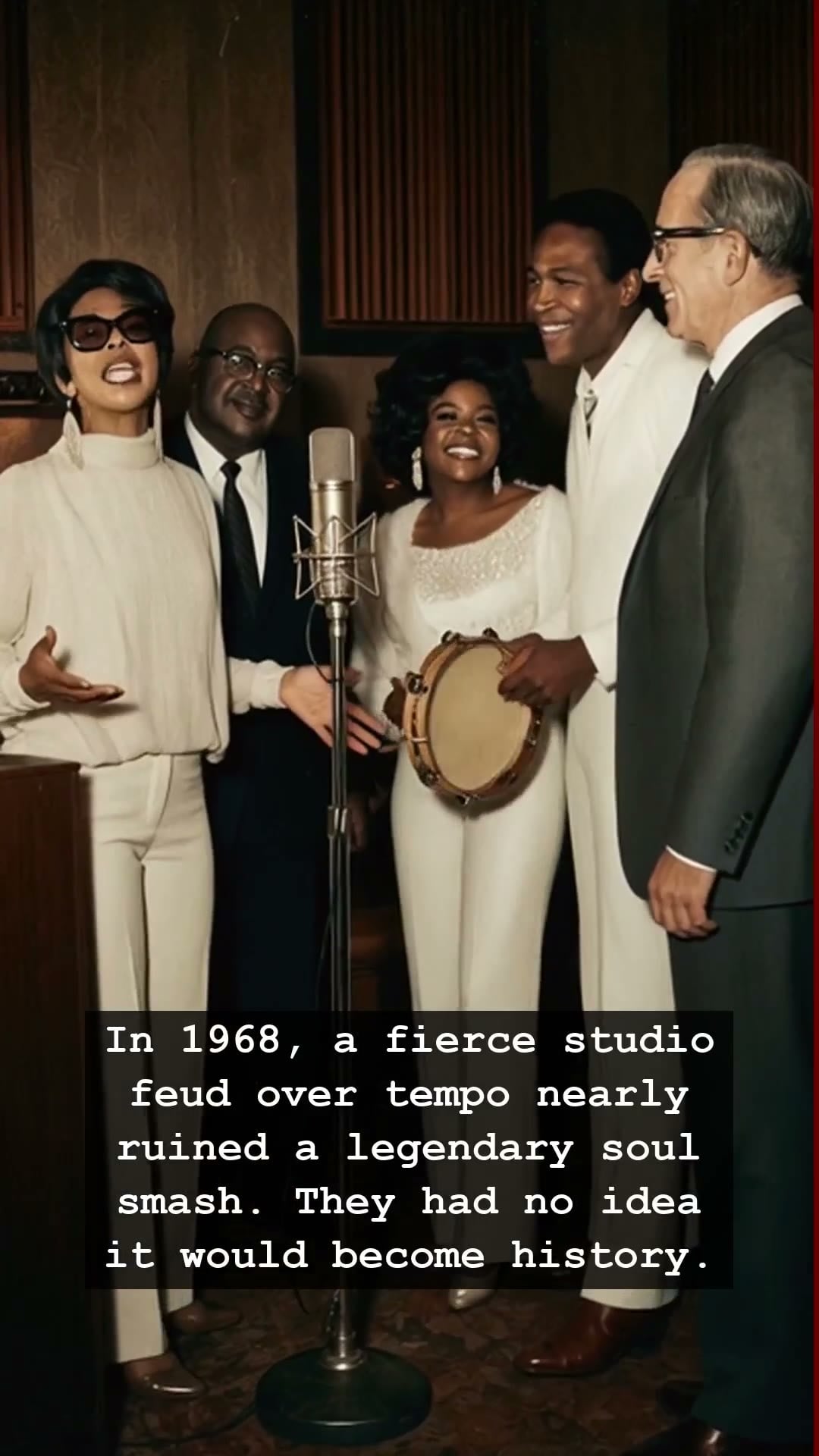
It was 1968, a year of global unrest, and inside the hallowed, claustrophobic walls of Motown’s Hitsville U.S.A. studio, the air was thick with tension. Marvin Gaye, the velvet-voiced prince of soul, was locked in a brutal creative showdown with his label executives. At the center of the storm was a track that would eventually define a generation, yet almost never saw the light of day. Motown’s brass, fueled by the polished standards of the time, were horrified by what they heard. They insisted the tempo was too frantic, the production too chaotic, and the overall sound far too paranoid for the radio airwaves. They were ready to scrap the song entirely, viewing it as a desperate, messy gamble that risked tarnishing the pristine image they had spent years cultivating for their star.
But Marvin Gaye refused to back down. He felt the urgency of the era, the creeping dread of betrayal, and the raw anxiety that pulsed through the streets of Detroit. That jagged, relentless rhythm wasn’t a mistake; it was a heartbeat. The executives wanted a pop-friendly ballad, but Gaye insisted on capturing the sound of a man watching his world crumble. As he pushed back against the institutional pressure, the recording session became a battleground of creative wills. It was a classic clash of commerce versus art, where the fear of the unknown nearly silenced one of the most iconic songs in music history.
When the single finally hit the airwaves, the world was stunned. It wasn’t just another Motown hit; it was a revelation. It didn’t just climb the charts; it dominated them, becoming the biggest-selling single in the label’s legendary history. That driving, syncopated beat that terrified the suits became the very thing that hooked millions of listeners, pulling them into a narrative of suspicion and heartbreak. It was a masterclass in tension, proving that sometimes, the most uncomfortable creative choices are the ones that resonate deepest with the human soul.
Looking back, this moment encapsulates the magic of the late sixties. It was a time when the jukeboxes were still spinning, but the lyrical content was shifting from moon-in-june romance to the complex, gritty realities of life. Marvin Gaye was at the forefront of this evolution, navigating the dark side of fame while struggling with his own personal demons. The success of this track paved the way for his later, more introspective work, cementing his status as not just a singer, but a profound cultural witness to his time.
Even today, the song retains its mysterious, haunting power. When you hear those opening notes, you are instantly transported back to a studio where the stakes were impossibly high. Marvin Gaye took a risk that could have shattered his career, but instead, he carved his name into the bedrock of American soul. Do you still remember where you were when you first heard that driving rhythm? It remains a testament to the fact that greatness is rarely found in the comfort zone.