
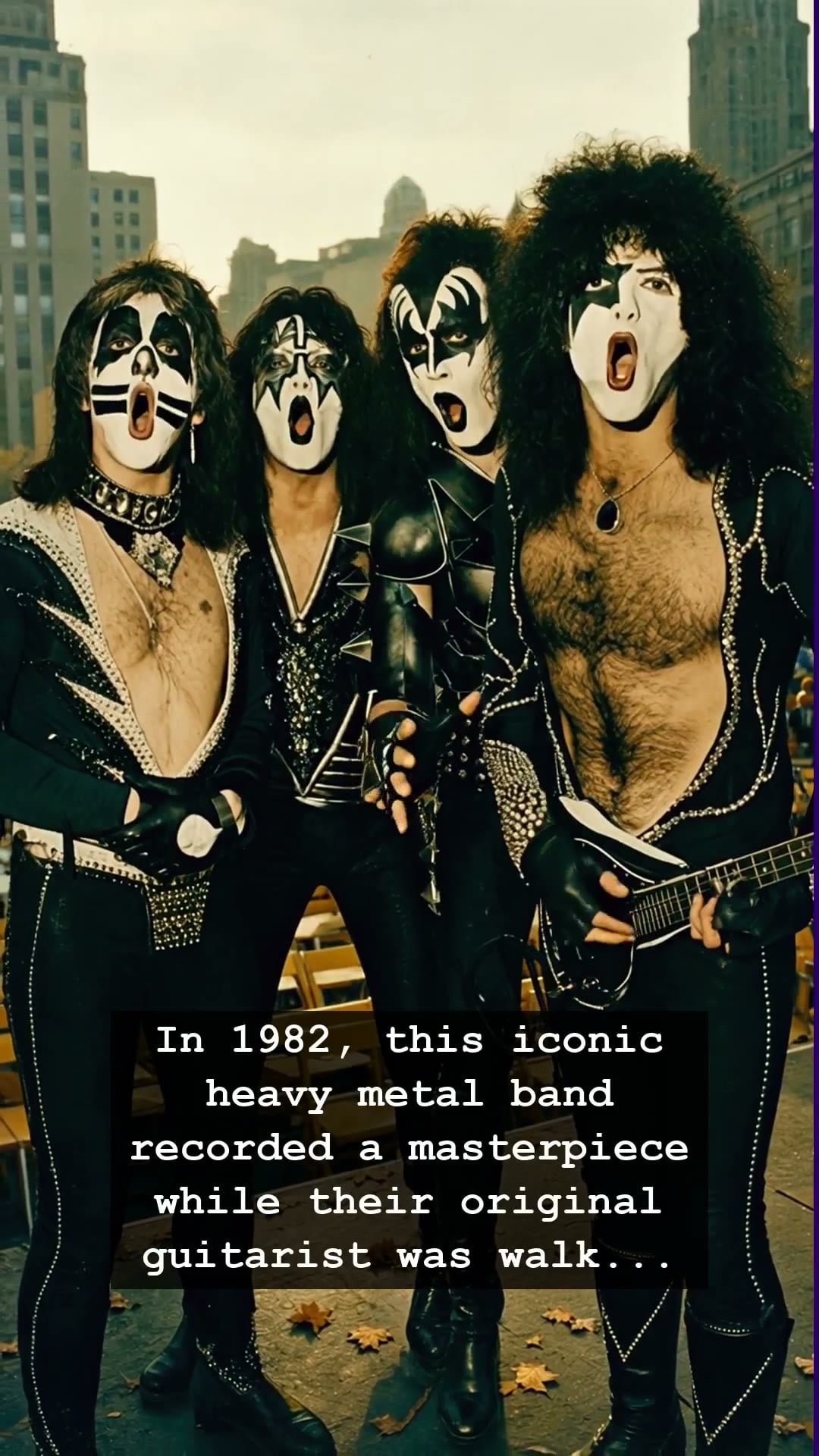
The year was 1982, a time when the world of rock was changing rapidly and the airwaves were dominated by the neon pulse of MTV. In the middle of this shifting landscape, the mighty KISS found themselves at a breaking point. While millions of fans were busy air-guitaring to their tracks, the internal reality was far darker than the makeup they wore. The legendary group was spiraling toward total collapse, and yet, amid the wreckage of crumbling personal relationships, they managed to craft an absolute sonic masterpiece. It is one of the great ironies of music history that some of our most beloved anthems were birthed in rooms filled with suffocating tension and resentment.
The tension centered around the inevitable departure of their original guitarist, Ace Frehley. As the band entered the studio to work on the album Creatures of the Night, the divide between the members had become an unbridgeable chasm. Ace, once the ‘Space Ace’ who defined the band’s iconic sound, was physically present in the recording booth but emotionally drifting toward the exit door. Every riff he laid down carried the weight of a goodbye, and every silence between takes was thick with the history of a brotherhood that was rapidly disintegrating. The frustration of Paul Stanley and Gene Simmons, desperate to keep their creation alive, fueled a high-stakes pressure cooker that demanded nothing less than perfection.
This friction, rather than destroying the music, actually sharpened it. The songs from this era of KISS possess a raw, dangerous edge that resonates with a unique kind of melancholic power. When you listen to those tracks today, you aren’t just hearing a heavy metal band at the height of their technical prowess; you are hearing the sound of a legacy fighting for its very survival. The grit in the vocals and the thunderous, desperate quality of the drums capture the exact moment when the old guard of hard rock felt the ground shifting beneath their platform boots.
Looking back from our modern perspective, it is haunting to realize how close the band came to disappearing entirely during those months. They were dealing with the pressures of industry decline, personal struggles, and the looming realization that their original lineup was dead in the water. Yet, they emerged from the studio with a record that is still hailed by die-hard fans as one of the heaviest, most authentic offerings in their entire catalog. It stands as a testament to the idea that art often thrives when the creator is pushed against a wall of fire.
Even now, decades after the hairspray has faded and the arena lights have dimmed, the story of this era remains a poignant reminder of the human cost of rock stardom. KISS was never just about the pyrotechnics or the costumes; it was about the collision of four distinct, volatile personalities creating something larger than themselves. Whenever I put on a record from this transition period, I am transported back to the atmosphere of 1982. It is a bittersweet experience to appreciate the music while knowing the pain that went into every note. Their story serves as a timeless lesson that even when the band falls apart, the magic they left behind continues to echo through the years.