
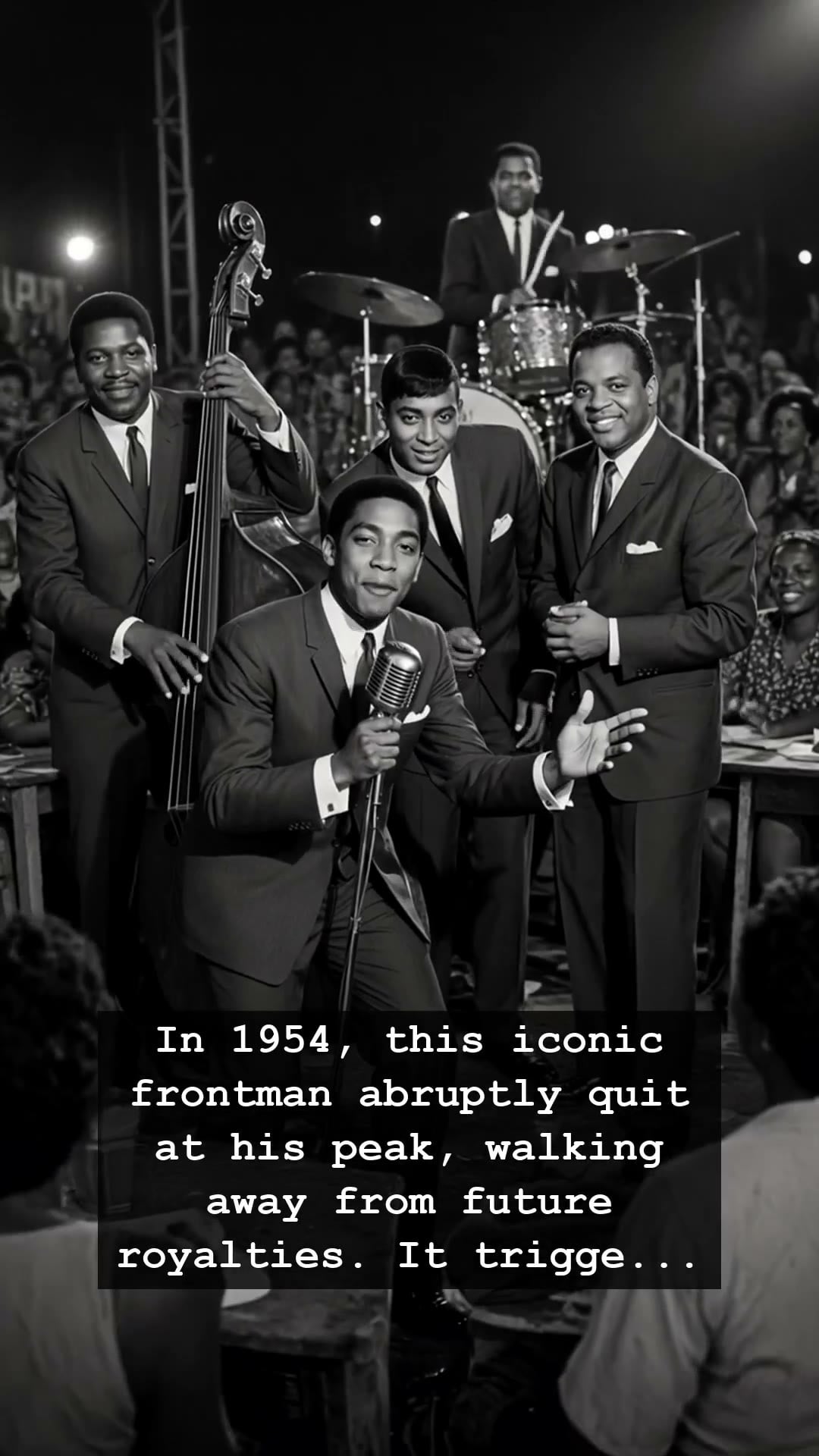
In the golden age of the jukebox, when the airwaves were dominated by the smooth, yearning harmonies of early R&B, one voice stood taller than the rest: Clyde McPhatter. In 1954, as the lead singer of The Drifters, McPhatter was not just a star; he was the blueprint for soul music. Yet, at the absolute zenith of his fame, he made a decision that sent shockwaves through the industry. He walked away from the group that he had hand-picked and built, abandoning potential future royalties and the security of a chart-topping ensemble for the cold, uncertain dream of a solo career. It was a gamble that defied the logic of the music business, but it ignited a chaotic, decades-long revolving door of talent that would define the legendary identity of The Drifters forever.
To understand the magnitude of this departure, you have to picture the mid-fifties landscape. The Drifters were the kings of the scene, blending gospel fervor with the polished pop sensibilities that would eventually set the stage for the Motown explosion. When McPhatter left, he didn’t just leave a vacancy; he left a vacuum that created an identity crisis. The band became a musical revolving door, a revolving door that saw dozens of members pass through its ranks, yet somehow, the sound remained iconic. It was a strange, dramatic alchemy where the brand name carried as much weight as the voices themselves. From the smoky corners of local clubs to the grandest stages, The Drifters transformed from a single vocal unit into an institutional, ever-shifting entity.
This cycle of arrivals and departures became the band’s most enduring, and perhaps most tragic, hallmark. While fans wept for the original lineup, they were met with new faces who brought their own shades of heartbreak to songs like Under the Boardwalk and Up on the Roof. This was the era of the transistor radio and the early Walkman, where these songs traveled with us, providing the soundtrack to our memories. The drama of the constant membership shifts was hidden behind the velvet-smooth harmonies, yet for those who knew the history, every note felt like a tribute to a group that was always being born and always dying all at once.
The industry of that era was brutal, often chewing up talent and spitting it out before the lights had even dimmed. For The Drifters, the revolving door was a double-edged sword; it kept the name alive and the hits flowing, but it stripped away the singular personality that McPhatter had initially injected into the group. It represents the darker, often ignored side of the rock and roll dream, where human beings are frequently secondary to the corporate legacy of a brand name. Yet, the music persisted, transcending the internal politics and the boardroom battles.
Looking back today, the story of The Drifters remains a masterclass in musical resilience and the cost of fame. Clyde McPhatter’s departure was more than just a resignation; it was the starting gun for a chaotic, beautiful saga that proved great songs can outlive the people who first recorded them. Whether you are a lifelong fan or a newcomer drawn in by the haunting melody of a long-lost record, the history of this group is a testament to the enduring power of American soul. Do you remember the first time those harmonies pulled at your heartstrings? The legend of The Drifters lives on, echoing through the decades.