
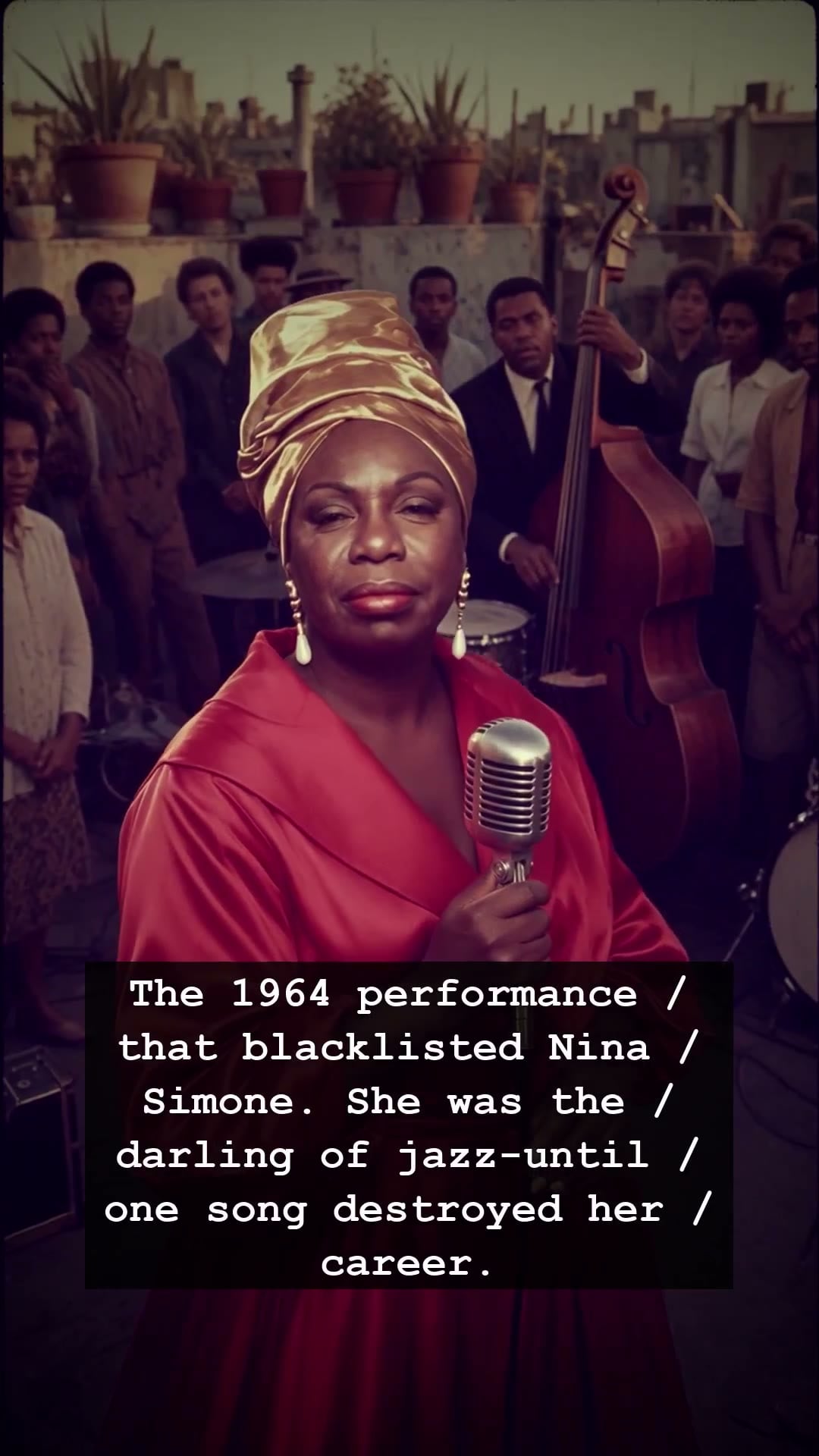
In the smoke-filled, dimly lit jazz clubs of the early 1960s, Nina Simone was not just a singer; she was a sovereign force. With her fingers dancing across the keys and a voice that felt like velvet dipped in gravel, she had captured the hearts of the American elite. She was the darling of the jazz world, destined for a life of prestige, platinum records, and the comfortable adoration of the masses. Yet, in the spring of 1964, the trajectory of this musical titan shifted forever. Nina Simone did not just perform a song that night; she ignited a cultural firestorm that would leave her blacklisted, shunned by the industry, and forever changed.
The song was Mississippi Goddam, a searing, defiant response to the horrific murder of Medgar Evers and the bombing of a church in Birmingham. While the radio waves of the era were filled with the lighthearted, optimistic melodies of early pop, Nina Simone chose to shatter the silence. She stood on the stage, the tension in the room thick enough to choke on, and laid bare the raw, bleeding truth of the Civil Rights movement. It was a cry for justice that the industry was not prepared to hear. To the record labels and the comfortable white listeners who had cheered her on, this was not music—it was an act of dangerous rebellion. The backlash was swift and brutal, effectively silencing one of the greatest voices of the century from mainstream airplay.
Looking back from our modern vantage point, it is easy to view this through the lens of romanticized history, but the reality was far grimmer. Nina Simone found herself locked out of the very spaces that once courted her. Her records were returned to sender, destroyed by radio stations across the South, and her name became synonymous with trouble. She sacrificed the safety of her career because her conviction left her no other choice. She was no longer just an entertainer; she was a truth-teller, a role that demanded the ultimate price. In the age of the Jukebox and the burgeoning influence of television, she chose the moral high ground, even as it cost her the global superstardom she had so masterfully built.
The tragedy is not that her career suffered, but that it took decades for the world to fully reconcile with the weight of her message. Nina Simone lived the rest of her life as an exile, both geographically and artistically, carrying the burden of that one performance. Yet, that single act of defiance became the bedrock of her legacy. It transformed her from a jazz singer into a revolutionary icon whose influence echoed far beyond the 1960s. She proved that while fame is fleeting, the power of a voice raised for justice is eternal. When you listen to those haunting chords today, hear not just the jazz, but the courage of a woman who chose her soul over her fame.