
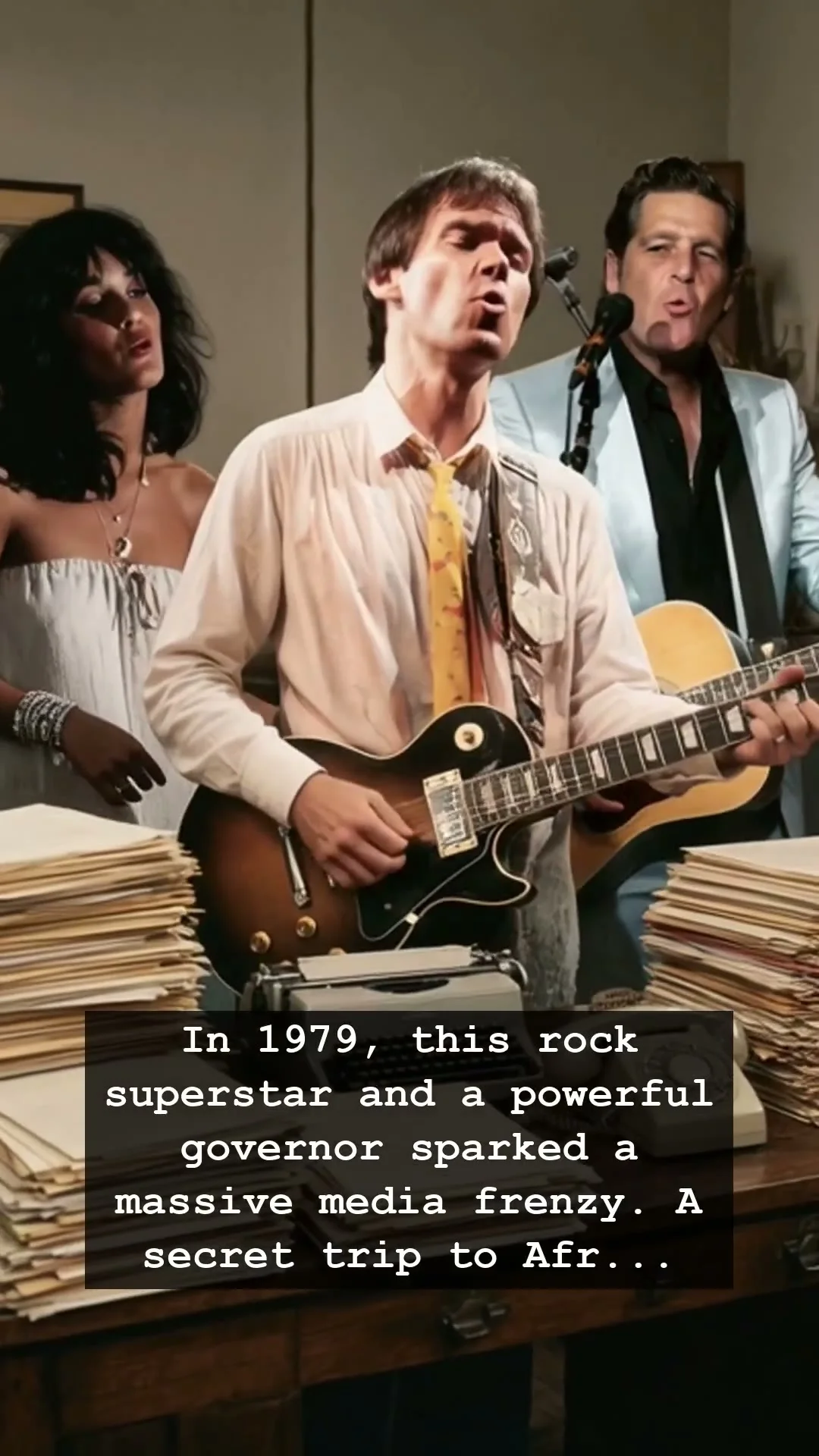
The year was 1979, an era defined by the shimmering lights of Studio 54, the rise of the Walkman, and the intoxicating promise of the California dream. Amidst this cultural whirlwind, an unlikely power couple emerged that would leave Hollywood and Washington gasping for air. Linda Ronstadt, the undisputed queen of rock with a voice that could crack a heart in two, was seen everywhere alongside Jerry Brown, the brilliant but enigmatic Governor of California. Theirs was not just a typical celebrity fling; it was a collision of the counterculture stage and the halls of state power, a pairing that felt as dangerous as it was inevitable.
The media frenzy reached a boiling point when the pair abruptly vanished from the public eye, embarking on a secret excursion to Africa. In the late seventies, the boundary between music icons and political elite was still largely defined, and the idea of a rock superstar disappearing into the wilderness with a sitting governor felt like a plot pulled from a high-stakes thriller. When rumors of their trip hit the headlines, the gossip columns went into overdrive, painting a picture of star-crossed lovers seeking refuge from the relentless glare of the spotlight. It was a moment of pure, unfiltered drama that captivated a nation caught between the fading hippie optimism of the sixties and the polished, cynical ambition of the coming decade.
Linda Ronstadt, then at the height of her vocal prowess, was the embodiment of the Laurel Canyon scene. She carried a raw, authentic energy that felt worlds away from the buttoned-up bureaucracy of Jerry Brown. Yet, their connection was undeniably magnetic. They were both outsiders in their own realms, challenging the status quo with a quiet intensity. While Brown was famously dubbed Governor Moonbeam for his forward-thinking, unconventional policies, Linda Ronstadt commanded stages across the country with a vulnerability that transformed every song into a personal confession. Together, they represented the volatile chemistry of the era, where the personal was always political.
Looking back, this 1979 escapade serves as a vivid time capsule of a lost age. There was no social media to broadcast their every move; there was only the mystery, the blurred photos in tabloids, and the whispered speculation among the public. The African trip remains a defining chapter in the history of American celebrity culture, marking a moment when music and politics danced on the knife’s edge of public perception. It was a brief, dazzling intersection of worlds that left everyone wondering how much of it was performance and how much was a genuine search for meaning.
Even today, the legacy of Linda Ronstadt and Jerry Brown lingers as a reminder of a more enigmatic time. While their paths eventually diverged, that fleeting moment in 1979 remains etched in the collective memory of those who lived through the transition from the seventies to the eighties. It stands as a haunting, romantic reminder of when rock stars were larger than life and political figures held a mysterious, untouchable aura. We are still left to wonder what secrets were shared under the vast African sky, far away from the cameras that tracked their every breath, back when the world felt both impossibly large and intimately connected by the power of a legend.