
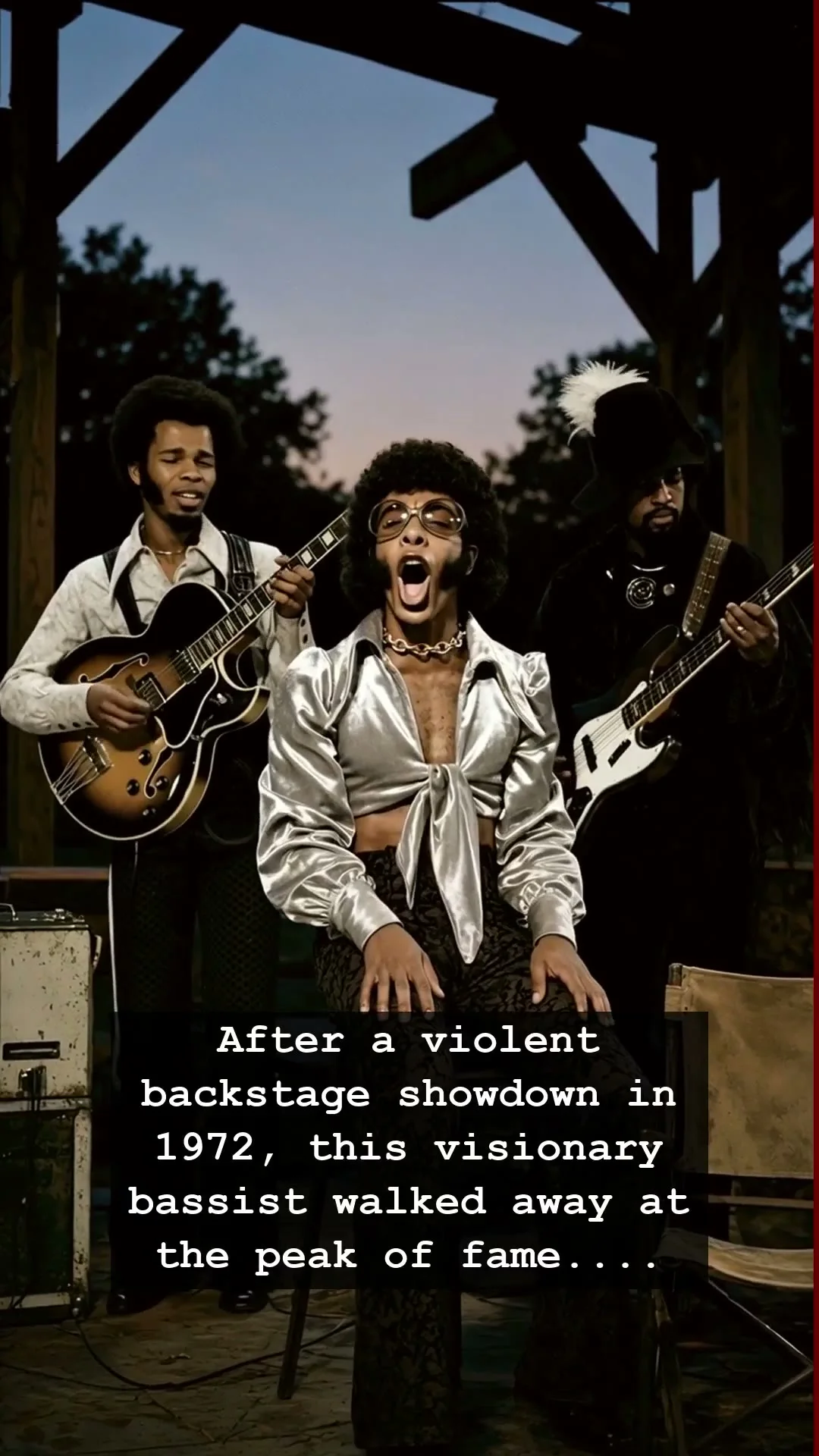
The year was 1972, and the air in the music industry was thick with the scent of rebellion, strobe lights, and the looming shadows of excess. For fans of the era, Sly and the Family Stone were not just a band; they were an explosion of counter-culture color, mixing soul, rock, and psychedelia into a potent cocktail that defined the late sixties and early seventies. Yet, behind the velvet curtains and the high-octane performances, the machine was breaking down. During a volatile backstage confrontation that threatened to spill over into genuine tragedy, the man who provided the heartbeat of the group—bassist Larry Graham—made a silent, life-altering decision. He walked away from the peak of fame, leaving behind the chaos of Sly Stone’s inner circle to forge his own path through the neon-lit smoke of the funk revolution.
To understand the magnitude of this departure, one must look at the atmosphere of the time. This was the era of the Jukebox hero and the rising influence of FM radio, where bass lines weren’t just background noise; they were the foundation of the dance floor. Larry Graham, the man credited with inventing the thumb-slapping bass technique, was the rhythmic anchor that kept Sly Stone’s erratic energy grounded. When he left, he didn’t just quit a band; he took the blueprint of modern funk with him. The tension between the visionary genius of Sly Stone and the disciplined innovation of Larry Graham had finally hit a boiling point, transforming a personal rift into one of the most pivotal moments in soul music history.
Walking away from the massive touring machine of the early seventies was a gamble that most musicians would have considered professional suicide. Yet, for Larry Graham, it was a necessary shedding of skin. Free from the encroaching shadows that often haunted the elite circles of the industry during the post-Woodstock malaise, he channeled his heartbreak and frustration into the formation of Graham Central Station. He took the grit of the streets and polished it into a driving, percussive sound that would eventually pave the way for the disco explosion and the funk foundations of the following decade. It was a rebirth born from the remnants of a shattered brotherhood.
Today, we look back at this moment with a sense of wonder. The legacy of Larry Graham is woven into every pop record that relies on a heavy, syncopated bass groove. While Sly Stone’s star burned brightly and erratically, Larry Graham remained a steady force of rhythmic precision. His ability to turn a backstage nightmare into a catalyst for creative independence serves as a poignant reminder of the fragility of fame and the resilience of true artistic spirit. It reminds us that behind every iconic record is a human story, often fraught with conflict, fear, and the quiet courage to start over.
As the golden age of funk fades into the archives of time, the echoes of that 1972 showdown still resonate in the speakers of our vintage record players. It was a transition from the psychedelic chaos of the sixties to the hard-driving groove of the seventies. Do you remember the first time you felt the thumping power of that signature bass line, unaware of the drama that birthed it?