
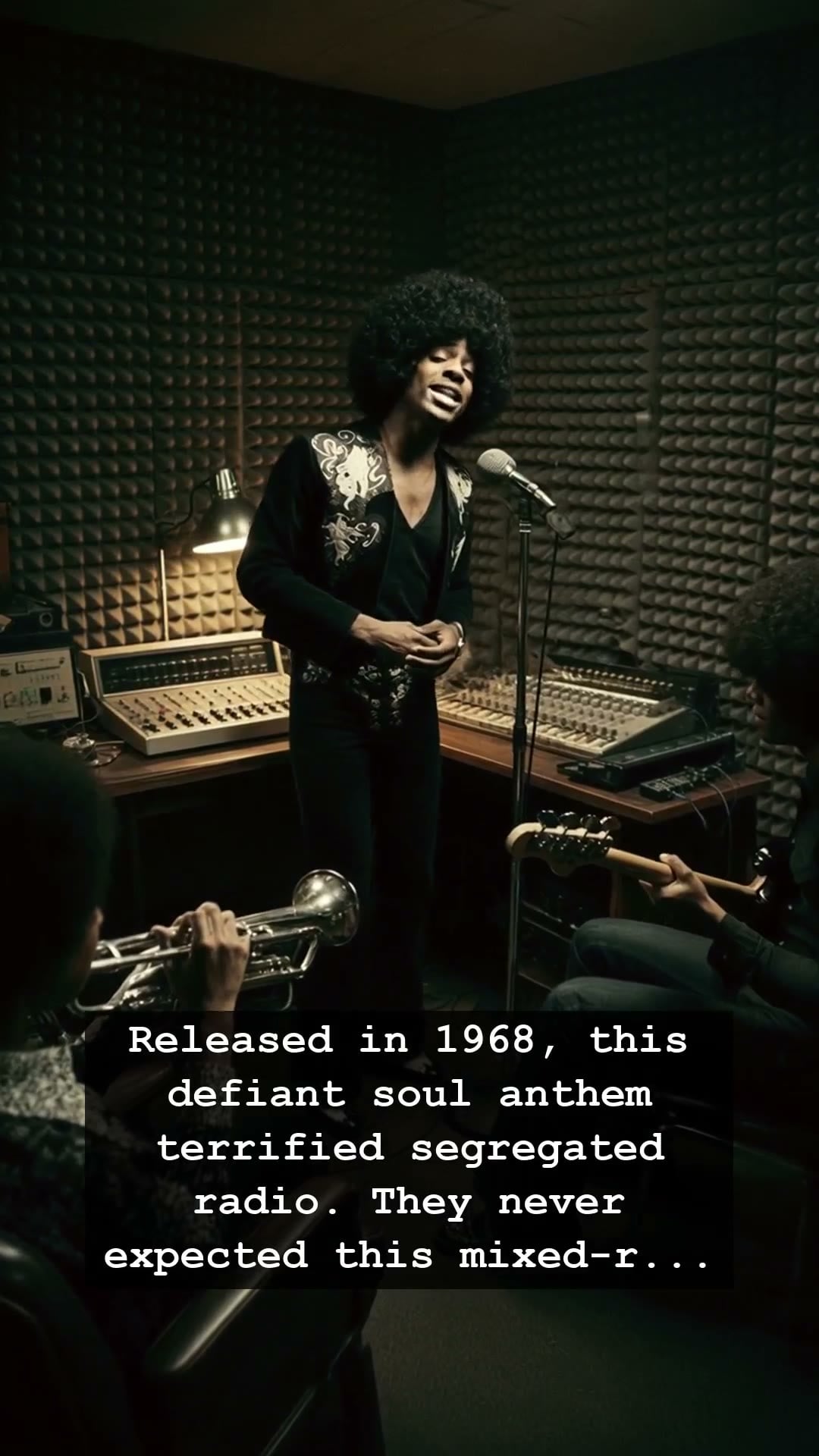
The year was 1968, a time when America felt like a fragile glass vase dropped onto concrete, shattering into jagged pieces of racial tension and cultural upheaval. Into this volatile atmosphere stepped Sly and the Family Stone, a group that defied every unspoken rule of the era. Their music did not just ask for integration; it demanded it with a bassline so infectious that even the most stubborn listeners could not help but move. When their defiant soul anthem first hit the airwaves, segregated radio stations were genuinely terrified. They had spent decades compartmentalizing sound, and suddenly, here was a band that refused to acknowledge the invisible lines drawn on the map of American society.
Sly Stone, the eccentric genius behind the operation, built something that was truly radical for its time. By putting men, women, Black, and white musicians on the same stage, the band acted as a living, breathing social experiment. While their contemporaries were often sequestered in the velvet booths of dimly lit clubs, Sly and the Family Stone were turning concert venues into kaleidoscopic mirrors of what America could become. This was the era of the Jukebox hero, but Sly and the Family Stone were not just playing songs; they were writing a manifesto for a new generation. They forced a divided nation to share the same groove, turning the dance floor into a rare sanctuary of unity.
Behind the glitz and the revolutionary sound lay a darker reality, the inevitable tragedy of meteoric fame that often stalks musical legends. The pressure of balancing a communal band identity with the crushing weight of global expectation began to take its toll. The studio sessions, once filled with the electric charge of innovation, became battlegrounds of creative friction and mounting substance struggles. Sly Stone himself became an enigmatic, increasingly reclusive figure, drifting away from the sunshine soul that had made the world fall in love with his vision. The band that was designed to stay together forever found itself unraveling under the glare of the spotlight.
Yet, even amidst the dysfunction, the legacy of the band remains untouched by the passage of time. They bridged the gap between the raw urgency of soul and the experimental flair of psychedelic rock, influencing everything from the funk giants of the seventies to the hip-hop pioneers who would later sample their rhythmic DNA. Their influence is baked into the foundation of modern music, a testament to the fact that when music is honest, it is impossible to ignore. Whether you first heard them on a crackling transistor radio or through a pristine stereo system, the impact of their sound is visceral and immediate.
Do you still remember the first time that bassline pulled you onto the floor? There is a certain magic in the way Sly and the Family Stone captured a moment in time and stretched it across decades. Their story is a reminder that music has the power to bridge divides, even when the world around us seems to be falling apart. As we look back at the late sixties and the era of social revolution, their funky, unapologetic voice continues to echo, inviting us all to keep dancing despite the odds.