
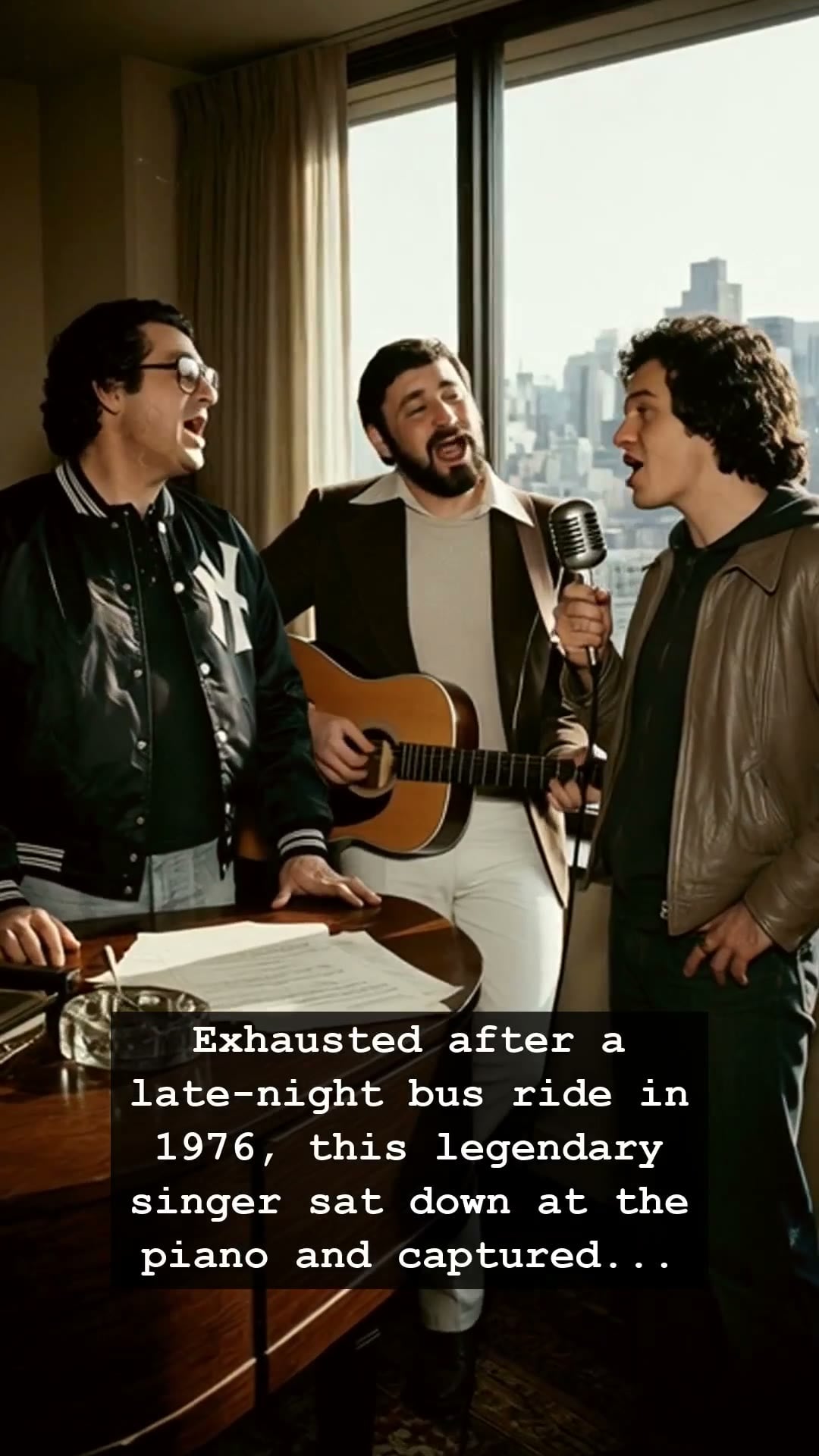
The year was 1976. For most, it was the era of the burgeoning disco movement, the rise of the Walkman, and the neon promise of the American dream. But for a weary traveler named Billy Joel, the reality of the road was far less glamorous. After a grueling Greyhound bus ride back to New York, the exhaustion set in. He wasn’t just tired; he was drained by the relentless pace of a career that was still fighting for its foothold in a city that never sleeps. When he finally sat down at his piano, he wasn’t trying to write a hit. He was trying to exorcise the ghosts of his own displacement.
That night, the urban landscape of Manhattan transformed into a melody. Billy Joel captured the grit of the subway grates, the flickering streetlights, and the desperate, beautiful isolation of the city. He channeled the soul of a place that felt like home, even when he was a stranger to it. That spontaneous session produced New York State of Mind, a track that would become the unofficial anthem of the city. It remains a masterclass in songwriting, proving that the most enduring art often comes from the deepest wells of human exhaustion and emotional longing.
To understand the genius of Billy Joel during this period is to understand the tension of the mid-seventies. This was a man caught between the fading idealism of the sixties and the cynical, high-octane pressure of the coming decade. Studio 54 was about to become the epicenter of cultural excess, yet here was Billy Joel, grounding us in the honest, blue-collar reality of piano-driven storytelling. His music provided a sanctuary for those who felt overwhelmed by the rapidly changing soundscapes of the era, offering a bridge back to a more authentic, melancholic style of rock.
The magic of this song lies in its narrative weight. Unlike the polished pop tracks that would dominate the charts later that decade, this piece breathed. It felt lived-in, like a well-worn leather jacket found in a thrift store. Throughout his career, Billy Joel often grappled with the shadows of fame, the weight of the spotlight, and the heavy toll of constant touring. Yet, even amidst the noise of the Arena Rock phenomenon that he would soon help define, he never lost the ability to strip his songs back to that solitary piano bench.
Decades later, we still turn to these tracks when we need to find ourselves in the clutter of modern life. Billy Joel remains a cornerstone of American music not because of the spectacle, but because of his refusal to hide the cracks in the mirror. He reminded us that there is a profound, gritty dignity in our struggle. When the world feels too fast and the neon lights grow blinding, we go back to that same piano, listening for the echo of a Greyhound bus rolling into the heart of a city that still feels exactly like a New York state of mind.