
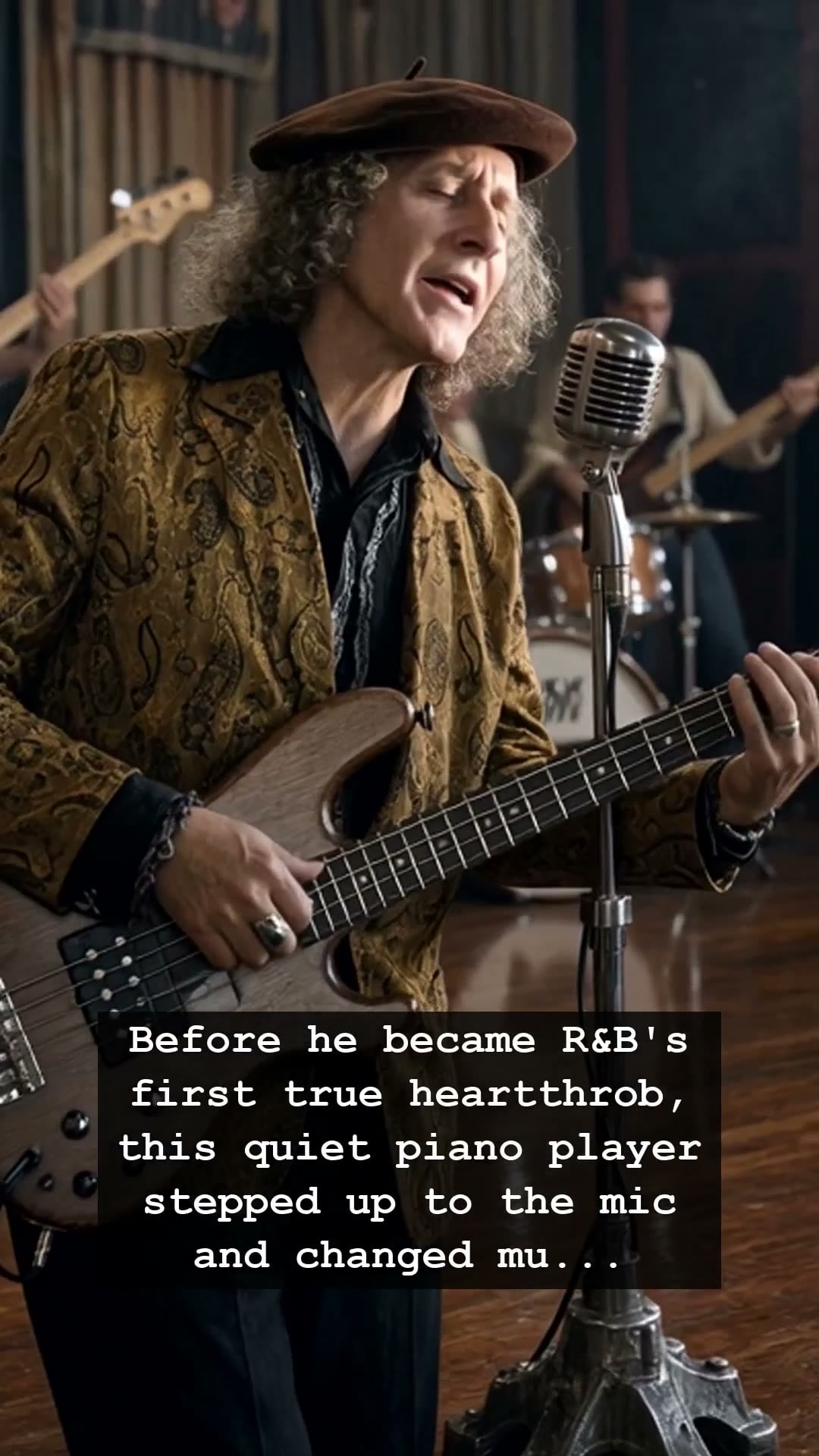
The year was 1952, and the airwaves were dominated by the stiff, crooning sounds of the post-war era. In the dimly lit clubs of Memphis, a quiet piano player named Johnny Ace sat behind his keys, waiting for his moment. He was not a flashy performer; he was a soft-spoken musician whose velvet voice held a strange, magnetic pull. When he finally stepped up to the microphone to record My Song, the industry stopped dead in its tracks. It was a masterpiece of soul—a haunting, understated ballad that bridged the gap between raw rhythm and blues and the burgeoning pop charts. In an instant, Johnny Ace became the first true heartthrob of the R&B world, a man who sang with a vulnerability that felt dangerously real.
Johnny Ace was not just a singer; he was the voice of a generation searching for something authentic in the wake of the jukebox revolution. His talent was undeniable, characterized by a smooth, sophisticated tone that made listeners feel as though he were singing directly to them in a crowded, smoke-filled room. As his popularity soared, he began touring across a segregated America, bringing his soulful melodies to audiences who were captivated by his cool, composed demeanor. He was the prototype for the modern solo star, a man who carried his own weight without the need for a massive backing band, relying instead on the raw emotional power of his piano and his lyrics.
Yet, the music business in the early fifties was a treacherous landscape, and the pressure of sudden fame began to weigh heavily on the young star. Behind the curtain of sold-out shows and rising record sales, the lifestyle was exhausting, fueled by long nights and the constant demands of a skyrocketing career. Johnny Ace moved through the world with a sense of melancholy that seemed to permeate even his most upbeat tracks. It was as if he knew that his time in the spotlight was destined to be fleeting, a brief, burning flame in a cold world. He was living the high life of a rising icon, yet the shadows of his profession were never far behind.
Then came the tragic finale that would cement his name in the annals of music history forever. On Christmas Eve of 1954, backstage at a performance in Houston, a moment of reckless playfulness turned into a nightmare. A loaded pistol, a bravado challenge, and a single, ill-timed click silenced the voice that had captivated millions. He was only twenty-five years old. The news sent a shockwave through the black community and the music industry at large, turning the rising star into a martyr of rock and roll’s infancy. The tragedy was so sudden and so senseless that it left his fans in a state of collective mourning that lasted for decades.
Today, the legacy of Johnny Ace persists as a poignant reminder of the fragility of fame. When we listen to his recordings now, we aren’t just hearing a song; we are listening to a ghost from a bygone era, a man who possessed the talent to change the course of American music before his story was cut short. His life serves as a somber chapter in the history of soul and blues, a tale of how a quiet piano player briefly held the world in his hands. Even after all these years, his music remains a testament to a voice that, once heard, could never truly be forgotten.